Category Features

Decision Time On Biologics Exclusivity: Eight Years Is No Compromise

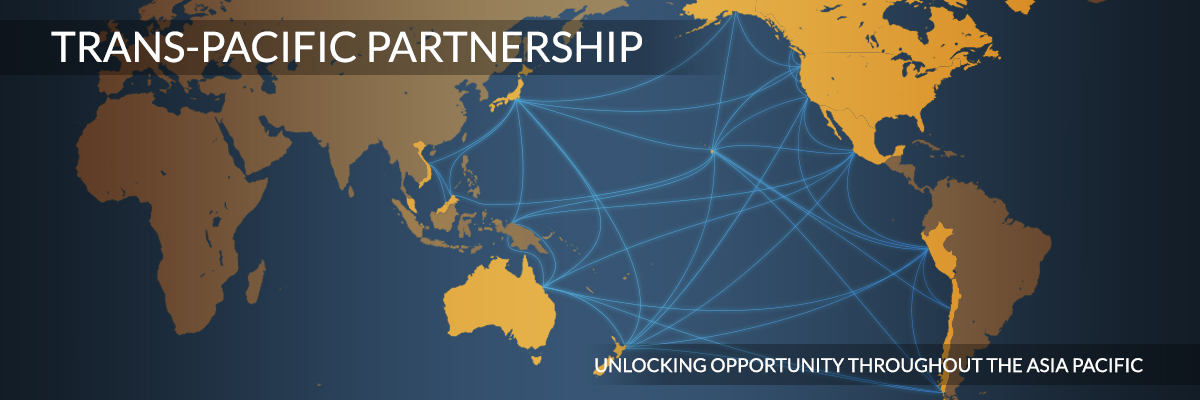
Burcu Kilic and Courtney Pine write: As the Trans-Pacific Partnership (TPP) negotiations approach their endgame, biologics exclusivity is still considered “one of the most difficult outstanding issues in the negotiation.”[2] Pharmaceutical companies seek longer data and marketing exclusivities to further delay market entry of cost-saving biosimilar drugs. Data exclusivity prevents follow-on pharmaceutical developers from relying on originators’ test data submitted for marketing approval while seeking such approval for its own product. The World Trade Organization’s (WTO) Agreement on Trade-Related Aspects of Intellectual Property Rights (TRIPS) requires some protection against unfair competition for this sort of data, but it does not require countries to adopt rules conveying exclusive rights over it in the same way as it does regarding patents.[3] Currently, the US provides 12 years of exclusivity for new biological products under the Biologics Price Competition and Innovation Act (BPCIA).[4] The provision providing 12 years exclusivity was buried inside the 20,000-page healthcare law, The Patient Protection and Affordable Care Act. A robust debate over what would be an appropriate exclusivity period, if any, was overshadowed by other controversial aspects of the bill commonly referred to as Obamacare.


Learning From Ebola

In 1976, Yambuku village school headmaster Mabalo Lokela felt sick when he returned from a trip to northern Zaire near the Central African Republic border. He had a high fever, diarrhea, and bleeding. Because he was initially believed to have malaria, Lokela was given quinine, but his symptoms got worse and he soon died. Shortly afterwards, those who had been in contact with Lokela also died. ... Almost four decades later, there is still no cure for Ebola, despite the fact that drug development on average takes about a third of this time frame, write William Fisher and Quentin Palfrey.

3D Printing And Public Policy

John Hornick writes: Although legal principles apply to 3D printing the same as they apply to any other technology, 3D printing has the unique potential to upset the legal status quo. It is the potential scale of 3D printing that may have profound effects on the law. 3D printing cuts across many areas of law, most types of technology, and almost all types of products. Eventually, anyone may be able to make almost anything. No one else will know they made it or be able to control it, which I call 3D printing away from control.

US High Court Removes Economics From Patent Law

Economics be damned. So said the US Supreme Court on 22 June, when it reaffirmed a 50 year-old ruling that limits how patent owners can license their patents. The court conceded the limit does not make economic sense, but asserted that patent law has its own logic. That could change many aspects of patent law, according to experts.

Special Report: ICANN Reviews Process For New Domains; Names Proposal For IANA Transition Done

Experts at last week’s meeting of the Internet Corporation for Assigned Names and Numbers (ICANN) in Buenos Aires reached a milestone with a final proposal from the ICANN working group for the transition of internet control away from the United States. But global governance without oversight remains difficult, as the ongoing review of the introduction of new generic top-level domains aptly illustrates.

US Political Trademarks And Campaign Branding 2016

As prospective presidential candidates prepare to plunge voters in the United States into campaign purgatory, it is time for pundits to examine how candidates are branding their political campaigns and crafting their messages to appeal to the electoral audience. With the presidential race beginning to heat up, which candidate will seize the message that resonates most with American voters? And what will that message be?

ICANN Is Not The Internet Content Police

ICANN's Allen Grogan writes: Allow me to say this clearly and succinctly – ICANN is not a global regulator of Internet content, nor should the 2013 Registry Accreditation Agreement (RAA) be interpreted in such a way as to put us in that role. Our mission is to coordinate, at the overall level, the global Internet's systems of unique identifiers, and in particular, to ensure the stable and secure operation of the Internet's unique identifiers. ICANN was never granted, nor was it ever intended that ICANN be granted, the authority to act as a regulator of Internet content.

US Approves New Loophole In Patent Protection

The US Federal Circuit Court of Appeals clearly likes patents. Over the years, the court has issued a long string of rulings that greatly strengthened the rights of patent owners. But several weeks ago, in Akamai Technologies v. Limelight Networks, the court reluctantly created a major loophole in patent protection.