
Year Ahead: Key IP-Related Issues, Dates At The WTO In 2015
This year is shaping up to be a busy one for the World Trade Organization, and intellectual property issues are among those coming up.

Original news and analysis on international IP policy
This year is shaping up to be a busy one for the World Trade Organization, and intellectual property issues are among those coming up.

The biotechnology industry is closely watching developments in the United States that could impact the industry in 2015. These include the regulatory framework for biosimilars, possible patent legislation, post-grant review procedure, and the consequences of the recent Supreme Court ruling banning the patenting of human genes. Hans Sauer, Deputy General Counsel for Intellectual Property at the Biotechnology Industry Organization (BIO), recently spoke with Intellectual Property Watch’s Catherine Saez. Sauer was asked to lay out the main developments to watch in the coming year.
South Africa's Supreme Court of Appeal has been blessed for the past few decades by having in its ranks judges who have experience and expertise in the field of Intellectual Property Law, writes law professor Owen Dean. With the recent retirement of Louis Harms, the bench at the Supreme Court of Appeal has been denuded of judges who can be regarded as IP experts. The paucity of IP experience on the bench is regrettably beginning to show.
In recent times the Supreme Court of Appeal has given three IP judgments in trade mark cases which, it is respectfully submitted, have been wrongly decided and are not in harmony with the principles of trade mark law and practice, Dean argues.
By Patrick Kilbride At no other time in history has humanity enjoyed such a boundless period of innovation. The human experience is literally changing day-to-day as new medicines and new technologies create solutions to seemingly insurmountable global challenges such as…
The Union for Affordable Cancer Treatment has sent a letter to the author of a much-noted Tufts University (US) study that found high development costs for medicines, with copies to the university administration. The letter requests transparency on the funding of the study and the press conference announcing the results, as well as copies of the study itself, which the group says was not made public, along with details to justify the result.
Welcome to (ANEPI), the first Intellectual Property News Agency of Ecuador. The Agencia de Noticias Especializada en Propiedad Intelectual (ANEPI) publishes news, analysis, interviews, feature articles, a weekly update and more on Ecuador and the region, at Articles are…
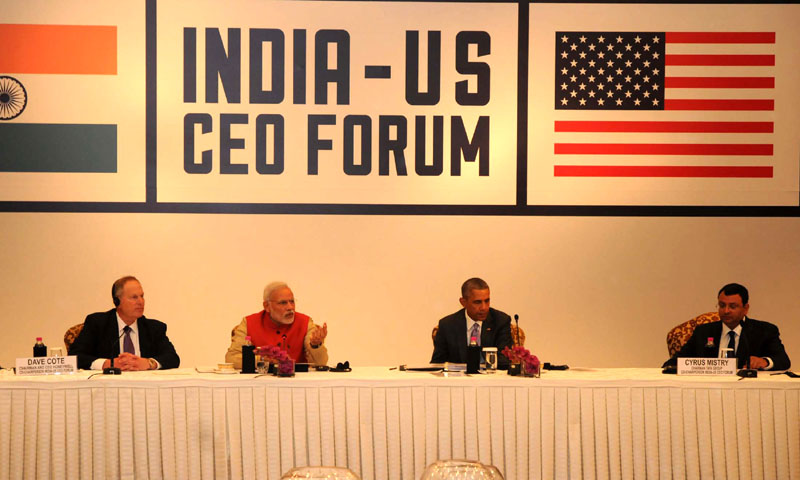
It is no secret that the United States has been scaling up pressure on India to adopt intellectual property measures similar to those common in the United States and the European Union. But to what extent does India’s new government led by the business-friendly Narendra Modi see eye to eye with US official position? Can India, the “pharmacy of the world”, resolve the friction between pharmaceutical patents and access to affordable medicines without putting off foreign investors? The vitriolic and polarising debate surrounding these questions has got a fresh lease of life following US President Barack Obama’s landmark three-day visit to India this week.
While Indian and American business moguls are bullish about the future, Indian generic drug-makers as well as health activists within and outside India are deeply anxious about the shape of things to come

Opposition proceedings in Europe have long served as a powerful tool for third parties to challenge the validity of a patent before the European Patent Office (EPO). Now, under the America Invents Act (effective September 2012), the United States (US) has two new procedures for challenging the validity of a patent before the US Patent and Trademark Office (USPTO): inter partes review (IPR) and post-grant review. Current statistics indicate a higher invalidation rate for IPRs as compared to EPO oppositions.

For many years Electronic Frontier Foundation Policy Analyst Jeremy Malcolm has been predicting the next year would be the pivotal year for the UN-led Internet Governance Forum (IGF). With the NetMundial Initiative being constructed these coming months and governments having not yet agreed to prolong the IGF mandate, the decade-old forum might be challenged to either move or become just one of many internet governance conference venues. And while some hope the future oversight over the internet’s underlying IANA function could become an experiment in shared global governance, others point out that more and more of the interesting questions of internet politics are decided elsewhere: national governments, trade negotiators, big data giants and cyberdominance strategists.
Welcome to (ANEPI), the first Intellectual Property News Agency of Ecuador. The Agencia de Noticias Especializada en Propiedad Intelectual (ANEPI) publishes news, analysis, interviews, feature articles, a weekly update and more on Ecuador and the region, at Articles are…
Teresa Hackett writes: “Copyright divide in numbers”, the graph on the first page of the newly launched ‘The Copyright Manifesto. How the European Union should Support Innovation and Creativity through Copyright Reform’ tells a story. In an illustration of the results of the European Union’s (EU) 2014 consultation on copyright, publishers, authors and collective management organizations express strong support for the current system, while end users and institutional users (such as libraries) are strongly in favour of copyright reform. So if copyright is supposed to benefit everyone, the copyright system sure isn’t working for everyone.

2014 brought major changes to the United States intellectual property system, particularly in the area of patent law. 2015 promises more of the same, as the new Supreme Court ruling in Teva Pharmaceuticals USA v. Sandoz attests. Here’s a discussion of Teva and other key cases and developments to watch this year.