Will KSR‘s Effect On Small Molecule Patents Be Limited?
Four recent Federal Circuit decisions suggest that small molecules are special and may be relatively unaffected by the US Supreme Court KSR decision, write Photon Rao and George Best.

Original news and analysis on international IP policy
Four recent Federal Circuit decisions suggest that small molecules are special and may be relatively unaffected by the US Supreme Court KSR decision, write Photon Rao and George Best.
Intellectual Property Watch asked Kanayo Nwanze of the International Fund for Agricultural Development to explain how to best create incentives for technology development aimed at helping smallholding farmers, how to achieve agricultural growth without damaging the environment, and how to use intellectual property to forward those goals.
 The third amendment of China's patent law will enter into force from 1 October, 2009. In this article, Wenting Cheng explores the major changes in substantive requirements for patent grant, post grant enforcement and adaptation of Chinese patent law to international norms on the protection of intellectual property.
 In a short videocast, Lammy offers his views on global public policy, patent backlogs, patent pools and the role of WIPO.
 Interview With Ellen ‘t Hoen, Senior IP Advisor At UNITAID, author of "The Global Politics of Pharmaceutical Monopoly Power."
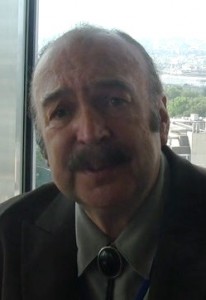 Indigenous people and governments like the United States' may be able to help each other, especially when it comes to protecting traditional knowledge while also using it combat global crises like climate change, says Terry Williams of the Tulalip Tribes. But additional protection for traditional knowledge is needed.
 Results of recent research on the impact of digital rights management (DRM) on the ability of users to take advantage of certain exceptions to copyright have introduced new systemic empirical data into the debate.
 A new study shows a copyright exception for legalising file-sharing is feasible, as a cease-fire in the “war on copying” emerges. A new social contract between creatives and society is needed, says media sociologist Volker Grassmuck.
 The recent commem-oration of Earth Day and World IP Day raised the importance of IP rights to innovation and jobs, says David Hirschmann of the US Chamber of Commerce. How about calling it “Green Innovation Week”?
 Developing countries would do well to demand a place at the table as negotiations for an Anti-Counterfeiting Trade Agreement undermine the multilateral approach to intellectual property policy making, argues Michael Geist.