Category Inside Views

Everything Is Obvious

Ryan Abbott writes: For more than sixty years, “obviousness” has set the bar for patentability.  Under this standard, if a hypothetical “person having ordinary skill in the art” would find an invention obvious in light of existing relevant information, then the invention cannot be patented.  This skilled person is defined as a non-innovative worker with a limited knowledge-base.  The more creative and informed the skilled person, the more likely an invention will be considered obvious.  The standard has evolved since its introduction, and it is now on the verge of an evolutionary leap: Inventive machines are increasingly being used in research, and once the use of such machines becomes standard, the person skilled in the art should be a person using an inventive machine, or just an inventive machine.  Unlike the skilled person, the inventive machine is capable of innovation and considering the entire universe of prior art.  As inventive machines continue to improve, this will increasingly raise the bar to patentability, eventually rendering innovative activities obvious.  The end of obviousness means the end of patents, at least as they are now.

South Africa Moves Forward With Creator Rights Agenda

Prof. Sean Flynn writes: The South Africa National Council of Provinces has cleared the Copyright Amendment Bill for a final vote. The bill would adopt an innovative fair use right as well as new rights of creators to receive royalties, partially own commissioned works, protect works through technological protections (with exceptions for fair use), establish of a tribunal for lower cost enforcement and regulate collective management companies. It establishes what is being referred to as a creator rights model for copyright reform including rights to create, own and earn.

Innovation And Regulation Of Gene-Edited Vegetables: An Interview With IP Lawyer Chris Holly

Chris Holly is a practicing intellectual property lawyer with extensive experience helping clients leverage IP portfolios in the agriculture, food, microbiology and biotechnology industries. Intellectual Property Watch's David Branigan interviewed Holly to gain his perspective on the technological, regulatory and intellectual property considerations of next generation plant breeding techniques, in particular those that involve gene editing using CRISPR technology.

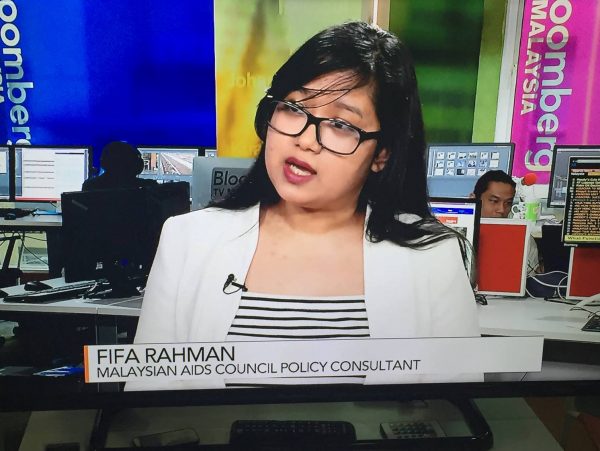
Fifa Rahman

Will US Drug Pricing Politics Change Intimidation Practices Globally?

Fifa Rahman writes: The global health world, particularly as concerns skyrocketing drug prices and patent abuse, is in a unique space in time. Recently, the Office of the United States Trade Representative (USTR) has been carrying on as per usual. It has threatened the Malaysian and Colombian governments at numerous junctures to prevent them from issuing compulsory licences – a completely legal mechanism which the US uses regularly - to access generic hepatitis C drugs. The Trump Administration has sent delegations to global health agencies in Geneva to intimidate them into reducing, or hiding, work on TRIPS flexibilities and fairer drug pricing.

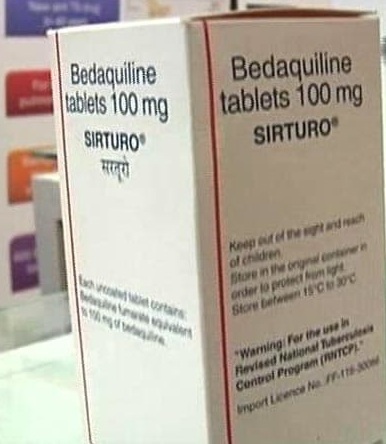
Pre-Grant Opposition Filed Against Janssen’s Bedaquiline Fumarate Application In India

Tuberculosis and its variant - Drug Resistant Tuberculosis (DR-TB) - are global public health emergencies. Current treatment regimens are expensive, tedious and prolonged: the overall treatment duration is 20 months or more, requiring daily administration of drugs that are more toxic and less effective than those used to treat drug-susceptible TB. Most of the drugs for treating TB are old and are known to have severe side-effects, writes Sandeep K. Rathod.

WHO’s Access Roadmap And The Art Of Accommodation Of Pharma Interest

The Roadmap to access to medicines, vaccines and other health products (Roadmap) to be discussed at this week's 144th session of WHO’s Executive Board accommodates vital interest of pharmaceutical TNCs on critical issues such as the approach to access, technical assistance on the use of TRIPS flexibilities and access to biosimilars.

Adoption of the Roadmap in its current form very well accommodates the interest of the Pharmaceutical TNCs and therefore one need not expect any proactive steps by WHO towards promoting access after the adoption of the Roadmap.

US Complaints About Technology Transfer In China: Negotiating The Endgame

Dean Pinkert writes: The United States Trade Representative (USTR) has been open about its view of the difficulties faced by US companies who claim – generally anonymously – that they have been forced to transfer technology to Chinese entities: “The fact that China systematically implements its technology transfer regime in informal and indirect ways makes it ‘just as effective [as written requirements], but almost impossible to prosecute.’” As I explain in this article, I believe such informality is not merely a barrier to prosecutions; it also presents conceptual challenges for US trade negotiators as they attempt to craft effective means to address the concerns of US companies doing business in China.

Supporting UHC And Better Explaining IP – The 2019 Pharma Industry Agenda

In 2019, IFPMA work will continue to focus on constructive engagement in supporting UHC and working with others to strengthen health care systems. The association will continue to engage with a range of stakeholders, particularly multilateral organizations, to better explain the benefits of IP and exchange ideas to address issues of coverage, capacity, affordability and sustainability of healthcare.

Time To Put A Stop To The Abuse Of Orphan Drug Regulation- The Latest Scandal

Ellen 't Hoen writes: Today, the Dutch Medical Journal (Nederlands Tijdschrift voor Geneeskunde) reported on the case of lutetium-octreotaat, a cancer drug developed by researchers in the Dutch Erasmus medical centre in Rotterdam. For the last 18 years, the hospital pharmacy made the medicine to treat their patients, keeping prices relatively low. But now the drug is being marketed by Swiss pharmaceutical giant Novartis, and its price has skyrocketed to Euro 23,000 an infusion from an original price of Euro 4,000 an infusion.

What’s The Cost Of Allowing Patent Theft? Don’t Wait To Find Out

Russ Genet writes: Protecting patents can be expensive, especially for companies competing in a global arena where aggressive startups, cut-rate competitors and industrial giants are all vying for the next big innovation to snatch up or move to market. However, failing to protect patents can be equally expensive. It is estimated that patent theft costs the US economy billions each year. And for the corporate patent owner, failing to defend patent rights today can significantly limit their value in the future.