Category Inside Views

UN Human Rights Council Begins; Freedom Of Expression Issues Highlighted By Article 19 Group

Today, the UN Human Rights Council begins its 39th Session (HRC 39) in Geneva – over the next three weeks the UN’s top human rights body will come together to discuss and act on some of the world’s most pressing human rights violations and abuses, writes civil society group Article 19. There is a lot on the HRC’s agenda for September, with a number of issues important to the right to freedom of expression to be considered, and it is essential that the Council acts on improving protections. In addition to important reports from OHCHR and from special procedures up for discussion, several thematic and country-specific resolutions will also be negotiated, to be considered for adoption on 20 and 21 September.
Not Just A Matter Of Matter: ‘The Way Forward’ For The UNCBD, NP And Half-Earth

Prof. Joseph Henry Vogel writes: Is information something or is it about something? That is essentially the question before the Fourteenth Conference of the Parties (COP) to the 1993 United Nations Convention on Biological Diversity (CBD), which meets from 19-27 November 2018. And it is a “$64 billion question”. The answer could determine the modality for “access to genetic resources” and “the fair and equitable sharing of benefits” (ABS), which is the third objective of the CBD. If the information conveyed in life is something, then the obligation of benefits could be orders of magnitude greater than if that same information is only about something. Re-phrasing the question: Are Users of genetic resources accessing information? Or are they accessing matter, the properties about which are diffused over organisms and jurisdictions? Information-as-the-answer leads to an economic rationale for tens of billions of dollars in payments per year. Properties-as-the-answer justifies the “peanuts” currently being paid.

New Health Ministry Of Chile Reaffirms Path To Compulsory Licence For Hepatitis C Drugs

Last week, Chilean Health Minister Emilio Santelices, appointed by President Piñera - who took office this year - rejected an attempt from company Gilead and a Big Pharma-related association of international drug makers in Chile to put down the resolution 399/2018 declaring public health justifications for the issuing of compulsory licences for sofosbuvir to treat a hepatitis C epidemic in Chile, that was issued by the previous government of Michele Bachelet, writes Luis Villarroel.

New Dutch Foundation To Address High Medicines Pricing Announces Plan To File Complaint With Competition Authority

The newly established Dutch Pharmaceutical Accountability Foundation has announced its first action to address unreasonably high medicines prices in the Netherlands. The Foundation will request the Netherlands Authority for Consumers and Markets to look into the price hike for the medicine chenodeoxycholic acid (CDCA) by the company Leadiant Biosciences Ltd (formerly Sigma-Tau). CDCA is used for the treatment of children and adults with cerebrotendinous xanthomatosis (CTX), a rare genetic metabolic disease that affects around 60 people in the Netherlands.

Conceptualizing Minimum Core Beyond Affordable Goods And Services – Trade For Human Rights As A Minimum Core Obligation

Prof. Sakiko Fukuda-Parr writes: The conception of the Minimum Core Doctrine around low cost goods and services is unnecessarily restrictive. It is also out of line with concerns to meet pressing and priority health needs of the population. It departs from the original concept of obligations of immediate effect. It limits the consideration of the wide range of measures that national governments should take to expand the enjoyment of the right to health such as by reversing damaging policies or setting new ones. A salient example is policy choices governments might make in the area of intellectual protection provisions in free trade and investment agreements.

South Africa’s Proposed Copyright Fair Use Right Should Be A Model For The World

Copyright laws the world over are under massive pressure to reform to fit the digital environment. One key area often in need of reform is in the exceptions to copyright that enable the digital practices. Without exceptions, common practices may be illegal, such as sharing photos on social media, making technical copies to send and stream, and uploading excerpts to closed networks for student access, writes a group of experts on the issue.

Dangers Of Means Plus Function Limitations In US Patent Prosecution

Broad patent protection is one of the goals when securing patent protection for inventions (i.e., new products and services). However, issues start to arise when the claim language becomes too broad. For example, broad claims might be construed as a means plus function limitation against the intentions of the patent prosecutor, and in some cases, those patents are invalidated as being indefinite. At least, this is the case with US patent prosecution. The patent laws of other jurisdictions treat means plus function style of claiming differently, and in my experience, less detrimental to the validity of the patent, writes James Yang.

Outcome Of ITU Global Regulators Symposium: Interview With Brahima Sanou

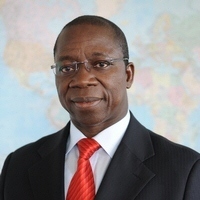
Heads of national information and telecommunications regulatory authorities gathered in Geneva for an annual symposium, and agreed on global best practice guidelines for the new digital ecosystem. After the meeting, Brahima Sanou, head of the UN International Telecommunication Union Development Bureau answered Intellectual Property Watch on the outcome of the meeting, and topics such as privacy and the digital divide.

Excessive Pricing And Sham Patent Litigation: The Pfizer And AbbVie Decisions

Frederick Abbott writes: Competition law is a critical tool in seeking to maintain some semblance of reasonable pricing in the pharmaceutical market. It is particularly important as legislators around the world appear extremely hesitant to address pharmaceutical pricing in meaningful ways, regrettably influenced by well-funded lobbying.

Two recent competition law decisions discussed below illustrate the importance of and challenges to regulating the pharmaceutical sector. In the first, the UK Competition Appeal Tribunal (CAT) partially upheld and partially reversed and remanded (pending briefing) a decision by the Competition and Markets Authority (CMA) fining Pfizer and Flynn close to £90 million for abuse of dominant position in the excessive pricing of an anti-epilepsy drug. The CAT decision is problematic because it creates unnecessary and unwarranted hurdles to findings of excessive pricing in the UK. In the second decision, the US Federal Trade Commission succeeds in proving that AbbVie engaged in abuse of monopoly power by engaging in sham patent litigation against two generic producers in order to delay market entry of competitive products. The Federal District Court found that AbbVie’s patent lawyers by “clear and convincing” evidence had knowingly pursued patent infringement claims without chance of success for no other purpose than to delay market entry.

WTO Panel On Australia’s Tobacco Plain Packaging: A Fact Dependent Analysis Of TRIPS Art 20

The WTO Panel’s long-awaited Reports in the four complaints against Australia’s tobacco plain packaging measures were circulated on 28 June 2018, more than 4 years since Panel establishment. Australia’s victory was absolute. It successfully defended its measures against every claim. Yet closer analysis of the Panel’s reasoning regarding specific provisions such as Article 20 of the TRIPS Agreement may cause some concern for policy-makers given how much the Panel’s conclusions relied on its assessment of the facts and evidence before it.

The Myth Of IP Incentives For All Nations – Q&A With Carlos Correa

Dr Carlos Maria Correa, an Argentinian economist and lawyer, is globally renowned for his expertise on international trade, intellectual property, health, technology transfer, investment policy and especially their impact on developing countries. He has authored several books and academic articles and been a visiting professor at several universities. Additionally, he has consulted with many United Nations agencies, the World Bank, and other regional and international organisations and has advised several governments on intellectual property, innovation policy and public health. Correa was a member of the UK Commission on Intellectual Property, of the Commission on Intellectual Property, Innovation and Public Health established by the World Health Assembly and of the FAO Panel of Eminent Experts on Ethics in Food and Agriculture.

Currently, he is the Director of the Centre for Interdisciplinary Studies on Industrial Property and Economics Law, at the University of Buenos Aires. He takes over as the Executive Director of the Secretariat of the Geneva-based South Centre from 1 July 2018. Correa recently engaged in an interview with Patralekha Chatterjee for Intellectual Property Watch. [Note: this interview is number two of two. The first was with Dr Othoman Mellouk.]

Прекратить неавторизованный доступ к генетическим ресурсам (а именно, Биопиратство): принцип ограниченной открытости

«Доступ к генетическим ресурсам» и «справедливое и честное распределение выгод от их использования» были камнем предкновения на всех тринадцати Конференциях сторон-участников Соглашения Организации Объединенных Наций от 1993 года о Биологическом разнoобразии (CBD). Слова в кавычках составляют третью задачу договора, которая переплетена с двумя первыми, а именно с задачей консервации и устойчивого использования. По первым буквам английского названия эта задача сокращенно обозначается как «ABS». Несмотря на 25 лет усилий и при размерах био-экономики порядка 1 триллиона долларов [1], было заключено немного контрактов [2]. И в этом малом количестве контрактов денежная часть так незначительна, что их участники не пожелали ее обнародовать. «Закон ABS Бразилии» от 2015, который вошел в силу 6 ноября 2017, позволяет чтобы отчисления от суммы продаж составляли всего одну десятую процента[3]. Используя выражение известного ученого-законоведа, потребитель платит «пшик» авторам биоресурсов.