Category Inside Views

EIFL Looks Forward To An Exciting 2019 At WIPO

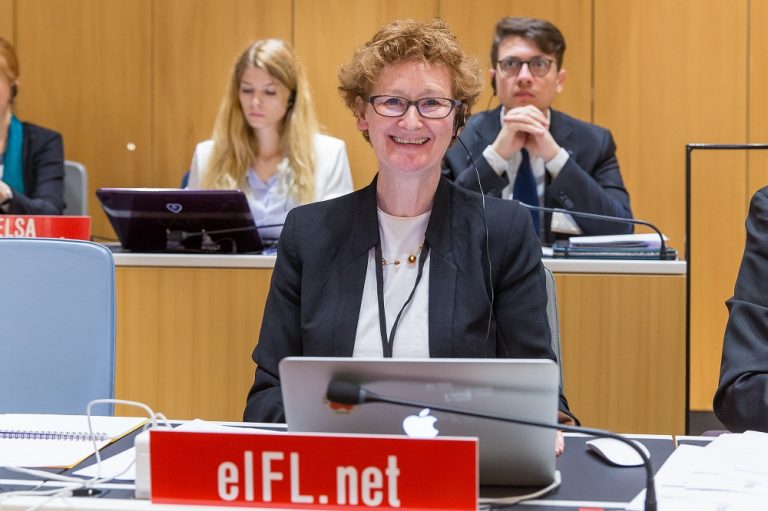
Teresa Hackett, EIFL Copyright and Libraries Programme Manager, attended the 37th meeting of the WIPO Standing Committee on Copyright and Related Rights (SCCR), the global body that sets international copyright law and policy, that took place in Geneva from 26 - 30 November 2018. During a full week advocating for libraries, EIFL participated in discussions on copyright limitations and exceptions, gave presentations at two civil society organized events, and engaged with government delegates from EIFL partner countries on library issues.

At the last SCCR of 2018, the main focus for libraries was on activities in the WIPO action plan 2018-2019; civil society presented ideas for the upcoming regional seminars on limitations and exceptions, as well as views on how to fix the draft broadcast treaty.


Defending Fair Use In South Africa

Sean Flynn, Peter Jaszi, and Mike Carroll write: On Wednesday the South African National Assembly vote on the Copyright Amendment Bill, which includes a new “fair use” right. Learned professors at the University of Stellenbosch have taken to calling the bill “shambolic”, and “an abomination.” It is certainly time for a little light to go with the heat.

Promoting Education Rights In South African Copyright Reform

Eve Gray and Desmond Oriakhogba write: The publishing industry is making a mad dash to defeat South Africa’s adoption of a fair use rights in Parliament on Wednesday. Their latest effort includes an alarmist petition being circulated among authors. It is interesting to note that, while one of the most persistent and loud complaints in these protests has been that the drafting of the new legislation was badly handled, our perception, along with a number of experienced observers in the process, has been that the level of discussion and debate; the degree of participation and engagement of government representatives; and the consensus on the needs to be addressed, was of a higher standard and the debate much better informed than in previous such attempts at reform over the past decades. It should also be noted that, while it is true that international publishers might have much to lose in the new law, local publishers, authors and students have much to gain. It is time to lower the heat and concentrate on the facts and context of what is before Parliament.

New Database Documents The Power Of TRIPS Flexibilities

Ellen 't Hoen writes: Medicines Law & Policy has published an on-line database of instances of the use of TRIPS flexibilities in public health contexts, titled the TRIPS Flexibilities Database. The publication of the TRIPS Flexibilities Database merits sharing a bit of its history because it has been a work in progress for some time. The database includes cases of actual use of TRIPS flexibilities and instances in which countries planned or threatened to use them. The collection of such cases started ten years ago as part of a research project to document and examine the uptake of the flexibilities contained in the TRIPS Agreement in medicines procurement.

The Bumpy Road To Selection Patents In India

Namrata Chadha, of K&S Partners, a Tier 1 Indian law firm, discusses various crucial aspects relating to patenting of selection inventions in India, especially in pharmaceuticals and chemicals. Summary: The patenting of selection inventions is not plain sailing in India. The patentability of such inventions must be determined in accordance with the general provisions of the Indian Patents Act, as there is no separate provision for the same in the Act. Of the said general provisions, the assessment of inventive step and testing under section 3(d) of the Indian Patents Act can be perceived as the most critical to patentability of selected novel species. Additionally, the concepts of ‘implicit disclosure’ and the contrasting views on ‘coverage vs disclosure’ frequently makes it challenging for applicants to defend their novel selection under the Indian scenario. Given the lack of enough precedents in India on this aspect, to date the fate of selection patents depends mostly on the judgement of the patent controllers. Not all hope is lost, however, since not only the Indian Patent Office, but also the IPAB and higher Courts have time-and-again acknowledged the existence of selection patents in India.

El mecanismo mundial multilateral de participación en los beneficios: ¿Dónde será el Bretton Woods del Siglo XXI?

Bretton Woods es el nombre de un lugar y también de un sistema. El lugar, Bretton Woods, cuenta con el Hotel Mount Washington y vistas majestuosas de las Montañas Blancas de New Hampshire. El sistema Bretton Woods es el conjunto de normas financieras elaboradas durante una conferencia en dicho hotel que se realizó en julio de 1944 [1]. El sistema creó un orden monetario y permitió la recuperación económica en los años de la posguerra. Para los economistas, Bretton Woods representa al sistema. El éxito del mismo demuestra cómo el pensamiento económico puede penetrar la esfera política y realizar un cambio duradero. John Maynard Keynes, el Darwin de la Economía, encabezó la delegación británica.

No se trata solo de lo material: “El camino a seguir” para el CDB de la ONU, el PN y Half-Earth (mitad de la Tierra)

¿Es la información “algo” o es “sobre algo”? Esa es esencialmente la pregunta ante la Decimocuarta Conferencia de las Partes (COP) del Convenio de las Naciones Unidas sobre la Diversidad Biológica de 1992 (CBD) que se reunirá del 19 hasta el 27 de noviembre del 2018. La pregunta es de 64 mil millones de dólares. La respuesta podría determinar la modalidad para el “acceso a recursos genéticos“ y una “distribución justa y equitativa de los beneficios” (ABS, por sus siglas en inglés), que es el tercer objetivo plasmado en el CDB. De ser la información transmitida en la vida “algo“ en sí y no “sobre algo”, los beneficios podrían ser mayores por órdenes de magnitud. Dicho de otro modo, los usuarios de recursos genéticos ¿están accediendo a información? o ¿están accediendo a materia, cuyas propiedades están esparcidas entre organismos y jurisdicciones? Si la la respuesta es “información”, se justifica un pago anual de decenas de miles de millones de dólares. En cambio, si la respuesta es “propiedades” justifica las “migajas“que se pagan actualmente.

The Global Multilateral Benefit-Sharing Mechanism: Where Will Be The Bretton Woods Of The 21st Century?

Joseph Henry Vogel writes: Bretton Woods is the name of a place and also of a system. Bretton Woods-the-place boasts the Mount Washington Hotel and majestic views of the White Mountains of New Hampshire. Bretton Woods-the-system is the set of financial rules drafted during an international conference held at the hotel from 1 to 22 July 1944 [1]. The system created monetary order and allowed postwar recovery. For economists, Bretton Woods signifies the system. Its success illustrates how economic thinking can penetrate the political sphere and make lasting change. John Maynard Keynes, the Darwin of economics, led the British delegation.

Interview With The Korea IP Office’s Acting Commissioner

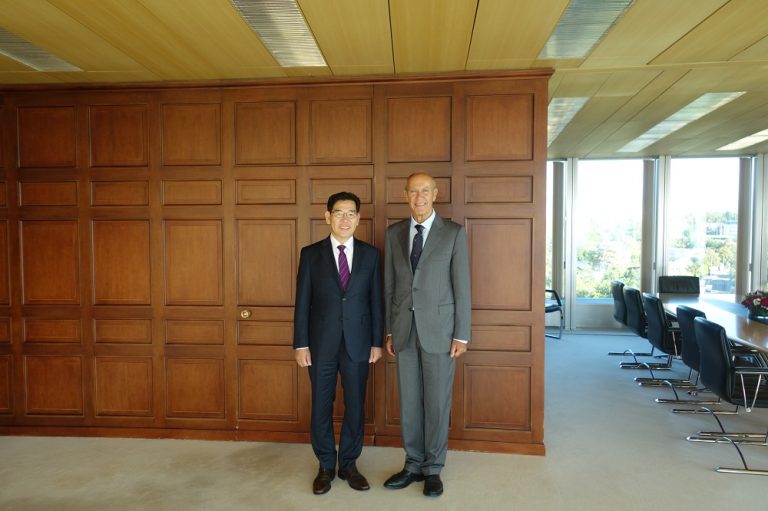
Korean Intellectual Property Office (KIPO) Acting Commissioner Kim Tae Man is attending the annual World Intellectual Property Organization General Assembly this week. In that context, he sat down with Intellectual Property Watch, and in a mutually prepared Q&A, he described some of KIPO’s policies and future plans, collaboration with WIPO, international partnerships, and regional efforts toward global harmonisation.

Why Follow-On Pharmaceutical Innovations Should Be Eligible For Patent Protection

Christopher M. Holman writes: Despite the important role of intellectual property rights in incentivizing innovation, the patenting of pharmaceutical innovation is frequently accused of impeding access to medicine. Criticism of the prevailing patent regime has focused in particular on patents directed towards follow-on pharmaceutical innovation, i.e., innovation that seeks to improve upon existing pharmaceuticals and their use in treating patients. Patents on follow-on innovation are often derided as “secondary” patents, with the implication that the underlying inventions are somehow lesser in nature than the subject matter claimed in “primary” patents, i.e., the drug active ingredient per se. While implicitly acknowledging the legitimacy of primary patents, critics of so-called secondary patents contend that patents on follow-on innovation allow drug innovators to “evergreen” their products, i.e., to extend the period of patent exclusivity beyond the expiration of any original patent on the drug active ingredient, and in doing so contribute to the high cost of drugs, thereby limiting the ability of patients to access the drugs upon which they have come to rely.

Brazilian Supreme Court Refuses To Judge Its Biggest Case On IP And Access To Medicines, And Benefits Big Pharma With Undue Monopolies

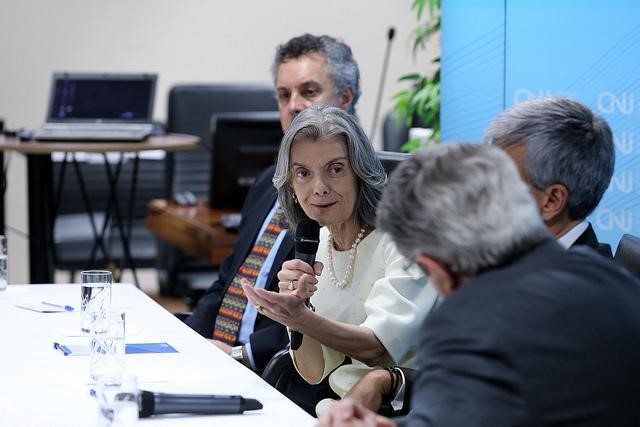
Marcela Fogaça Vieira and Pedro Villardi write: The Brazilian Supreme Court (STF) has mysteriously cancelled the judgment of the most important case regarding intellectual property and health ever to be decided by the court. On 28 June, the date of the judgment was set for 6 September. The cancellation occurred on the eve of the judgment, something very rare in the practice of the Court. The lack of decision on the case only benefits the transnational companies awarded with hundreds of undue monopolies. Just a few days before, the President of the STF - Judge Carmem Lucia - had a meeting with Interfarma, the association of multinational pharmaceutical companies in Brazil.

Fifa Rahman

Extended Monopolies On Biologic Drugs – A Warning To Developing Countries

Historically, the US has been the primary demandeur of maximalist IP norms in FTAs. Pharmaceutical IP is market-driven, and this is no different for biologic drugs, which dominate the list of bestselling drugs worldwide, making them important economic commodities. Developing country governments must take note of the US pushing for biologics exclusivity through NAFTA as this signifies an effort to change norms worldwide.