Intellectual Property Watch

Intellectual Property Watch

Giving Process Its Due When An SDO Changes Rules Of The Game

George Willingmyre writes: The process a Standards Developing Organization (SDO) employs to revise its patent policy is an aspect of the SDO’s competitive posture in the global marketplace. A dearth of research exists on the processes SDOs employ to revise their patent policies. Generally, the processes an SDO uses to revise its patent policy are part of the governance processes of the SDO. As a baseline, the governance processes of an SDO must be consistent with the applicable legal system defining what is acceptable and unacceptable behavior. What an SDO says about its governance processes is a further consideration. Thus the procedures themselves, the procedures’ relationship to the applicable legal system and what the SDO says about the procedures all play a role in understanding how an SDO revises its patent policy.

Support IP-Watch: An Appeal To Readers

Intellectual Property Watch needs your financial support. As one of our readers, you know that IP-Watch plays a vital role in international policymaking on intellectual property and innovation through its independent, reliable, balanced and dedicated news coverage. But like other…

Rebuttal Letter – WIPO Human Resources Report A “Whitewash”

Ed Flaherty writes: Please be advised that I represent the duly elected members of the World Intellectual Property Organisation's Staff Council. On their behalf, I must respond to the inaccuracies contained in the article entitled: "WIPO Human Resources: All Is Harmony, Secretariat Says" published on the IP-Watch website on 29 August 2016.

The HRMD report from which this article is lifted presents a whitewashed and totally unrealistic picture of the current situation at WIPO.

Updated List Of Geneva Delegates Responsible For IP

There are many, many committees, councils, panels, meetings, receptions, conferences, assemblies - not to mention countless private lunches, coffees and other contacts - during the year in Geneva that address policy issues related to intellectual property, innovation, research & development and the like. Intellectual Property Watch provides an indispensable, up-to-date list of who you need to talk to when you want to get the message across or follow the action.

A Comprehensive And Fair Solution To The Price Of Medicines

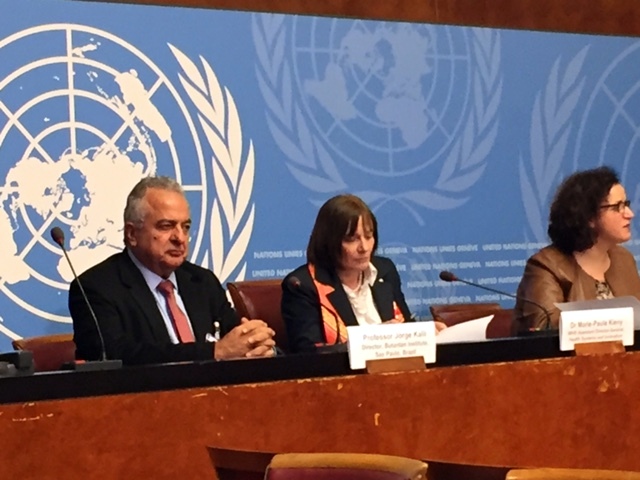
WHO's Marie-Paule Kieny writes: Amid public outcry, political battles and media articles, no one seems to understand how, exactly, medicines prices are set. For years, pharmaceutical research companies have cited the large investment of time and resources that go into bringing a drug to market. More recently, they argue that their medicines are actually saving money by preventing expensive medical interventions like surgery and hospitalization.

But whatever the argument used, the price setting mechanisms for commodities that are inextricably linked to people’s health and survival must be made more transparent so that we can, as a global community, devise effective solutions.

IP-Watch Seeking Writers In Brussels, Washington

Intellectual Property Watch is seeking occasional Freelance Writers based in the Washington DC Metro area, San Francisco Bay area, and in Brussels or London. Writers will assist with reporting, writing and publishing stories on international intellectual property and innovation policymaking and law. We are looking for writers who are experienced with delivering multimedia content on a digital news platform and through social media.

ICTSD: Specialised Intellectual Property Courts – Issues And Challenges

The establishment of the WTO Agreement on TRIPS (Trade Related Aspects of Intellectual Property Rights) and the proliferation of plurilateral, bilateral and regional agreements have significantly contributed to the increasing complexities of the intellectual property system. The emergence of new actors, reflecting conflicting expectations and the adoption of new trade agreements that often exceed the standards set by the TRIPS agreement, have resulted in a new density of rules that have further fragmented the international system. These developments have unavoidably called for further analysis by academics and stakeholders.