Intellectual Property Watch

Intellectual Property Watch

Copyright And The Public Interest: Not Necessarily Competing Forces
Copyright protection advances the public interest, and good public policy must properly consider “the role of intellectual property as a tool for economic emancipation, a catalyst for cultural diversity, and a powerful protector of individual dignity and fundamental human rights,” argues RIAA’s Neil Turkewitz.
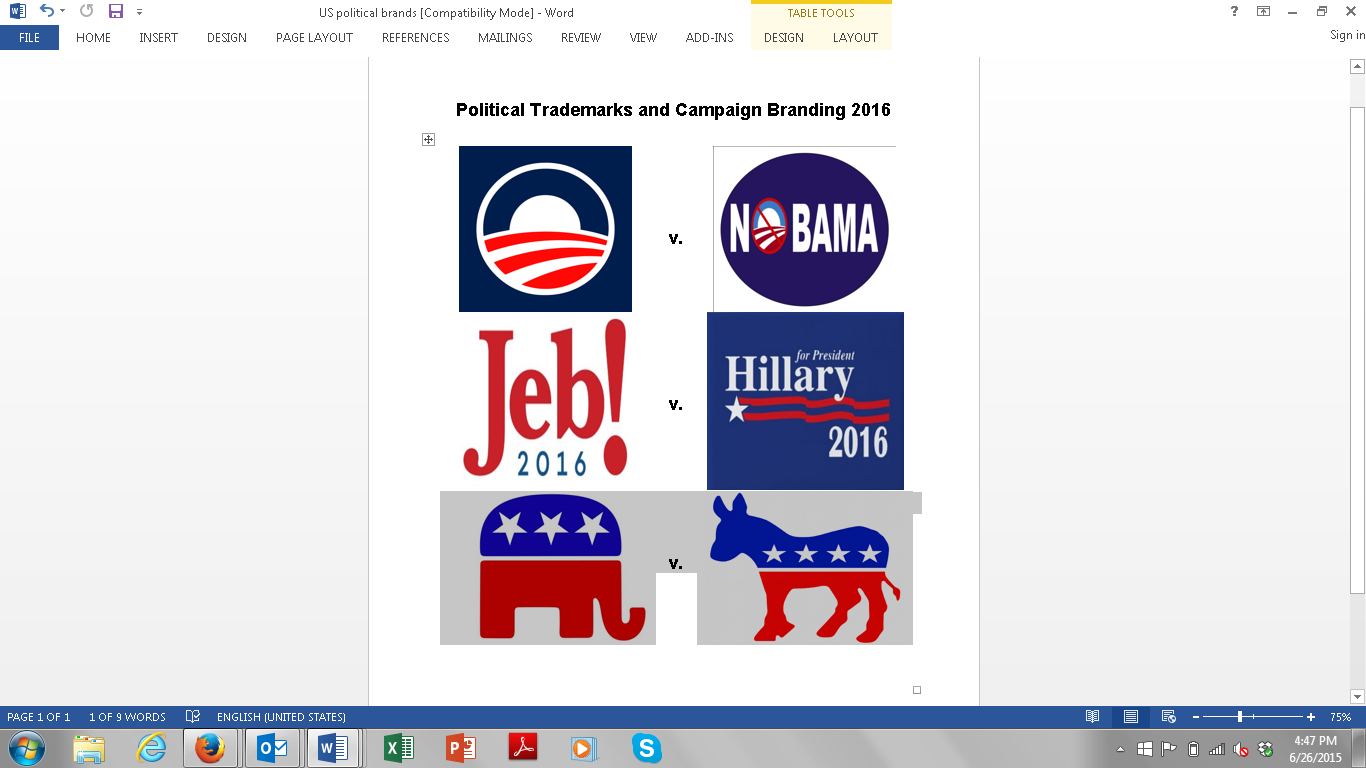
US Political Trademarks And Campaign Branding 2016

As prospective presidential candidates prepare to plunge voters in the United States into campaign purgatory, it is time for pundits to examine how candidates are branding their political campaigns and crafting their messages to appeal to the electoral audience. With the presidential race beginning to heat up, which candidate will seize the message that resonates most with American voters? And what will that message be?

ICANN Is Not The Internet Content Police

ICANN's Allen Grogan writes: Allow me to say this clearly and succinctly – ICANN is not a global regulator of Internet content, nor should the 2013 Registry Accreditation Agreement (RAA) be interpreted in such a way as to put us in that role. Our mission is to coordinate, at the overall level, the global Internet's systems of unique identifiers, and in particular, to ensure the stable and secure operation of the Internet's unique identifiers. ICANN was never granted, nor was it ever intended that ICANN be granted, the authority to act as a regulator of Internet content.

Report: European Patent Office Tapped Computers

A story in the German newspaper Süddeutsche Zeitung says, according to an unofficial translation, that it has obtained an internal report that shows the European Patent Office (EPO) tapped two general use computers it had identified as a source for leaked information. The news comes on the eve of a meeting of the EPO president with the European Parliament.

US Shifts Stance On Drug Pricing In Pacific Trade Pact Talks, Document Reveals

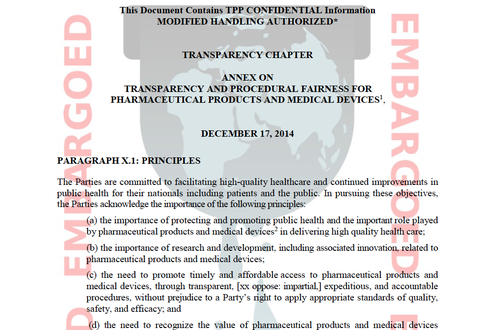
From the New York Times: WASHINGTON — Facing resistance from its Pacific trading partners, the Obama administration is no longer demanding protection for pharmaceutical prices under the 12-nation Trans-Pacific Partnership, according to a newly leaked “transparency” annex of the proposed trade accord.

But American negotiators are still pressing participating governments to open up the process that sets reimbursement rates for drugs and medical devices. Public health professionals, generic drugmakers and activists opposed to the trade deal, which is still being negotiated, contend that it will empower big pharmaceutical firms to command higher reimbursement rates in the United States and abroad, at the expense of consumers.

African Civil Society: Disillusionment, Mistrust In Bonn

We, the African civil society organisations participating in the Bonn Climate Change Conference, are gravely concerned about the progress of negotiations and wish to express our utmost disillusionment on the mistrust reigning the corridors of the new World Conference Centre here in Bonn.

Firm Performance In Countries With & Without Open Copyright Exceptions

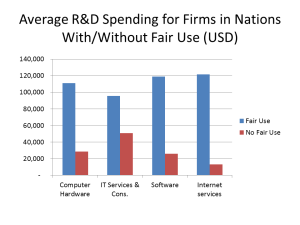
Mike Palmedo writes: This post presents preliminary data showing that firms in industries sensitive to copyright can succeed in countries other than the US when copyright limitations include fair use. It is an early product of an interdisciplinary project at American University, in which legal researchers are working with economics professor Walter Park to study how country’s copyright exceptions effect economic outcomes. The project has been undertaken as part of American University’s larger role coordinating the Global Network on Copyright User Rights. The research supports and expands on other recent research attempting to measure the value of fair use abroad.

Did The WHO Just Invite Corporates To Set Health Policy?

From the New Minute: The Director General of the World Health Organisation (WHO) Dr. Margaret Chan has invited the private sector, civil society and academia among others, to join a dialogue on how non-state players can work with the global body to enhance public health work. A leading voice in this configuration is the United States-based Global Health Council (GHC) whose strong and spirited response to the invitation has set the cat among the pigeons in some countries (including reportedly with India) and certain sections of non-governmental organisations (NGOs).

Statement: Blumenthal Offers Amendment On Trade Transparency

Senators Blumenthal, Brown, Baldwin, and Udall introduced today a trade negotiation transparency bill that would require that all formal U.S. proposals for trade agreement restrictions on domestic regulations be posted on a website. This is a common sense policy that should be broadly supported. The bill would require policies similar to the transparency policies currently followed by the European Union and by intergovernmental organizations that set similar minimum regulatory standards. But it would be a major change in the current process for trade negotiations followed by the U.S. Trade Representative, which are infamously secretive, write Sean Flynn and David Levine.

Dissecting The “Internet Freedom” Agenda

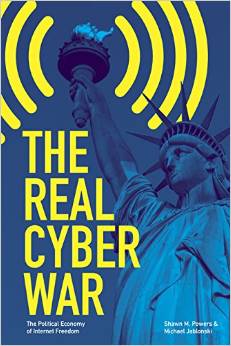
Both radical civil society organizations and mainstream defenders of the status quo agree that the free and open internet is threatened: see for example the Delhi Declaration, Bob Hinden’s 2014 Year End Thoughts, and Kathy Brown’s March 2015 statement at a UNESCO conference. The threats include government censorship and mass surveillance, but also the failure of governments to control rampant industry concentration and commercial exploitation of personal data, which increasingly takes the form of providing “free” services in exchange for personal information that is resold at a profit, or used to provide targeted advertising, also at a profit, Richard Hill writes in a review of the new book, The Real Cyber War: The Political Economy of Internet Freedom.