Guest contributor

Guest contributor

JPO Refused To Register Wordmark “ROMEO GIGLI” Due To Lack Of Consent From Italian Fashion Designer

In a recent decision, the Appeal Board of Japan Patent Office (JPO) refused to register trademark application no. 2015- 100245 for a red-colored word mark “ROMEO GIGLI” in gothic script (see below) designating goods of Class 24 and 25 on the grounds that applicant failed to obtain a consent from Italian fashion designer, Romeo Gigli, based on Article 4(1)(viii) of the Trademark Law, writes Masaki Mikami.

Julia Reda-Led Panel Discussion Reveals – Publishers’ Right Faces High Resistance From Academic Circles

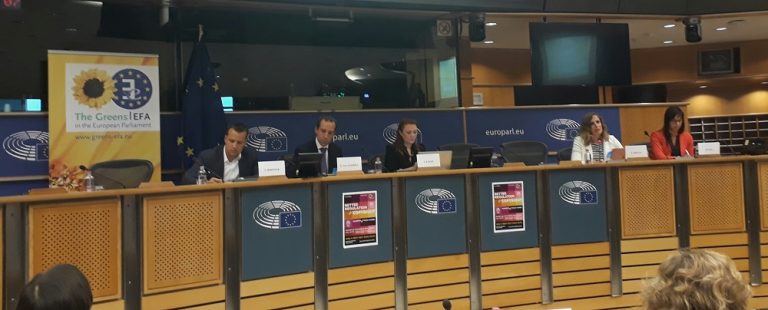
The Greens/EFA Group in the European Parliament organised last autumn the panel discussion titled, “Better Regulation for Copyright: Academics Meet Policy Makers” in Brussels. This is an initiative that together with a recently published study questions whether national and EU neighbouring rights for publishers are actually lawful. The article below gives an overview of the panel discussion and movements that followed in the legislative process in Brussels, with a special focus on the press publishers right, writes Ines Duhanic.

Heading Off Global Action On Access To Medicines In 2018

At the dawn of 2018, political and health leaders must seize the growing momentum and opportunities to tackle the protracted challenges of access to medicines that undermines efforts to save lives and improve health as committed under the Agenda 2030 SDG [Sustainable Development Goals] by all UN member states, write Jorge Bermudez and Viroj Tangcharoensathien.

Libraries – A Trio Of European Court Rulings

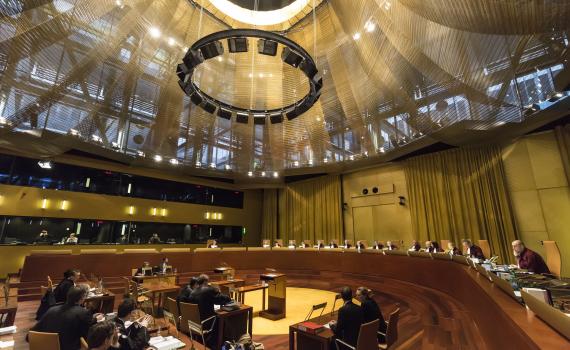
In recent years, the Court of Justice of the European Union (CJEU), Europe’s highest court, has made three important rulings concerning digital library activities in Europe, Vincent Bonnet and Barbara Stratton write on the EIFL blog.

Morrison & Foerster’s 2018 Predictions On Intersection Of Technology And Law—From Web Scraping To Blockchain

From the Morrison & Foerster Socially Aware blog: Happy 2018 to our readers! It has become a Socially Aware tradition to start the New Year with some predictions from our editors and contributors. With smart contracts on the horizon, the Internet of Things and cryptocurrencies in the spotlight, and a number of closely watched lawsuits moving toward resolution, 2018 promises to be an exciting year in the world of emerging technology and Internet law.

Japan Patent Office Invalidates The Word Mark “Bord’or” In Relation To Bordeaux Wines

In a decision in an invalidation trial jointly claimed by INSTITUT NATIONAL DE L’ORIGINE ET DE LA QUALITE and CONSEIL INTERPROFESSIONNEL DU VIN DE BORDEAUX, the Invalidation Board of Japan Patent Office (JPO) ordered the invalidation of trademark registration no. 5737079 for a word mark “Bord’or” in script fonts (see below) in violation of Article 4(1)(vii) of the Trademark Law, writes Masaki Mikami.
Changes In EU Data Law: The GDPR Requirements And How To Meet Them

Linkilaw writes: Statistics show 69% of SME owners have heard about the General Data Protection Regulation (GDPR) and 70% admitted to being unaware it will come into effect from 25th May 2018. It is important for small business owners to understand what the GDPR is as well as its application. The GDPR is the outcome of four years of constant discussions, investigations, and amendments made by the EU to update its data privacy rules and regulations.The GDPR will replace the Data Protection Directive established in 1995, creating a greater territorial scope and stricter penalties for those states members, and business dealing with Personal Data, who fail to keep and handle data according to the new regulation. The GDPR was finally approved by the EU Parliament on 14 April 2016 but will apply from 25 May 2018, giving a two-year transition period for all EU members states. This is a call for all SME’s: you need to prepare now!

What Could Have Entered The Public Domain On January 1, 2018?

Current US law extends copyright for 70 years after the date of the author's death, and corporate “works-for-hire” are copyrighted for 95 years after publication. But prior to the 1976 Copyright Act (which became effective in 1978), the maximum copyright term was 56 years—an initial term of 28 years, renewable for another 28 years. Under those laws, works published in 1961 would enter the public domain on January 1, 2018, where they would be “free as the air to common use.” Under current copyright law, we’ll have to wait until 2057.1 And no published works will enter our public domain until 2019. The laws in other countries are different—thousands of works are entering the public domain in Canada and the EU on January 1, writes the Duke University Center for the Study of the Public Domain.

Obviousness In The Wake Of Arendi

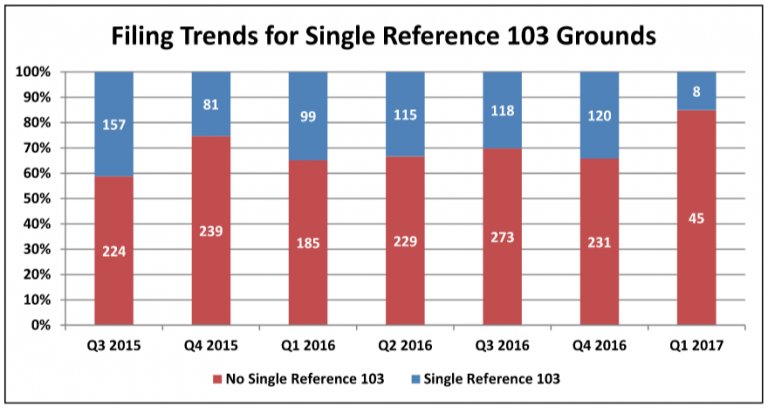
Since the U.S. Court of Appeals for the Federal Circuit issued its opinion in Arendi S.A.R.L. v. Apple Inc. last August,[1] many patent commentators have asserted that the decision marked a significant change in the analysis of obviousness under 35 U.S.C. § 103, especially as a weakening of single-reference obviousness grounds. Notwithstanding this decision, petitioners and the Patent Trial and Appeal Board have continued to rely on single-reference obviousness to assert and find that claims are obvious, write Amy Simpson and Kyle Canavera.

New UNCTAD, GIZ Toolbox: How To Achieve Policy Coherence For Local Production And Access To Medicines

What do investment, trade, intellectual property, health financing, R&D, industrial and medicines regulation policy have in common? They are all important building blocks for the successful promotion of local pharmaceutical manufacturing. As more and more countries are looking into building their own pharmaceutical production capacities, they need to ensure strong policy coherence to be successful.

EU-MERCOSUR FTA Puts At Risk Access To Medicines In Brazil, New Impact Assessment Study Finds

The European Union (EU) is currently negotiating a free trade agreement (FTA) with the four founding members of Mercosur (Argentina, Brazil, Paraguay and Uruguay), which comprises a chapter on intellectual property rights (IPR). A new round of negotiations is taking place from November 29th to December 8th in Brussels[1]. Word is that they aim to announce the closure of the agreement at the next World Trade Organization (WTO) Ministerial Conference that will be held from 10-13 of December in Buenos Aires and the clock is ticking to close all the chapters before that. The authors have conducted a study that shows the adoption of the measures proposed by the EU could put the sustainability of access to health policies in Brazil at risk, as they could sharply increase public expenditures on medicines.