Guest contributor

Guest contributor

How To Discover Valuable Patents

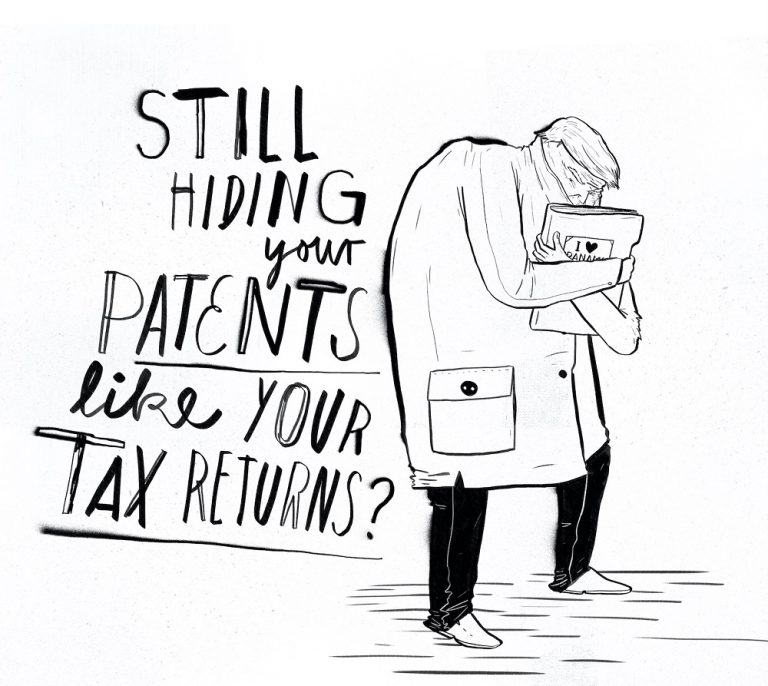
Bastian July writes: In May 1968, the submarine USS Scorpion disappeared after a tour of duty in the North Atlantic. The initial search area was a circle twenty miles wide and thousands of feet deep. Instead of asking one or two experts for input, Navy officer John Craven assembled a large group of independent experts with a wide range of knowledge. The group included mathematicians, submarine specialists, salvage men and many others. Combining their knowledge, Craven was able to estimate the submarine’s likely location. It was found 200 yards from the group’s collective estimate. But can you also turn to the Wisdom of the Crowd when it comes to discovering the fortunes lying hidden in patents?


Adopting An Open Innovation Perspective For Patent Policy For The Internet Of Things

The Internet of Things is a prototypical technology space, where small and medium sized enterprises (SMEs), universities and their spin-outs as well as big corporations alike could constitute a fruitful innovation ecosystem. All these players could thrive in the spirit of Open Innovation, so to collectively re-invent the future of the internet and patents could take the role of promoting tech transfer, knowledge exchange and spur secondary markets for intellectual property.

Ending Unauthorised Access To Genetic Resources (aka Biopiracy): Bounded Openness

“Access to genetic resources” and “the fair and equitable sharing of benefits arising from their utilization” have beleaguered all thirteen Conferences of the Parties to the 1993 United Nations Convention on Biological Diversity (CBD), a group of academics writes. The expression in quotes constitutes the third objective of the Convention and is intertwined with the first two, conservation and sustainable use. It goes by the acronym “ABS”. Despite 25 years of efforts and an annual bio-economy of nearly one trillion dollars, few contracts have ever been concluded. And of those very few, the monetary benefits are so low that contracting parties are loathe to disclose them. The “Brazilian ABS Law” of 2015, which came into effect on 6 November 2017, even allows royalties on net sales to be as low as one tenth of one percent. In the words of one distinguished legal scholar, Users are paying “peanuts for biodiversity.”

New IP-Sharing Framework To Accelerate R&D

Pharmaceutical R&D constantly leads to the generation of new intellectual property (IP), from clinical trial data to libraries of promising compounds. Not all IP assets generated by a company are used in their future R&D. When this happens, companies can choose instead to share them with other third-party researchers, under licensing agreements. The Access to Medicine Foundation has worked with BIO Ventures for Global Health (BVGH) to develop a framework for identifying which IP assets are most difficult for companies to share, yet most likely to speed up R&D of the medicines and vaccines needed by people living in low- and middle-income countries (LMICs), write Clarke B. Cole and Katie Graef.

What We Know – And What We Don’t – About Counterfeit Goods And Small Parcels

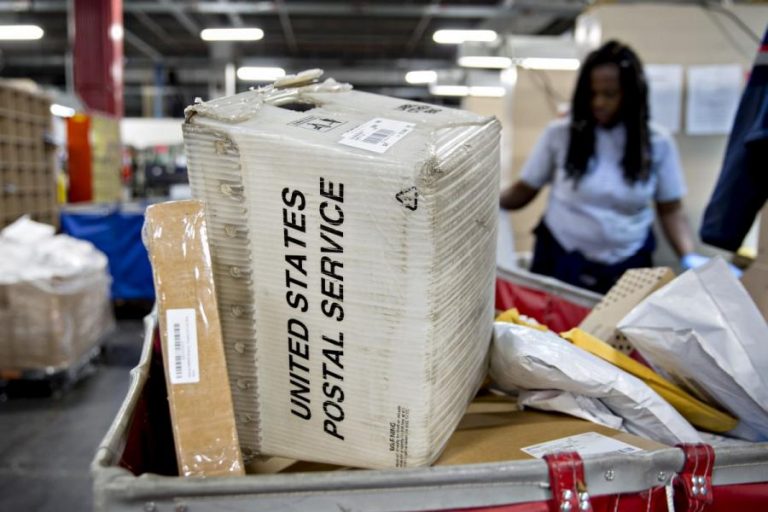
Kasie Brill writes: Cross-border e-commerce is growing exponentially. Consumers can purchase products from all over the world and have them delivered straight to their doors with just the click of a button. In fact, the U.S. Postal Service’s (USPS) international small parcel business increased 232% from 2013 to 2017, when it received nearly half a billion packages.

Out of those half a billion packages, USPS only had critical safety information on 36% of them. In other words, millions of packages reached American consumers with little or no security screening at all. Though most of these packages contained exactly what the customer ordered, counterfeiters have discovered that small parcels are an easy means to distribute fake and often dangerous goods.

Fair Use/Fair Dealing Week 2018 Highlights Balance In The Copyright System

The fifth annual Fair Use/Fair Dealing Week took place February 26–March 2, 2018, growing to 153 participating organizations—as well as numerous individuals—celebrating the important and flexible doctrines of fair use and fair dealing worldwide. This year’s event was organized by the Association of Research Libraries (ARL) and participants included universities, libraries, library associations, and many other organizations, such as Authors Alliance, the Center for Democracy & Technology, the Electronic Frontier Foundation, the R Street Institute, and Re:Create. Sixty ARL member institutions contributed a wide range of resources this year. Fair Use/Fair Dealing Week was observed around the globe by participants in such countries as Australia, Canada, Colombia, Greece, and the United States.

Copyright For Libraries Around The World In 2018

Copyright laws around the world are constantly changing in an attempt to adapt – or react – to the digital world. These changes can have a major impact on how libraries function and on the public service they provide. While some reforms offer new possibilities and legal certainty, others look backwards and seek to use the law to restrict the ability of libraries to guarantee meaningful information access to their users, IFLA writes.

A Brief Sketch Of Privilegio In The Venetian Renaissance

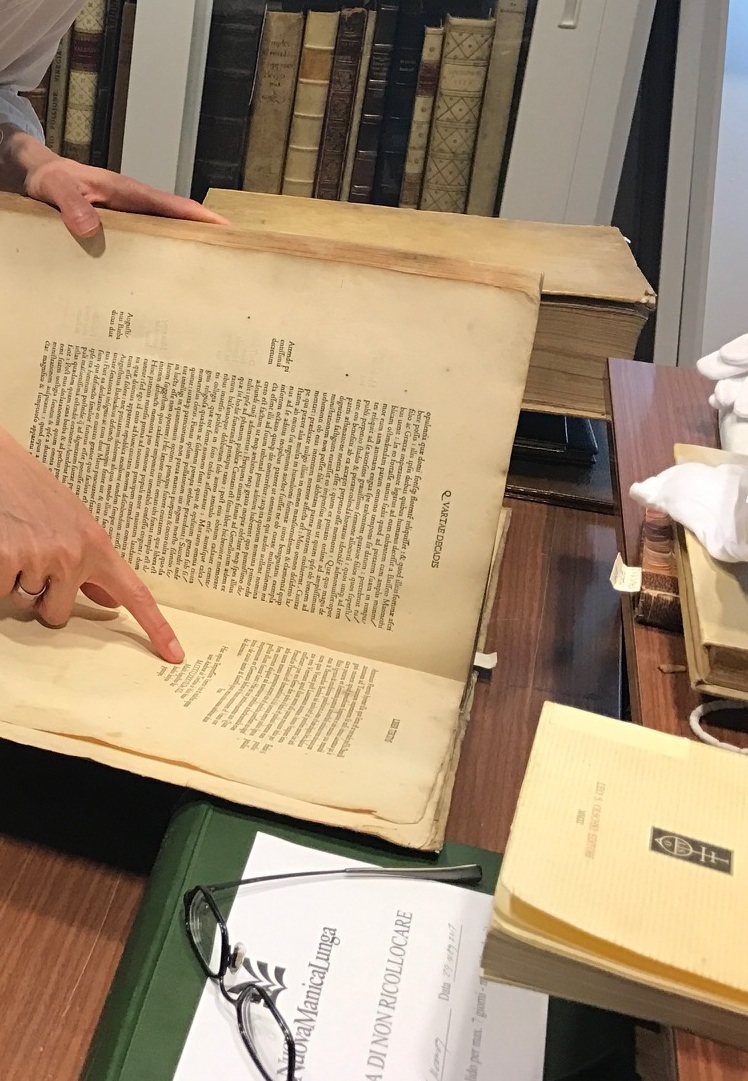
Gavin Keeney writes: As a type of historical morality tale, especially given arguments currently before the European Commission regarding copyright reform and “neighboring rights,” this short treatise addresses the origins of copyright in the Venetian Renaissance in the late 1400s under the aegis of privilegio, notably first granted to authors (author-publishers) versus printers (printer-publishers). Subsequently, printers as publishers would command the lion’s share of such rights to works. Arguably, Venetian privilege transferred the immemorial aspect of written works (here considered “moral rights” for works) to authors in a casual, yet emphatic manner leading to modern copyright. With contemporary copyright nominally belonging to authors, but in fact belonging by expropriation to presses and platforms, it is likely that one of the few solutions, short of benevolent presses fully sharing rights with authors, is for moral rights to return to works by way of the author renouncing copyright but refusing the arrogation of such renounced rights to presses and platforms.

Analysis Of The Working Group On Enhanced Cooperation On Public Policy Issues Pertaining To The Internet

Richard Hill writes: The Tunis Agenda calls for enhanced cooperation to address issues related to the Internet and its governance. However, there was no clear agreement on how to implement enhanced cooperation, so a Working Group on Enhanced Cooperation (WGEC) was convened to discuss that matter and to prepare recommendations. A first WGEC group failed to find agreement, so a second group was formed. In 2018, fifteen years later, the digital divide is worse, spam is worse, and security and privacy have become key issues; the fact that ICANN operates under the jurisdiction of the USA is also at times raised. Some are of the view that the evidence shows that current mechanisms are not working.

Copyright And Artificial Intelligence

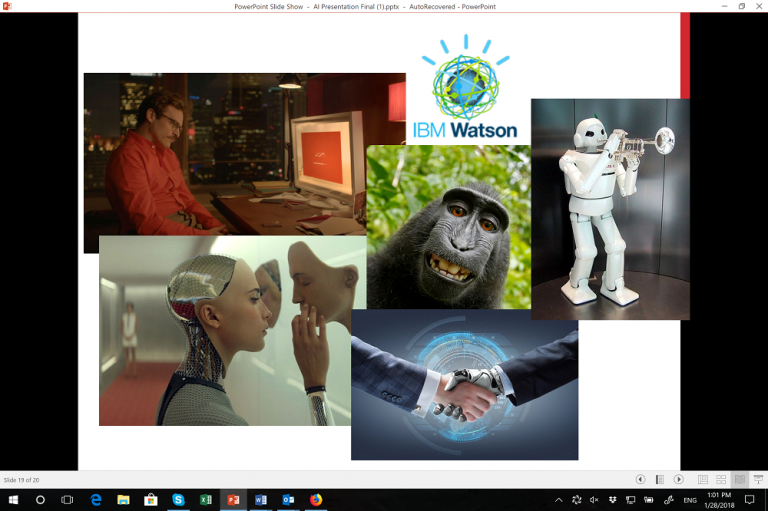
Ed Klaris writes: Recently, a photographer whose camera was used by a monkey to take a selfie settled a two-year legal battle against an animal rights group about copyright over the image. The lower court had denied the monkey a copyright, but the photographer did not want to face the appeals court. Whether monkeys can create copyrighted works is not exactly a pressing question for our time. But the important issues raised by this case and others about who owns creative work in an increasingly automated world are crucial to the future of copyright. With the advent of AI software, computers -- not monkeys -- will potentially create millions of original works that may then be protected by copyright, under current law, for more than 100 years.

The Top 5 Issues In EU Medicines Policy For 2018 (Including IP)

Yannis Natsis writes: There is a breakdown in communications between the pharmaceutical industry and Ministers of Health in Europe. The newly-deployed tactic of public, personalised attacks on national decision-makers who express concerns over high prices of medicines, reveal a change in the industry’s lobbying strategy that might damage the relationship irreparably.