Guest contributor

Guest contributor

New Policies On Technology Transfer In China: Granting More Autonomy To Universities

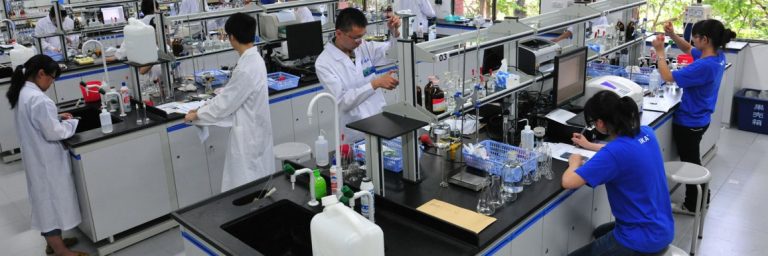
According to a recent circular released by the Chinese ministries of education, and science and technology, universities established by the state have autonomy in technology transfer (see the original news here). Unless the scientific and technological achievements concern national security, national interests, and major public interests, it is unnecessary to report to the ministry of finance or management department. All income gained from the technology transfer belongs to the universities.

The New Caribbean Patent Convention And Caricom Stasis

Abiola Inniss writes: The creation of the Caribbean Patent Convention under the auspices of Caricom is a long awaited and most welcome development towards the harmonization of intellectual property laws in the region. Even more importantly, it is an indication that Caricom leadership has at long last, after a lengthy period of stagnation and indeterminacy, finally decided to engage the process of thought and action necessary for the promulgation of a legal and regulatory framework for Caribbean intellectual property. The convention is expected to be enacted later in 2017.

A Case For Trade Enforcement: Colombia And Intellectual Property

President Trump and members of his administration have rightly talked about the need to be tougher on trade enforcement, including promising to take a closer look at existing trade agreements to see whether they should be revoked, renegotiated, or more strictly enforced. A candidate ripe for review is Colombia, and in particular, its ongoing failure to implement intellectual property provisions under the U.S. Colombia Trade Promotion Agreement (TPA), Nigel Corey writes.

Expensive Medicines Increase The Pressure

When Gilead brought its new antiviral medicine – Sovaldi – for the treatment of Hepatitis C to the US market for USD 84,000, it triggered a storm of protest. Demand for this revolutionary treatment was so high that the price (despite reductions) became an enormous burden on the American healthcare system. Although the product is cheaper in Switzerland at CHF 48 307, treatment is rationed for reasons of cost.

Open Source Software A Core Competency For Effective Tech M&A

Imagine your company just acquired its competitor for $100 million. Now imagine the company’s most important asset – its proprietary software – is subject to third-party license conditions that require the proprietary software to be distributed free of charge or in source code form. Or, imagine these license conditions are discovered late in the diligence process, and the cost to replace the offending third-party software will costs tens of thousands of dollars and take months to remediate. Both scenarios exemplify the acute, distinct and often overlooked risks inherent to the commercial use of open source software. An effective tech M&A attorney must appreciate these risks and be prepared to take the steps necessary to mitigate or eliminate them.

In Search of Evidence: The IP Statistics For Decision Makers Conference (IPSDM) 2016

The annual “Intellectual Property Statistics for Decision Makers Conference” took place in Sydney, Australia on 15-16 November. After Vienna last year, the Organisation for Economic Co-operation and Development (OECD) as the key initiator organised the landmark forum this time with the Australian Government through its national intellectual property office, IP Australia. In this environment where the Australian economy could recently mark its 25 years of continuous growth and where the government just launched a new “National Innovation and Science Agenda” in the form of a new tax reform package, we could follow panel discussions and speeches about how empirical evidence can be gained for innovation.

TPP May Be Dead – But Its Impact Lingers

Despite the Trans-Pacific Partnership (TPP) being - to all-intents-and-purposes - dead in the water, pursuit of some of the most egregious objectives of the corporate interests driving the TPP agenda rolls on. Pharma is persisting in its push for countries to adopt not just TRIPS-Plus, but in some cases even TPP-Plus intellectual property rules - presumably groundwork for the later emergence of a ‘son-of-TPP’ agreement, three authors write.