David Branigan

David Branigan

US Releases New Medicare Drug Plan To “Pay The Prices Other Countries Pay”

The United States Department of Health and Human Services has released a new plan intended to reduce drug prices for some patients on Medicare, based on an international pricing index model. In his announcement of the plan, President Trump said the US would save money “for our seniors by paying the prices other countries pay. Nothing special, just the prices that other countries pay.”
Near-Monopolies On HCV Diagnostics Curb Competition, Keep Prices High, Research Finds

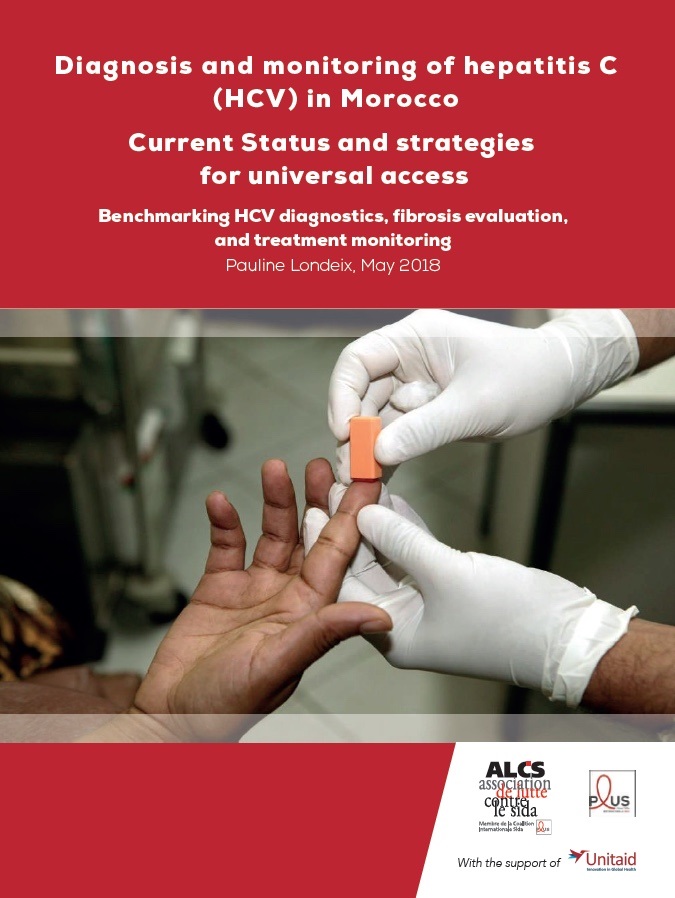
Monopoly prices of diagnostic tools and lack of competition in the market constitute a barrier to treatment for people with hepatitis C virus (HCV), but the increased use of “open” diagnostic platforms could reduce prices, a health advocacy research study has found.

US Interference In EU SPC Manufacturing Waiver “Unacceptable,” Says EU Generic Industry Group

Generics industry group Medicines for Europe has declared United States interference in the European Union legislative process on the supplementary protection certificate (SPC) manufacturing waiver “unacceptable,” and an attempt to “influence the outcome of this EU legislative proposal.”

G77+China Plan To Take UN TB Declaration Forward: Increased Resources, Access To Medicines

The Group of 77 developing countries plus China delivered a statement at the recent United Nations High-Level Meeting on Tuberculosis, calling for forward progress on the commitments to funding and action made in the UN political declaration on TB.

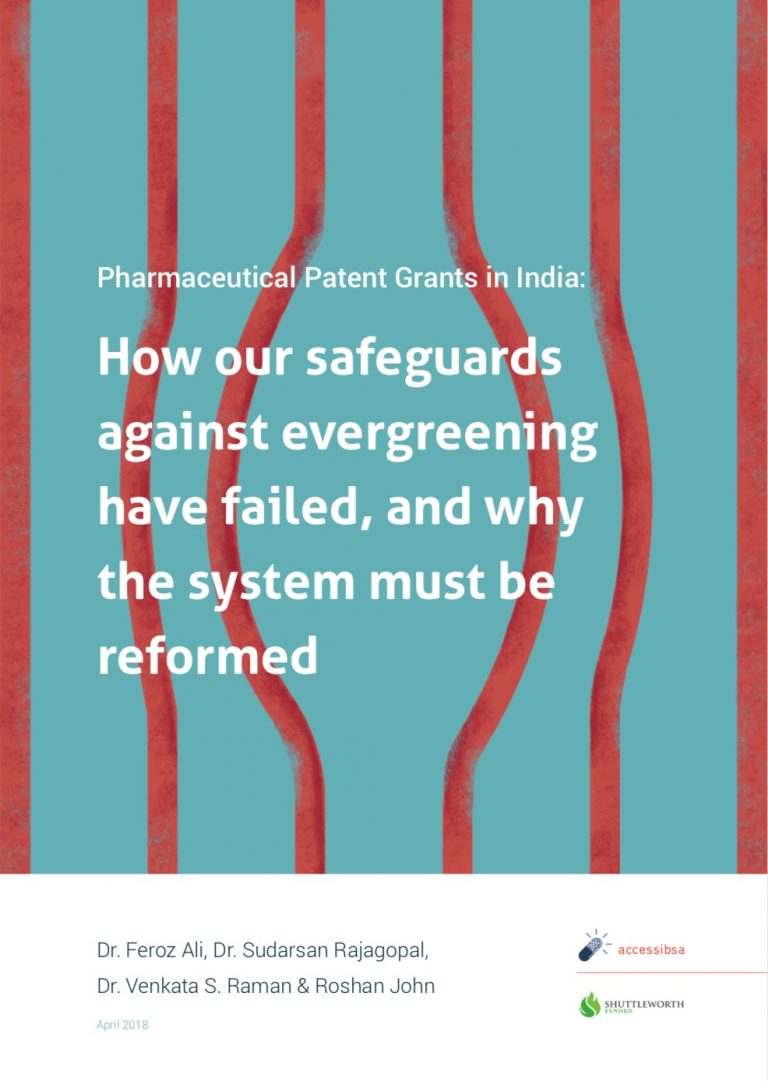
Research Group Identifies Over-Patenting Of Pharmaceuticals In India, Calls For Patent Reform

The tricontinental research group “accessibsa” has found that while the Indian Patent Office rejects 40 percent of pharmaceutical patent applications, it should be rejecting 90 percent of applications to comply with Indian patent law, according to the results of its recent study of Indian patent data.

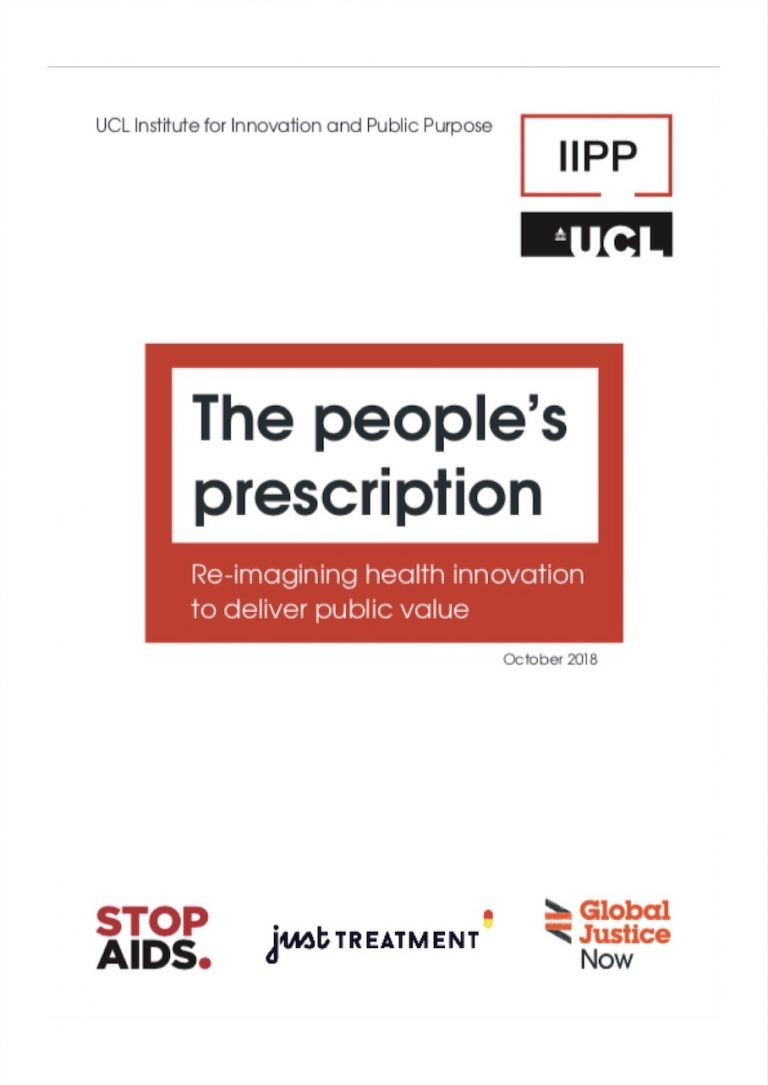
“The People’s Prescription”: New Report Calls For Value Creation Instead Of Value Extraction In Pharmaceutical R&D

A new report, “The People's Prescription: Re-imagining health innovation to deliver public value,” calls for restructuring research and development innovation systems to create, rather than extract, value. It also calls for long-term “mission-oriented” public investment, and a public return on this investment.

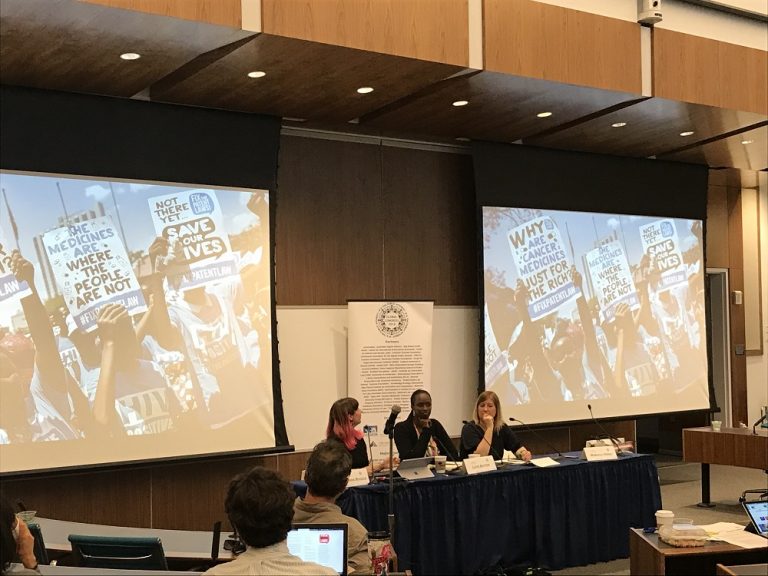
5th Global Congress On IP And The Public Interest: Successes, Strategies Highlighted

WASHINGTON, DC -- More than 400 activists, academics and practitioners from over 50 countries gathered at this year’s Global Congress on Intellectual Property and the Public Interest, according to organisers. At the Congress, participants shared success stories, developed strategies, and engaged in critical dialogue to re-think and re-invent intellectual property systems that serve the public interest.

UN High-Level Meeting On Noncommunicable Diseases: A Call To Action

NEW YORK -- The United Nations General Assembly yesterday adopted a high-level political declaration on noncommunicable diseases like cancer and unhealthy lifestyle. And while it gives an infusion of political energy to the issue, some are concerned it did not go far enough and are urging strong actions to follow.

UN General Assembly Adopts High-Level Political Declaration On Noncommunicable Diseases

NEW YORK -- The United Nations General Assembly is meeting today for the Third High-Level Meeting on Noncommunicable Diseases, and has adopted an ambitious political declaration, entitled, “Time to Deliver: Accelerating our response to address NCDs for the health and well-being of present and future generations.”

World Leaders Commit To End Tuberculosis At Historic United Nations Meeting

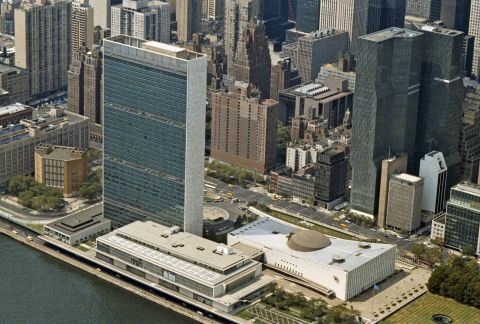
NEW YORK -- World leaders and senior representatives came together today for the first-ever High-Level Meeting on the Fight to End Tuberculosis at United Nations headquarters in New York. At the meeting, heads of state adopted a political declaration with commitments to accelerate action and funding to end the tuberculosis epidemic by 2030.