

The concept of machines that can think and create in ways that are indistinguishable from humans has been the stuff of science fiction for decades. Now, following major advances in artificial intelligence (AI), intellectual property created by machines without human input is fast becoming a reality. The development thus begs the question among legal scholars, legislative bodies, and judiciary branches of governments worldwide of who owns the intellectual property that humans did not create.
AI Meets Deep Learning
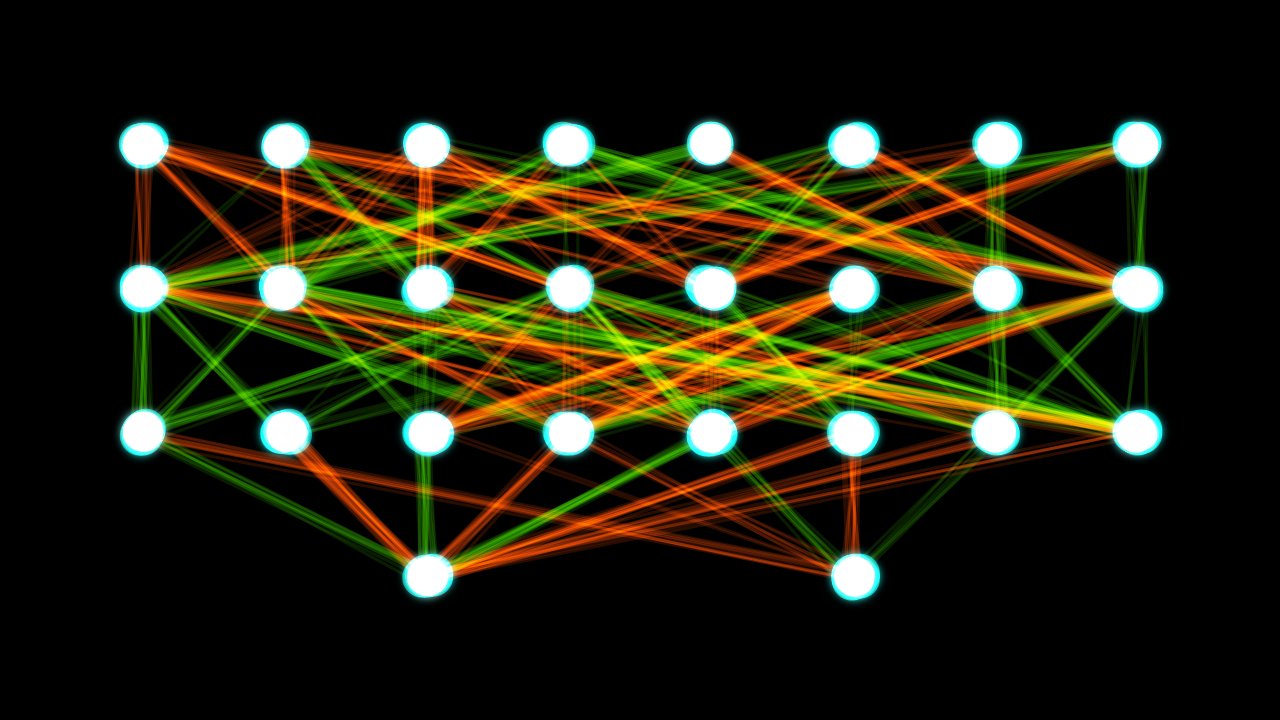
AI is gaining the capacity to create as researchers develop systems designed to think in ways that mimic the functioning of the human brain, known as “deep learning” capabilities. Deep learning involves machines that rely on artificial neural-like networks to replicate those that humans use for most of their thinking processes. Recreating these neural networks to give machines deep learning capabilities allows them to recognize sounds, including human speech; shapes and patterns, and other information. The idea of designing such machines has existed since the advent of computers, but now, researchers have access to computing power, advances in deep learning, and other developments to make this science fiction-like concept a reality.
Google, for example, introduced a deep learning system a few years ago that was able to recognise objects such as cats at double the rate of previous machine-created, image-recognition machines when shown 10 million images of YouTube videos.
More recently, Google Brain, OpenAI (co-founded by Tesla owner Elon Musk), Massachusetts Institute of Technology (MIT), the University of California, Berkeley; and Deep Mind (another Google AI researcher division) have begun to develop systems that teach machines to teach other machines. They are able to do this thanks to the availability of high-power computation, very large-scale data analysis, and software that allow machines to possess human-like reasoning skills and expertise.
Essentially, machines are beginning to create and invent things that would otherwise be copyright-protected if created by a human. But since machines are not human, they thus lack intent and other human qualities that meet the legal definition of a copyright holder in the European Union, United States, Japan, and elsewhere.
“The principles that require humans to conceive intentions or to create art are applied universally across the globe,” Michael Baumert, an attorney at US-based Mayer Brown, told Intellectual Property Watch.
While US lawmakers have yet to formally address the issue of assigning copyright to works or inventions created by machines, the European Parliament Committee on Legal Affairs has begun to study the issue. In Japan, legislation may be passed so that AI-created works would not be copyright-protected but fall under an unfair competition doctrine.
It has been argued that the licensor holder or owner of the machine or AI system that created or invented something should own the intellectual property. An engineer, for example, who relies on software to design a patent-protected device is the owner of the intellectual property under current law in jurisdictions worldwide.
Similarly, successful business models are based on many of today’s most-used social media platforms, serving as a reflection of the profound changes in intellectual property ownership taking place in the digital age. A symbiotic business relationship often occurs when the owner of a software platform benefits directly or indirectly when a third-party enterprise uses it to offer a service. Facebook, for example, has engendered a new multi-billion dollar per year advertising channel to the benefit of both Facebook and those enterprises that use the social media platform as part of their business model.
“Even if one person is the visionary and the coder and the business-development person rolled up in one, digital businesses often rely upon the contributions of the users of the service over time,” John Palfrey and Urs Gasser write in “Born Digital: How Children Grow Up in a Digital Age.” “That’s the story that we’ve heard, time and again, with the digital businesses started by the children of the Internet.”
But AI-created works or inventions are different. In this case, the machine learns and thinks alone without human input, often using intuitive human-like thought processes.
“How can a programmer of a machine-learning program be an inventor if he or she didn’t conceive or discover the actual invention? It was the machine learning program that, as of a result of its abilities to process vast amounts of data to then come to independent conclusions, conceived an invention that could be useful, novel, and nonobvious,” Baumert said.
“We can further speculate that such a programmer, while writing the machine-learning program, didn’t even think of or foresee the invention,” he added. “However, is the processing of large amounts of data and creating patterns and conclusion based on the results, a ‘mental act’ as required by the patent statute?”
Technological developments, such as the invention of machines that create software that teach machines, has forced the issue for which legal systems worldwide are unprepared.
“The current solution to the problem is to paper over the inadequacies of copyright law with licensing agreements, but contract law is really being stretched to the breaking point in order to accommodate a novel situation,” said Raquel Acosta, a US-based attorney and legal scholar who is the author of the seminal paper “Artificial Intelligence and Authorship Rights” published in the “Harvard Journal of Law & Technology.”
A Monkey’s Copyright Claims
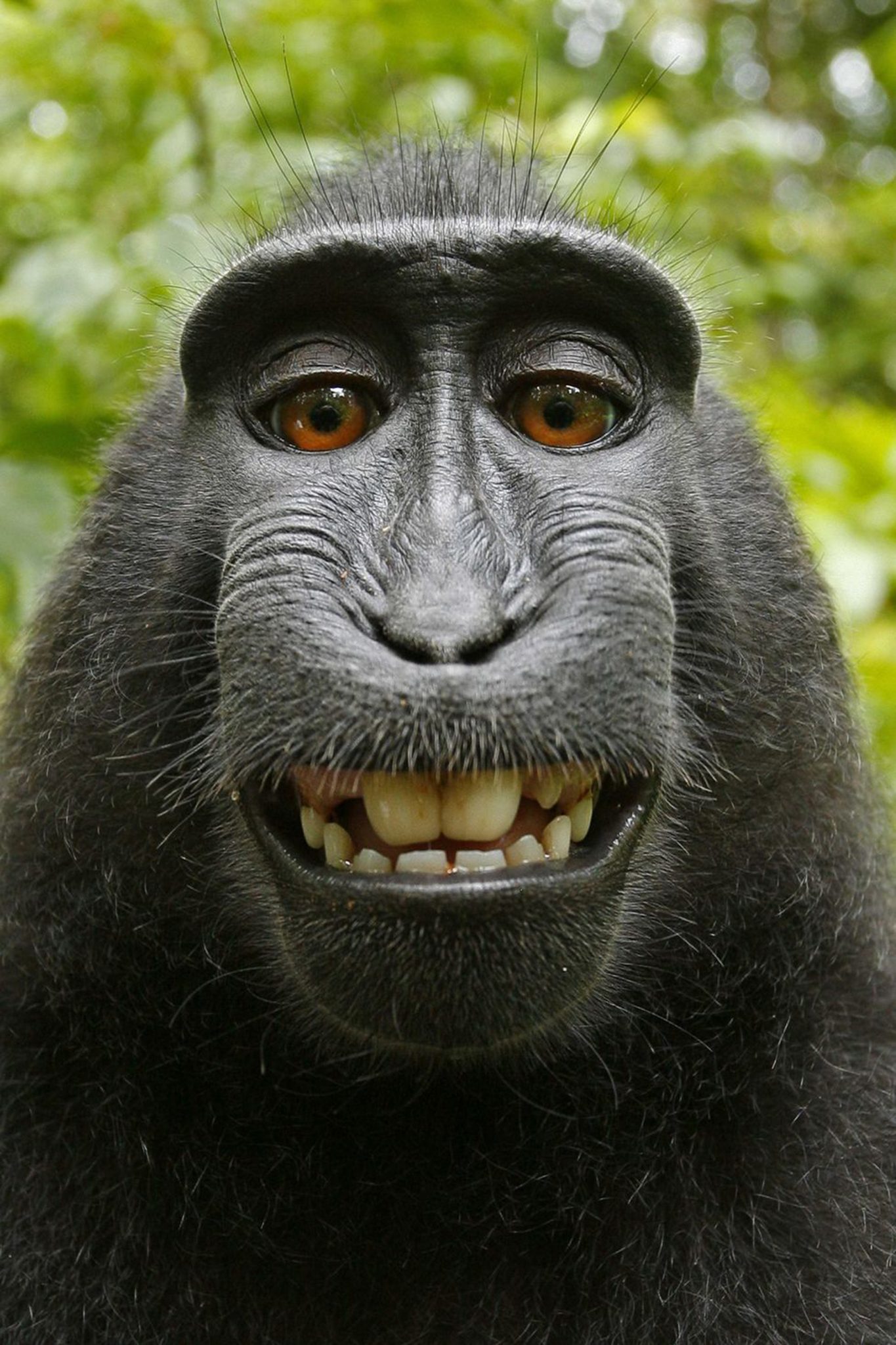 A US lawsuit about whether or not a non-human entity can own intellectual property offers some guidance on the reaction of courts. At issue is a series of self-portraits or “selfies” a macaque called Naruto took using a camera owned by British photographer David Slater. Slater has been unsuccessful in his attempts to enforce his claims that he owns the copyright for the photos, which were taken with his camera. He was also unable to obtain a court order in the US to have one of the photos removed from Wikipedia.
Meanwhile, in a separate legal case, the People for the Ethical Treatment of Animals (PETA) has claimed the monkey own the copyright, while the original case was dismissed.
“In Naruto [the PETA case], the federal district court dismissed the case because animals have no standing even to bring a case,” Baumert said. “The court, to justify its decision, pointed out that the higher courts have only referred to ‘persons’ or ‘human beings’ when analysing authorship. Although some scholars argue for recognising the rights to the inventions created by animals or computers, congress and federal courts in the US are reluctant to grant such rights. Therefore, neither copyright law nor patent law protects animals or AI-generated inventions.”
Public Domain
If lawmakers can agree that machines cannot be considered in the same light as humans, and thus cannot own copyright, many legal scholars contend machine-created inventions and works should be in the public domain.
“Copyright law is meant to protect people, not machines, and things created by machines should not be copyrightable by anybody. They should be in the public domain,” Ray Beckerman, a New York-based attorney and veteran advocate of defendants in lawsuits initiated by the recording industry. “There is already an excess of property right promotion in the US copyright world now, and not enough promotion of the public’s rights in public domain.”
In the not-so-distant future, there may be cases when there are several programmers and content sources, since machines are often given access to vast libraries of content, Acosta said.
“It might end up being a situation where a novel entity (the AI) is being used to process what it has learned from our common cultural heritage into novel forms of creation, which should also belong to our society at large,” Acosta said.
Image Credits: Wikicommons
Easy, the owner (s) of the machines. Same as work for hire or employees under a company. The premise is not whether a machine that “thinks” is the owner of intellectual property when creating such property but that falls under employer and employee relationship. Whether you treat it as an object with information created, someone owns that machine and maintains it, directs it, has control over the outcome including the inability for the machine to disengage at will therefore under the owner. If a chef creates a recipe while working, the restaurant – not the creator in this case the chef owns the dish. If there are enough direction from one party the other party may fall under an employee employer relationship with benefits.
Why not the creator of machine?
I want to share my article reganding this topic – sobre este interesante tema, comparto mí artículo sobre el mismo. https://derechoprivado.uniandes.edu.co/index.php?option=com_content&view=article&id=203%3Apropiedad-intelectual-de-las-obras-creadas-producidas-o-generadas-mediante-computador&catid=21%3A29&Itemid=65&lang=es
I have written a post on the issue of copyright ownership in poems authored by AI. It can be read here – https://yoursintellectually.com/2016/12/29/who-would-own-copyright-in-a-poem-written-by-ai/.
If ownership is ased on authorship or will to create and the machine was not instructed to create but did so of its own will (independence), it is my opinion that the machine would be the owner. However this would in some societies contravene the moral law as the concept of independently thinking machines is “the stuff of the terminator omniverse” then the ownership should revert to the owner of the machine.