

A new report by civil society groups defending the right to food and nutrition lays bare threats to seeds and biodiversity created by intellectual property rights, and calls for states to respect their human right obligations to protect small farmers’ right to seeds and food security.
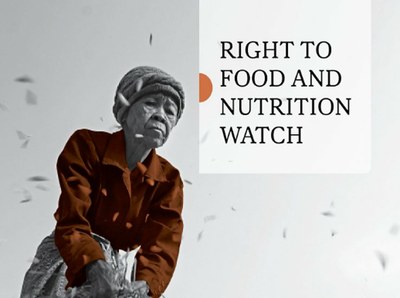 Launched at the UN Food and Agriculture Organization (FAO) on 13 October, the Right to Food and Nutrition Watch 2016 [pdf] titled, “Keeping Seeds in Peoples’ Hands,” warns that seeds and biodiversity are under threat “as a result of the increasing corporate capture and the states’ neglect.”
States must step up and adopt stronger policies and laws that recognise and protect peasants’ rights to save, use, exchange and sell seeds, the report said.
First published in 2008, the Right to Food and Nutrition Watch is an annual report monitoring key policies, processes and issues related to the right to adequate food and nutrition at the global, regional, national, and local level. It is published by Bread for the World – Protestant Development Service, FIAN International, and Interchurch Organisation for Development Cooperation (ICCO Cooperation), according to a press release.
2030 SDGs Too Focused on Economic Growth
Some 70 percent of the food consumed globally is produced by smallholders, according to the report. However, “today, seeds are under threat everywhere,” it said, as “laws are increasingly limiting what peasants can do with their seeds and criminalizing them, thereby impeding their role as food producers and threatening our food sovereignty.”
“Today, seeds are under threat everywhere [as] laws are increasingly limiting what peasants can do with their seeds and criminalizing them, thereby impeding their role as food producers and threatening our food sovereignty.” – report
According to the report, “The 2030 Agenda for Sustainable Development has laudable aspirational goals but it remains fundamentally embedded in prioritizing national economic growth over achieving human rights for each person. It sets the clock back by framing human rights as ‘needs’, opening dangerous avenues for their commodification.”
“This is especially pernicious given the significant influence of corporate actors in shaping the 2030 Agenda and the pervasive belief in many UN forums that the private sector holds the key to SDG implementation,” it added. SDGs refer to the UN Sustainable Development Goals for the year 2030.
“The 2030 Agenda and SDGs have been swept up in the ‘data revolution’, in which quantifiable data manipulated by technocratic data ‘experts’ are seen as the main, if not only, path to knowledge.”
Green Revolution Encroachment of Peasants’ Seeds
According to the report, “peasants are steadily losing their seeds” as their collective seed systems are being made illegal and are destroyed and contaminated by genetically modified organisms (GMOs).
“The Green Revolution’s agricultural policies, trade agreements, and more recently, the national and international legal frameworks protecting intellectual property rights (IPR) are behind this encroachment on peasants’ seeds,” it said.
Monopoly in the seed sector leads to the destruction of agricultural biodiversity, as the industrial seed and breeding systems favour standardisation and homogeneity, according to the report.
Throughout the 20th century, some 75 percent of plant genetic diversity has been lost as farmers worldwide have left their multiple local varieties and landraces for genetically uniform, high-yielding varieties. At the end of the 20th century, three quarters of the world’s food was generated from only 12 plants and 5 animal species, it said.
There is a push in many African countries for land and seed laws to be amended to secure access and control for private investors, undermining domestic farmers’ access and control, said the report.
“African governments are coerced through donor pressure” to replace farmer seed systems with corporate-owned seeds, from the Alliance for a Green Revolution in Africa (AGRA) – report
“African governments are coerced through donor pressure” to replace farmer seed systems with corporate-owned seeds, from the Alliance for a Green Revolution in Africa (AGRA), originally founded through a partnership between the Rockefeller Foundation and the Bill & Melinda Gates Foundation, and the New Alliance for Food Security and Nutrition in Africa. The alliance was established during a G8 meeting in 2012 hosted by President Obama at Camp David, the presidential retreat outside Washington, DC.
Farmers’ Exception Contentious
The farmers’ exception, which provides the right to save, use, grow, exchange, and sell seeds of protected varieties, is one of the most contentious issues in the international negotiations on the rights to plant genetic resources for food and agriculture, said the report.
The proliferation of global intellectual property, trade and environmental regimes in the last 25 years has led to conflicting norms – report
“The proliferation of global intellectual property, trade and environmental regimes in the last 25 years has led to conflicting norms,” it said. This is the case, in particular, with respect to farmers’ right to seed as considered by UPOV 1991 on one hand, and by the FAO International Treaty on Plant Genetic Resources for Food and Agriculture (ITPGRFA), on the other. UPOV refers to the International Union for the Protection of New Varieties of Plants.
The ITPGRFA‘s [pdf] Article 9 (Farmers’ Rights) states that “Nothing in this Article shall be interpreted to limit any rights that farmers have to save, use, exchange and sell farm-saved seed/propagating material, subject to national law and as appropriate.”
The 1991 UPOV Convention‘s Article 15 (Exceptions to the Breeder’s Right) includes an optional exception: “…each Contracting Party may, within reasonable limits and subject to the safeguarding of the legitimate interests of the breeder, restrict the breeder’s right in relation to any variety in order to permit farmers to use for propagating purposes, on their own holdings, the product of the harvest which they have obtained by planting, on their own holdings, the protected variety…”
Resistance to UPOV 91, Brazil and Ecuador
“In countries such as Brazil and Ecuador, which have not signed FTAs [free trade agreements], governments have thus far had less legal and political capacity, as well as more popular resistance, when it comes to adopting provisions from UPOV 1991,” said the report.
However, it said, in Brazil “there are significant legal initiatives in place to reverse this situation. A case in point is Draft Law 827/2015, which, in accordance with UPOV 1991, widens the scope of restrictions to free use of seeds by farmers, and therefore decreases the exceptions that can be applied to peasants and traditional peoples and communities.”
Ecuador in an opposite way created a Draft Bill for Agricultural Biodiversity, Seeds and Agroecological Development. The draft bill was developed in 2012 by the Plurinational Intercultural Conference on Food Sovereignty (COPISA) following a participative process involving more than 500 peasant organisations and 3,000 citizens, it said.
The law, which is currently being examined at the National Assembly, promotes the preservation and recovery of agricultural biodiversity and associated ancestral knowledge, as well as the use, conservation and free exchange of seeds. It also recognises IP but all types of appropriation of collective knowledge are prohibited in the fields of science, technology, ancestral knowledge, genetic resources, and agricultural biodiversity.
Switzerland Small-Scale Farmers in Danger Too
According to the report, Swiss small-scale farmers are also in danger. Switzerland currently loses three farms per day and the agricultural sector has lost 50 percent of its employees over the last 30 years. “The country has chosen to import over half of all foodstuffs consumed nationally,” it said.
Switzerland has chosen to import over half of all foodstuffs consumed nationally. It is losing three farms per day.
In March 2016, a farmers’ union, Uniterre, proposed the “Food Sovereignty initiative,” which aims to give advantage to Swiss small-scale agriculture, and proposes to ban GM foods, as well as to guarantee the rights of small-scale farmers to use, propagate, exchange, and commercialise seeds, said the report.
Human Rights Obligations
According to the report, “the human rights framework is under strong pressure to recognize new stand-alone human rights to seeds, land and biodiversity. The recognition of these rights is key, in our view, because the current international legal framework only partially and inadequately protects these rights to resources as part of other recognized human rights.”
“In the last year, we have noted a clear setback in the recognition of human rights in the new global agreements that have been reached. Striking examples are the 2030 Agenda for Sustainable Development and the Paris Agreement on climate change, which do not include a single reference to human rights beyond the preambular paragraphs.”
The report underlines the importance of reminding states of their existing human rights obligations, and to rethink “the contours of the right to food and nutrition so as to better integrate new challenges with regard to control of, and access to, natural resources.”
Among the funders of the publication is the Swiss Agency for Development and Cooperation (SDC) and the International Food Security Network (IFSN), which is co-funded by the European Commission.
The report comes as UPOV is today organising a seminar [pdf] on propagating and harvested material in the context of the UPOV Convention.
Image Credits: FIAN International
[…] IP Rights, Corporate Interests Threaten Small Farmers’ Right To Seeds, Biodiversity […]