

At its annual Assembly next week, the World Health Organization will seek member state approval of US$160 million over two years to establish its role as a global coordinator for health emergencies.
The 69th World Health Assembly is taking place from 23-28 May. The provisional agenda [pdf] is here. A preliminary journal [pdf] lays out a potential programme for the week.
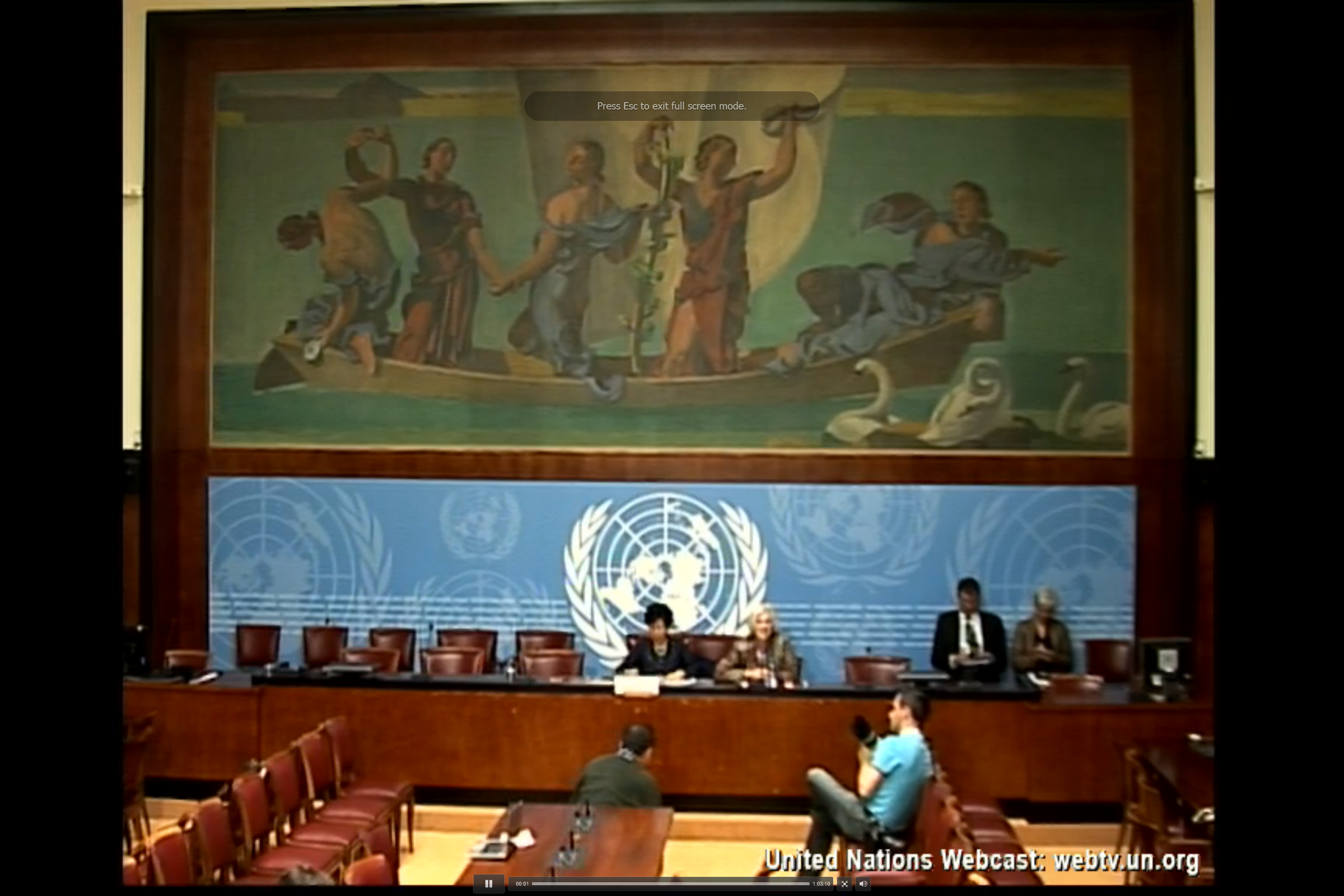
In a 17 May press briefing, WHO Director General Margaret Chan said that to date the UN agency has been only a normative organisation, providing advice to countries, but now will launch a new health emergencies program.
“It is the duty of countries to provide care and respond to health emergencies to protect their people,” she said. But member states learned from the Ebola crisis, and would like WHO to move from normative to “operational,” she added.
“WHO is given a new task from our member states to make sure we coordinate actors from the UN, the humanitarian sector, … and countries who are providing support in the event of a health emergency,” said Chan. “This is a change in the role. It requires that WHO needs to capacitate in areas where we did not have the capability in the past.”
For this, the secretariat is asking for US$ 160 million over two years, $60 million for 2016 and $100 million for 2017. She said a budget document was presented to member states this week. WHA document A69/30 [pdf] describes the new programme and the budget (paragraph 21).
The new role does not mean WHO would become an “implementing” organisation like Médecins Sans Frontières (MSF, Doctors Without Borders), providing direct service to sick people, Chan said, nor like a UNICEF, which goes deep into the field to deliver water, sanitation and other basics.
The budget increase will allow WHO to “implement the new programme to support countries’ implementation of the core International Health Regulations [IHRs], to be able to prevent, detect and respond to health emergencies,” she said.
WHO is an intergovernmental organisation with some 194 member countries.
One of the “lessons learned” from Ebola was how quickly and relatively cheaply industry and the public sector, working together, could come up with an effective treatment for a disease, contrary to common opinion under the patent system.
On IHR implementation, Chan urged countries to make early reports of health issues developing in their territory, and for other countries not to take measures to block movement of people, goods and services from those countries that do report early.
Related to the question of the WHO budget and where the funding would come from, the nongovernmental Knowledge Ecology International (KEI) this week highlighted a document from WHO showing its top voluntary funders. The KEI blog post is here. It includes a link to the WHO document.
According to KEI, the top 10 voluntary contributors in 2015 were:
United States of America: $305,744,839
United Kingdom of Great Britain and Northern Ireland: $195,678,335
Bill & Melinda Gates Foundation: $185,272,525
GAVI Alliance: $126,421,673
National Philanthropic Trust: $86,252,168
Nigeria: $67,610,799
Rotary International: $56,302,924
United Nations Development Programme (UNDP): $47,221,524
Canada: $47,158,403
European Commission: $45,637,006
Image Credits: UN
[…] In addition to issues pertinent to followers of intellectual property, innovation, research and development, medicines access the like, there are broader issues of importance to health diplomacy, such as the UN Sustainable Development Agenda – of which health is a top priority – and health emergencies, for which WHO is being asked to move from a policy body to being operational. For that new role, it is seeking an additional US$ 160 million in its budget (IPW, WHO, 18 May 2016). […]