

Just days before the start of the Diplomatic Conference for the Adoption of a new Act of the Lisbon Agreement for the Protection of Appellations of Origins and their International Registration, several committees of the European Parliament considered a recommendation to extend existing geographical indication protection in the European Union to non-agricultural products.
Over 3,000 geographical indications (wines, spirits, foodstuffs) have been registered in the Union allowing regional producers to distinguish their agricultural products and offering consumers transparency about origin and quality, the rapporteur of the lead Legal Committee, Virginie Rozière summarised in a report. Her draft report is here.
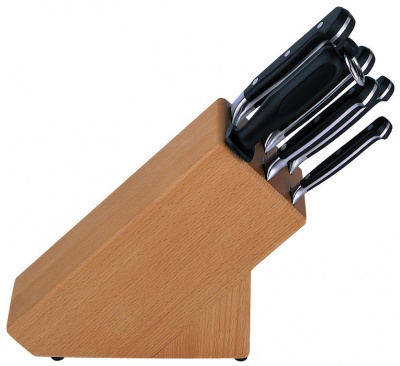
But only 15 member states have national rules to protect non-agricultural products on the basis of geographical origin. An EU-wide harmonised and stepped-up protection for non-agricultural products (like Carrara Marmor, Bohemian crystal or knives from Solingen) is highly desirable, Rozière said, a comment echoed in the International Trade Committee.
If recognised, these products would allow up to a 25 percent rise in exports, for example, of textiles from France, according to studies, Rozière said. An EU-wide extension of GIs to non-agricultural products would call for a single register at low cost. Pre-existing national systems and registrations under these should be recognised.
Interestingly, the draft report – as well as a mid-2014 report by the Commission – underlines that “harmonized European legislation could only benefit the EU in international trade negotiation.” In fact, GI protection is one of the contentious negotiation topics between the EU and the United States in the Transatlantic Trade and Investment Partnership (TTIP) talks.
With Canada, the EU managed to agree on a list of 173 protected food names, according to a recent report by the non-governmental Agricultural and Rural Convention (ARC).
For the TTIP, at least a minimal list of products marketed within the US accordingly is on the wish list of the Commission; according to ARC wrote it was about 200. The Commission started the initiative to extend GI protection with a “green paper” last year and a consultation in January 2015. It is expected to, after the vote in plenary set for September, be in charge to prepare a legal instrument for the new EU GI protection.
[…] EU Parliament Considers Extension Of GI Protection To Non-Agricultural Products (ip-watch.org) Just days before the start of the Diplomatic Conference for the Adoption of a new Act of the Lisbon Agreement for the Protection of Appellations of Origins and their International Registration, several committees of the European Parliament considered a recommendation to extend existing geographical indication protection in the European Union to non-agricultural products. Over 3,000 geographical indications (wines, spirits, foodstuffs) have been registered in the Union allowing regional producers to distinguish their agricultural products and offering consumers transparency about origin and quality, the rapporteur of the lead Legal Committee, Virginie Rozière summarised in a report. Her draft report is here. […]