Category Regional Policy

US, European Views On IP Management And Digital Business

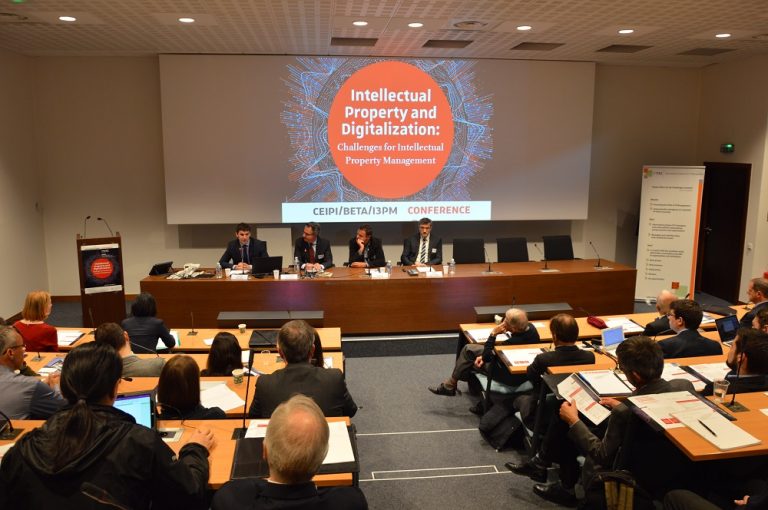
Data-driven technologies are enabling the expansion of trade and data flows around the world. We have disruptive smart products, smart industrial processes, smart clouds and smart services. Traditional industries such as pharmaceuticals, chemical and mechanical engineering digitally transform production processes to generate custom-tailored services and improve competitiveness using artificial intelligence while new companies emerge with disruptive offers. Such artificial intelligence-based business models, however, are bringing about a rethinking in European regulations in relation to copyrights, such as that deployed by DeepMind and Pinterest, for instance, because machine learning may reproduce countless amounts of proprietary content to generate raw solutions. A recent event in Paris delved into these and other issues, including data ownership and access rights, as well as inventions by computers.


To Print Or Not To Print: Innovation And IP Issues In 3D Printing

3D printing used to be an expensive product design tool, but it is quickly becoming an affordable and accessible technology. First emerging in the 1980s, the availability of low-cost, high-performance 3D printers has put the technology firmly within reach of consumers. While this provides a number of opportunities for designers and manufacturers, there is also concern around the impact on IP rights, writes Jia Li.

Intermediaries Could Be Made Liable In EU Copyright Legislation

Positions on the new draft European Union Copyright Directive lie so far apart in the European Parliament that compromise before an expected October vote seems nearly impossible. Critics of a new special copyright for press publishers - and of a radical change towards holding internet intermediaries liable for what their users upload - were highly alarmed by this week’s developments in Brussels.

WIPO’s Gurry: Artificial Intelligence, Gene Editing Latest ‘Winners’ In Innovation

The main winners of innovation are technologies that enable market application, with gene editing and artificial intelligence as two examples, Francis Gurry, director general of the World Intellectual Property Organization, told a panel discussion last week. Thomas Cueni, director general of the International Federation of Pharmaceutical Manufacturers & Associations (IFPMA), said at the same event that everybody benefits from innovation.

Course Packs For Education Ruled Legal In India: Triumph For Access To Educational Materials

On 9 May 2017, a five year court battle between publishers and universities finally came to an end when the Supreme Court of India dismissed an appeal by the Indian Reprographic Rights Organization (IRRO) challenging an earlier judgment of Delhi High Court that ruled course packs in India legal for educational purposes.

In a case that gained wide international attention, issues such as the cost of textbooks in India were raised, students agitated for fair access to educational materials, and the jurisprudence on copyright in India has taken a leap forward. In this guest blog, Anubha Sinha, Programme Officer on Openness and Access to Knowledge at the Centre for Internet and Society India, discusses the judgment in the case known as the ‘Delhi University photocopy’ case, and what it means for access to educational materials in India.

Lessons From South Africa: Protecting Non-Expressive Uses In Copyright Reform

Matthew Sag and Sean Flynn write: This week, the South African Parliament began accepting comments on its pending Bill proposing to amend the South African Copyright Act to align it with the digital age. We and other experts and civil society organizations submitted comments praising many of the Bill’s provisions and proposing that it adopt an “open” fair use right. Here we focus on one major reason to adopt an open fair use right – to authorize so-called non-expressive uses of works. We conclude with some reflections on how international law could help in this regard.

EU Parliament Adopts Marrakesh Treaty; Blind Union Prepared To Fight Publisher ‘Compensation’

The European Parliament today with over 600 votes adopted the legal instruments to ratify the Marrakesh Treaty on access to reading material for the visually impaired. The treaty, adopted by the members of the World Intellectual Property Organization in 2013 and effective since last year, has been subject of controversies due to lobbying from publishers in the European Union, members of Parliament said today in Strasbourg before the vote. EU member states after today’s vote have one year to implement.