Category Regional Policy

Fifa Rahman

Malaysia Inclusion In Gilead Voluntary Licence – A Product Of Compulsory Licence Pressure

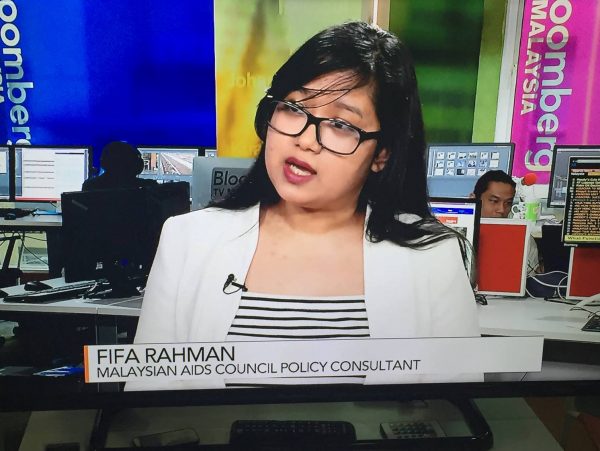
Gilead’s announcement today that they would include four middle-income countries (Malaysia, Thailand, Belarus, Ukraine) in their sofosbuvir voluntary licence was a welcome surprise, and will enable millions access to their highly effective, but exorbitantly priced, drug. The decision to include these countries, however, no doubt is a response to increasing pressure from within these countries to either issue a compulsory licence (CL) or a government use licence (GUL), invalidate the sofosbuvir patents, or block data exclusivity for the drug.


WIPO, IFPMA Speaker Says Despite Trump Actions, He Would Be US Science Envoy

A United States State Department science envoy quit yesterday in protest over US President Donald Trump's pullout from the Paris climate accord and defensive comments after violence at a white nationalist rally in Charlottesville, Virginia. But according to a press report, Peter Hotez, a past science adviser who has been a featured speaker of a UN agency and pharmaceutical industry group in Geneva, is stepping up to offer his services without concern for Trump's actions.

Access To Medicines Foundation Details Methodology For 2018 AMR Benchmark

The Amsterdam-based Access to Medicines Foundation today published the methodology it will use for its 2018 framework for evaluating how pharmaceutical companies are taking action to limit antimicrobial resistance, addressing the rising the global problem of overuse of antibiotics leading to resistance with few new ones in the pipeline.

The Dilemma Of Fair Use And Expressive Machine Learning: An Interview With Ben Sobel

Intellectual Property Watch recently conducted an interview with Ben Sobel, law and technology researcher, teacher, and fellow at Harvard University's Berkman Klein Center for Internet and Society. Sobel has focused his research on copyright and the fair use doctrine, in particular in the context of artificial intelligence (AI). Below, he shares his views on expressive machine learning, “the fair use dilemma” and “Big Content versus Little Users”. The most pressing copyright question has to do with AI readers, not AI authors, according to Sobel.

INTA Pro Bono Trademark Clearinghouse Takes Off

This summer, the International Trademark Association (INTA), the global trademark industry group, launched a one-of-a-kind pilot program offering pro bono attorneys the opportunity to help nonprofits and others obtain and protect trademarks. And in its first weeks, it is already receiving submissions and a positive response, according to an INTA representative.

US Issues Spate Of Trade Announcements, With IP In The Foreground

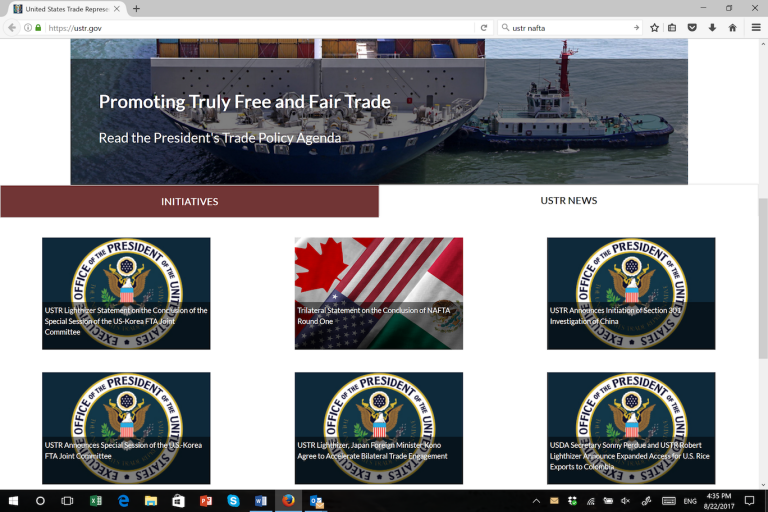
With much of the rest of the western world on holidays, the Office of the United States Trade Representative spent this month in meetings and issuing statements about improving international trade conditions for the US.

Over the past two weeks, United States Trade Representative Robert Lighthizer and other senior officials have been involved in activities with Canada and Mexico (under renegotiation of the 1994 North American Free Trade Agreement, NAFTA), Japan, South Korea, and China.

Report Shows Benefits Of US Investment In Global Health R&D

A new report from a global health advocacy group in Washington, DC shows the importance to the United States of US government investment in global health research and development and argues that more investment would have a tremendous positive impact on lives worldwide, including in fighting neglected diseases.

Troubled Federal Circuit Hobbles US Patent System

It’s been another dismal term for the Federal Circuit Court of Appeals. Six of its patent law decisions were reviewed in the US Supreme Court’s 2016-17 term, and the Federal Circuit’s decisions were overturned in all six cases. That, unfortunately, is not surprising. Over the past 15 years, the tribunal once known as the nation’s “patent court” has seen many of its most important patent law decisions reversed by the Supreme Court– sometimes in withering opinions. This has seriously undermined the Federal Circuit’s power, reputation, jurisprudence, and (apparently) self-confidence – causing a major problem for the United States’ patent system.

Companies Prefer Trade Secrets To Patents To Protect Innovation, EUIPO Finds

“Despite their economic importance, and in particular their role in protecting returns from innovation, trade secrets are poorly studied and their relationship with patents is often misinterpreted,” the EU Intellectual Property Office (EUIPO) said in a study published this month. It used a survey of around 200,000 companies in Europe's manufacturing and service industries to determine what factors influenced their choice between patents and trade secrets, as well as their overall use of both mechanisms. The results could help policy-makers, the Office said. It also holds out opportunities for innovative lawyers and intellectual property firms, said one IP management consultant.

Why Fair Dealing Is Not Destroying Canada Publishing

For the past few years, publishers around the world have engaged in a sustained campaign to hold up Canada as proof that making fair dealing more flexible for education will hurt publishers. Those efforts rarely tell the whole story: that paid access remains the primary source of materials in Canada, that educational copyright policies in Canada are primarily a function of court decisions not copyright reform (the emphasis on fair dealing came before the 2012 reforms), that global publishers were reporting marketplace challenges that have nothing to do with copyright, that Canadian publishers that supposedly stopped publishing were still in business, that court affidavits from Canadian publishers focus on many concerns other than copyright, and that a study from one Canadian publisher association highlighted issues such as open access and used book sales. University of Ottawa law professor Michael Geist expands on the reality of Canadian publishing and copyright law.