Category North America

CETA: Ripe For Provisional Implementation In January 2018?

The European Commission on 8 July published the finalized Comprehensive Economic Canada-EU Trade Agreement (CETA) and formally proposed to Council to sign the agreement, pushing for provisional implementation amidst ongoing discussions over competency issues with EU member states. After finalising CETA in August 2014, the controversial investor-state dispute settlement (ISDS) system was renegotiated last year.

US Industry Airs Hopes, Frustrations On IP Rights In India

What do global innovators make of India’s new National Intellectual Property Rights Policy? A recent discussion on “India’s National IPR Strategy: A View from Global Innovators” in Washington DC attempted to assess the opportunities and challenges ahead from the perspective of American companies.

US Sees Weak African IP Protection, But Not Enough To Lose Unilateral Trade Benefits

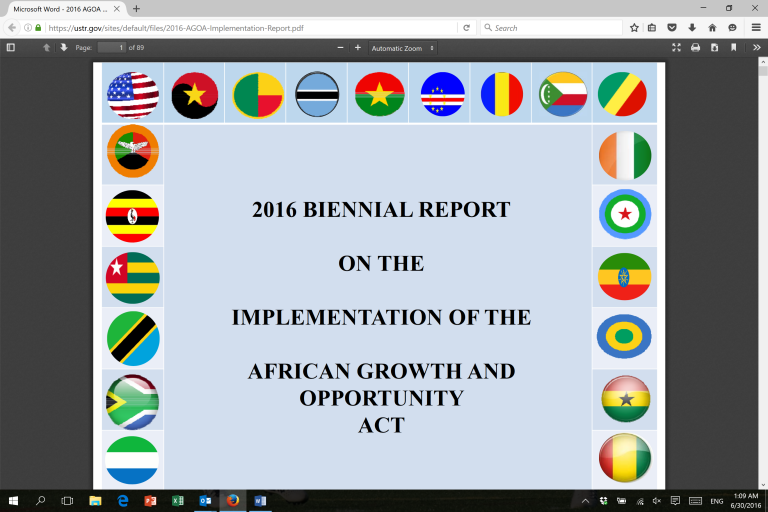
The Office of the United States Trade Representative (USTR) today (29 June) released its annual report on the eligibility of African nations for unilateral trade benefits offered by the US. While some countries were praised for progress on intellectual property protection, others were found to be weak in this area, but none were removed from eligibility for that reason. Overall, reporting on IP rights varied widely in the report.

Clinton Lays Out Presidential Tech & Innovation Plans

US presidential candidate Hillary Clinton has issued highlights of her plan to boost the nation's competitiveness in and attention to technology, internet and innovation if elected. The platform hits many of the latest issues and buzzwords in those fields, continuing existing programs but also pushing further in some areas. Among the plans: appoint a chief innovation advisor, reduce frivolous patent litigation, support allowing the US Patent and Trademark Office to keep its fees, boost access to orphan copyrighted works and open licensing, support multi-stakeholder internet governance, and keep the internet open worldwide. Clinton also gave a nod to personal privacy online and took a jab at the SOPA bill that was defeated for over-reaching on behalf of IP rightsholders.

US Courts Split On Legality Of Music Sampling

De minimis non curat lex – the law does not concern itself with trifles. This venerable legal principle is applied throughout the world, but not in one part of US copyright law. Copying any part of a sound recording, no matter how tiny, is actionable copyright infringement, according to an eleven year-old US appellate court ruling. Following that ruling, pop star Madonna found herself sued because her hit song, Vogue, allegedly copied a fraction of a second of another song. That copyright infringement suit was thrown out on 2 June, however, when a different appellate court ruled that de minimis infringements of sound recordings do not create any liability. Now US copyright law is in a muddle.

LinkedIn’s Patent Portfolio; Looking For Hidden Gems

John Sullivan writes: It's obvious that this acquisition isn’t necessarily about the IP assets of LinkedIn. However, let’s have a closer look at LinkedIn’s portfolio to see if there are any hidden gems inside that would represent a nice fringe benefit to what already looks like a mutually beneficial acquisition.

US High Court Inter Partes Review Leaves Patent Holders Dissatisfied

A 20 June decision by the Supreme Court upholding US Patent and Trademark Office (USPTO) rules for inter partes review of patents isn't helpful to patent owners, according to several attorneys. The ruling in Cuozzo Speed Technologies, LLC v. Lee (No. 15-446) disappointed expectations for another pro-patent holder decision following a 13 June ruling in another case, said Proskauer patent lawyer Baldassare Vinti. USPTO Director Michelle Lee, however, said the decision would allow the office to continue resolving patentability disputes via less expensive alternatives to litigation.

Nearly All Global Physical Counterfeiting Is From China & Hong Kong, US Report Shows

A new analysis released this week by the United States Chamber of Commerce Global Intellectual Property Center (GIPC) shows that some 86 percent of all physical counterfeiting comes from China and Hong Kong. Companies locating manufacturing there may not be surprised to find counterfeit versions of their products on the market, and seizures are a small fraction of the goods getting into the global trade stream, the report says.

Panels Brainstorm Ideas On Innovation And Drug Access

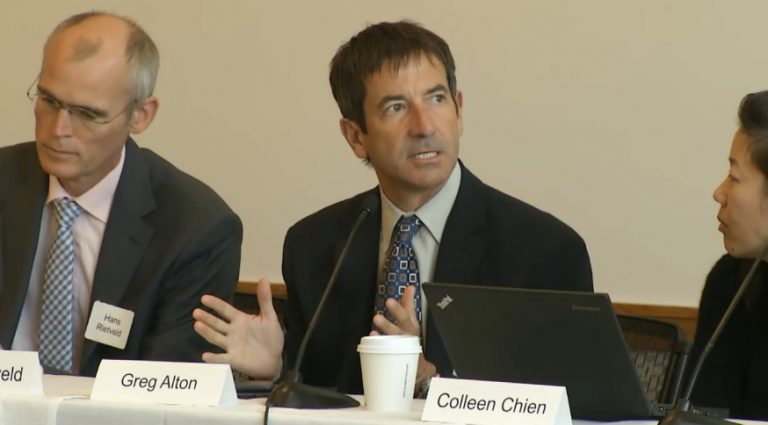
The quest of balance between encouraging medical innovation and the imperative of broad access to medicines has so far been elusive. Two Harvard University programmes jointly organised a workshop this week with the aim of encouraging a conversation between global health actors and see if some "outside the box" thinking is possible.

Special Report: Roundup Of US Copyright Office Review Of US Law

The United States Copyright Office is examining how provisions of the Digital Millennium Copyright Act (DMCA) and the 1976 Copyright Act are working and whether any changes, legislative or otherwise, are needed. Not surprisingly, there are broad differences of opinion among rights owners, public interest groups, users of copyrighted works and the high-tech community on both questions.