Category ITU/ICANN

Top IP-Watch Stories Of 2017: What Do They Tell Us About Multilateral IP Policy?

What IP-Watch stories were readers reading most in 2017, and what does it say about the state of global intellectual property policy? In this article, we look at the most-trafficked stories of last year, and make a few assumptions. Asia, Europe, trade, health. These were the top targets of interest to readers among our offerings. Interestingly, despite all the sound and fury in Washington, our coverage there was not at the top of the list. Even more interestingly, neither was our extensive and world-leading coverage of the World Intellectual Property Organization.

Internet Governance Forum – An Encyclopaedic Endeavour

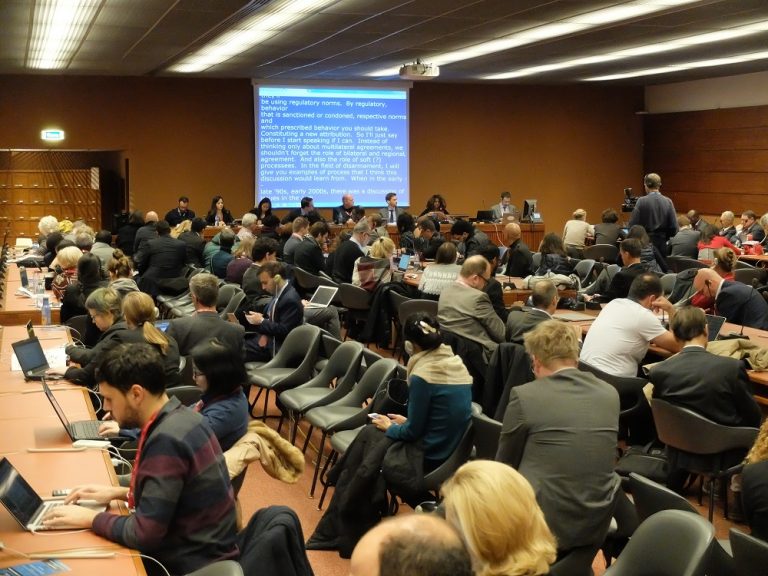
The 12th Internet Governance Forum has closed its doors and sent home the last of the more than 2,000 die-hard internet governance adepts from 142 countries who stayed until a mere three days before Christmas in the halls of the United Nations in Geneva. Asking the adepts and the critics about what has changed in the forum that started because governments just could not agree on how critical internet infrastructures should be managed during the 2005 UN World Summit on Information Society, the first answer always is just “big”.

With originally 3,000 registered, it is the biggest international internet politics conference. But “big” is not only the size of the meeting, it is also the number of workshops, panels, best practice forums and bi-, pluri- and (nearly) multi-lateral meetings taking place over the five days. So this year Intellectual Property Watch, having participated substantively all week, decided to make an encyclopaedic endeavour to bring you the first IGF dictionary (or to make a dictionary about that encyclopaedic endeavour) in an effort to give credit to the richness of the forum, but highlight some problems, too.

In Break From Past Leadership Role, US Gov Largely Missing From Internet Governance Forum

The United States has been a steadfast supporter of the UN-led Internet Governance Forum since its inception over a decade ago, regularly bringing large and high-level delegations to the Forum. The US must have seen the forum as the lesser evil when governments from many continents pounded the desks during the 2005 World Summit on the Information Society (WSIS) conference in Tunis over the US special role in overseeing the Internet Corporation for Assigned Names and Numbers (ICANN) and thereby the heart of the domain name system, the root zone. But IGF 2017, held this week, saw a dramatic change in that regard.

Friends, Foes Of Big Data Discuss Its Promise For Development, Privacy Issues

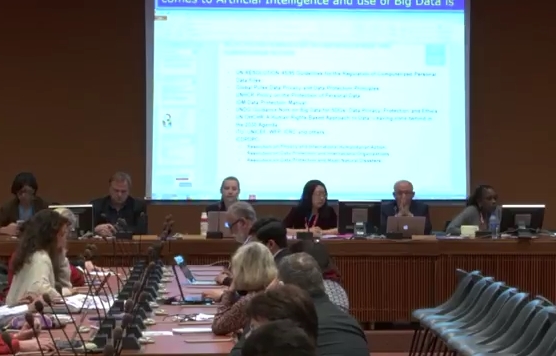
Big data and artificial intelligence hold promise for achieving the United Nations Sustainable Development Goals, but risks associated with extensive data collection should not be minimised, according to speakers at this week’s Internet Governance Forum. Of particular concern: privacy issues, the digital divide, the need for raising awareness of internet users, and current or upcoming legislation and guidelines seeking to address challenges associated with big data.

State Hacking An Option To Overcome Encryption, IGF Hears

The days of unfettered access to internet content are over, Riana Pfefferkorn of the Stanford Center for Internet and Society told government representatives during a panel dedicated to state interference in encryption, organised by Brazil's registry Nic.br and CGI.br at the 12th Internet Governance Forum this week in Geneva. “Governments have to adapt,” the cryptography researcher said. A concern is, though, that governments will adapt by either lashing out to get backdoors in code, weaken encryption or legalize state hacking.

Fierce Fake News Regulation Rising From Fear Of Election Manipulation

The globally creeping fear of fake news in the wake of elections resulted in another harsh legislative proposal adopted by the Brazilian “Tribunal Superior Eleitoral” (TSE) earlier this week in Brasilia. The globally creeping fear of fake news in the wake of elections resulted in another harsh legislative proposal adopted by the Brazilian “Tribunal Superior Eleitoral” (TSE) earlier this week in Brasilia. The resolution lays out measures on how content must be removed upon notice in 24 hours by platform providers, a Brazilian activist said during one of the many debates on fake news and potential measures against it at the 12th Internet Governance Forum taking place this week in Geneva.

Internet Society Official On Internet Governance Challenges, Role In Solving Issues

The Internet Society has participated in the Internet Governance Forum since its inception. Since then, the forum has been able to build trusted relationships with the different groups of stakeholders, but it should be able to attract more participants from all those groups of stakeholders, such as ministers and CEOs, according to Constance Bommalaer, senior director of Global Policy of the Internet Society. Bommalaer sat down with Intellectual Property Watch’s Catherine Saez in the margins of this week’s Internet Governance Forum in Geneva to explain the pressing issues of internet governance, such as the trust issue, and the internet of things, and the work of the Internet Society to bring tangible answers.

US Vote On Net Neutrality Could Affect The World, UN Rapporteur Says

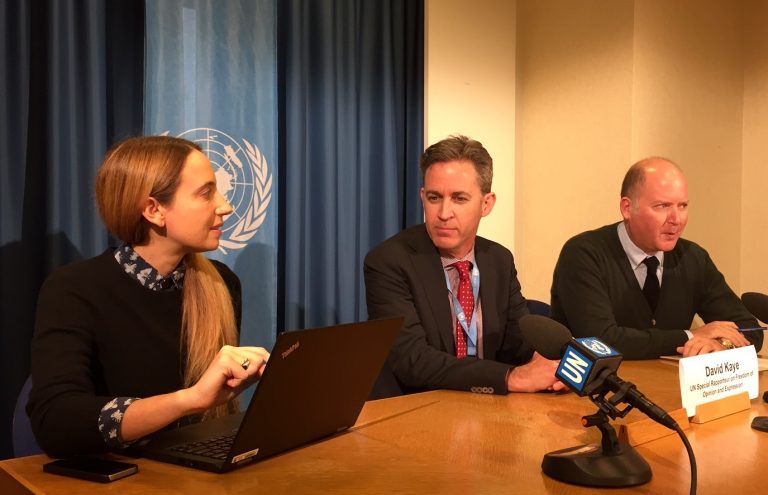
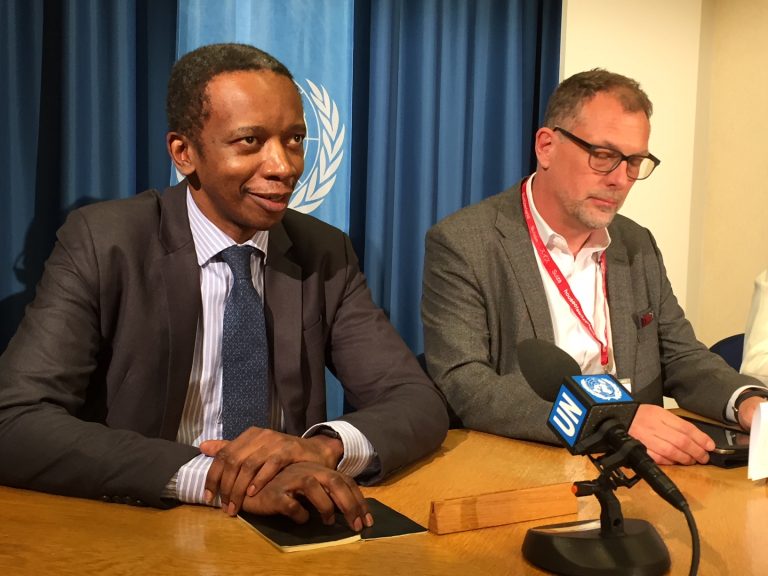
The recent decision by the Trump administration in the United States rolling back the internet neutrality is of concern and in the long term could have effects beyond US borders, David Kaye, the United Nations special rapporteur on freedom of opinion and expression, told a press briefing today. He also commented on the negative effect of the social media model, in particular Facebook on small independent media outlets, but said the issue of the control of the internet is not limited to Silicon Valley companies.

A Digital Geneva Convention: Nobel Prize-Worthy Or Dangerous?

Microsoft on 19 December presented its Digital Geneva Convention during the 12th Internet Governance Forum in Geneva. With cybersecurity being one of the top issues at the forum, the company received a lot of interest for the idea of developing the convention as a multi-stakeholder draft. But there were also voices of caution from individual governments as well network-operating people.

US Decision On Net Neutrality Will Not Impact ICANN’s Work, ICANN CEO Says

Internet is almost an experiment, the CEO of the Internet Corporation for Assigned Names and Numbers said today at the Internet Governance Forum. No one has ever built an internet before, he said, adding that between 3.5 and 4 billion people connect to the internet every day successfully, taking the technology for granted. He did not provide any comments on the recent United States decision ending net neutrality in the country, but said it will have no influence on ICANN’s work.