Category Traditional and Indigenous Knowledge

UN Study: GIs Could Open New Markets For Poor Countries If Financing, Training Provided

A new study by the United Nations Conference on Trade and Development (UNCTAD) finds that geographical indications could open the way to lucrative export markets for least-developed countries. The study calls for UN agencies to support those countries in their effort to develop GIs and diversify their exports, but warns about the need for capacity building and financial help, and raises biodiversity concerns of GI intensification.

Will The Voice Of Indigenous Peoples Disappear From WIPO Discussions To Protect Their Knowledge?

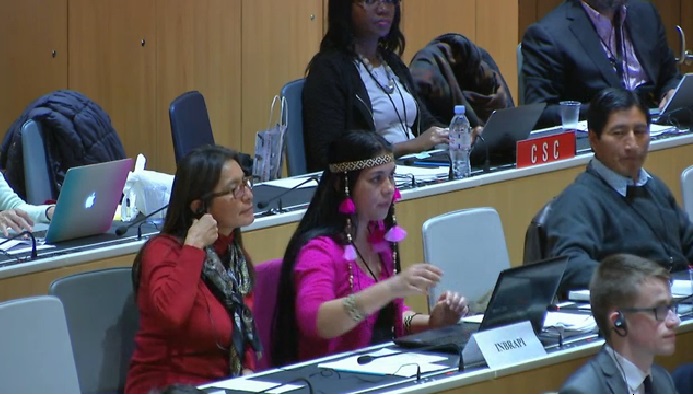
What would be the credibility of the World Intellectual Property Organization committee negotiating a system of protection for traditional knowledge held by indigenous peoples, if none of their representatives could participate in the meetings? That has been a recurring question asked by indigenous peoples and the organisation over the years. But now, if no voluntary contributions are made by governments or others, the next committee meeting could very well be first in 16 years held without a single observer from an indigenous community.

Support IP-Watch: An Appeal To Readers

Intellectual Property Watch needs your financial support. As one of our readers, you know that IP-Watch plays a vital role in international policymaking on intellectual property and innovation through its independent, reliable, balanced and dedicated news coverage. But like other…

WIPO Committee On Traditional Knowledge Agrees On Revised Text For Further Discussions

World Intellectual Property Organization delegates last week agreed on a revised set of draft articles to be further discussed at the next session of the committee working on a potential treaty to protect traditional knowledge. Views differed on the achievements of the week. For the proponents of a binding treaty, the text reflects a better understanding of issues, and some reduction in differences. However, for some developed countries not in favour of a treaty, gaps are still wide open and much work remains.

Popcorn, Football And Chocolate – US Idea To Prompt Discussions At WIPO TK Committee

What do popcorn, chewing-gum, football, syringes, and chocolate have in common? According to a United States paper tabled at the World Intellectual Property Organization, they are all rooted in traditional knowledge. While most efforts are geared this week towards trying to find consensual language on a treaty protecting traditional knowledge, the US said a discussion on what is protectable and what is not would be instructive. Some other delegations resubmitted proposals introducing alternative means of protection than a binding instrument.

New Draft Articles For The Protection Of Traditional Knowledge On Table At WIPO

New draft articles published this morning at the World Intellectual Property Organization committee on traditional knowledge show signs of progress in terms of reducing options. Meanwhile, the United States introduced a proposal for a discussion of what should be protectable and what is not intended to be protected. Delegates have to deliver their take on both documents this afternoon.

First Attempt At Bridging Textual Gaps On Traditional Knowledge Protection At WIPO

A new text suggested by facilitators in the ongoing discussions on the protection of traditional knowledge at the World Intellectual Property Organization attempts to tighten options to facilitate further discussions. They focused on the policy objectives of the potential treaty, what it should cover, and who should benefit from it - whether only indigenous peoples or states as well. Separately, Switzerland made a suggestion for a way forward with "positive" protection of TK.

Panel Explores Relation Between Plant Breeders’ Convention And Plant Treaty

When countries belong to several international instruments, some aspects of those instruments may run contradictory to one another. A symposium held recently by the International Convention for the Protection of New Varieties of Plants (UPOV) sought to explore the interrelations between the convention and the international treaty on plant genetic resources for food and agriculture. Farmers' rights lie at the intersection of the two treaties and while some find the treaties complementary, some others view them as contradictory on farmers' rights. Meanwhile, farmers themselves have been blocked from participating in deliberations.