Category IP Law

Number Of Unique Patent Assertions Declined Over Years, Patexia Finds

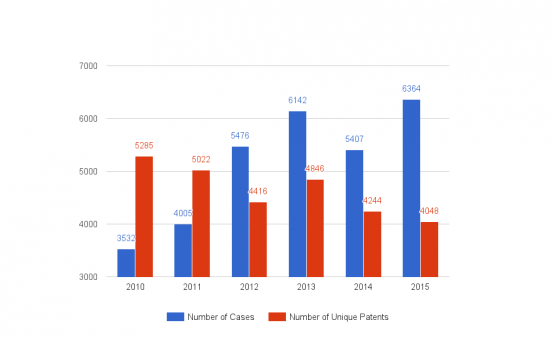
Pedram Sameni of Patexia writes: We recently studied the PTAB data and suggested that although the rise and fall in litigation indirectly affected the rise and fall in IPR challenges, the true driver of IPR challenges is the number of unique patents asserted each year. To learn more, we decided to look at the number of unique patents asserted against different defendants since 2010. We made several interesting discoveries, including the surprising fact that even though the number of cases has been rising, the number of unique patents asserted each year has been declining.

US High Court Restores Treble Damages For Patent Infringement

Pulse Electronics was guilty of patent infringement. That had been decided long ago. The only remaining issue was how much Pulse must pay for its wrongdoing. The company could be liable for treble damages, provided its infringement was willful. Fortunately for Pulse, willful infringement was almost impossible to prove, thanks to a standard established by the Federal Circuit. Unfortunately for Pulse, its lawsuit reached the US Supreme Court. And in its recent ruling on the case, the high court threw out the Federal Circuit’s standard, making it far easier to prove willful infringement. The decision is likely to have an important impact on patent litigation, the courts, and companies doing business in the US.

The Significance Of Uruguay’s Win Over Philip Morris International

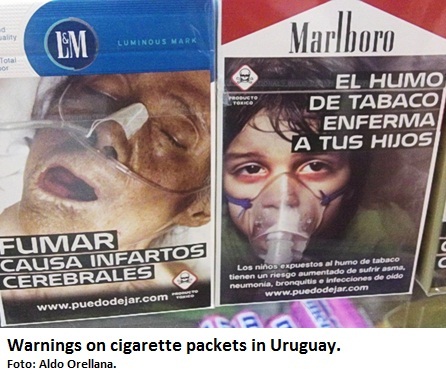
The tobacco industry’s global efforts to use bilateral and multilateral agreements to challenge the spread of tobacco control measures such as trademark-minimising plain packages were dealt a significant blow last week when the World Bank dispute settlement body dismissed a case brought by Philip Morris against the government of Uruguay.

The decision is seen a landmark for those who view the company as using test cases to continually challenge and delay public health protection measures and discourage other countries, particularly those with fewer resources, from strengthening their health regulations. Additionally, the case reasserted that trademarks are subject to government regulations and also illustrated the role that international organisations and actors can play in support of national governments defending their health measures.

Brexit Threatens Legal Uncertainty, Higher Costs For Trademarks, Lawyers Say

Two weeks after the United Kingdom voted to leave the European Union, the potential impact of “Brexit” on patents and trademarks is becoming marginally clearer, intellectual property lawyers said in interviews and a 7 July webinar. Among other things, Brexit would delay the EU unitary patent and unified patent court (UPC) and result in great uncertainty –and higher costs -- for trademark owners, they said.

UK Proposes To Tighten IP Protections Online

The United Kingdom Digital Economy Bill, floated this week, aims to “enable access to fast digital communication services for citizens and businesses, to enable investment in digital communications infrastructure, to shape the emerging digital world to the benefit of children, consumers and businesses, and to support the digital transformation of government, enabling the delivery of better public services, world leading research and better statistics,” the UK government said in the document.

US Courts Split On Legality Of Music Sampling

De minimis non curat lex – the law does not concern itself with trifles. This venerable legal principle is applied throughout the world, but not in one part of US copyright law. Copying any part of a sound recording, no matter how tiny, is actionable copyright infringement, according to an eleven year-old US appellate court ruling. Following that ruling, pop star Madonna found herself sued because her hit song, Vogue, allegedly copied a fraction of a second of another song. That copyright infringement suit was thrown out on 2 June, however, when a different appellate court ruled that de minimis infringements of sound recordings do not create any liability. Now US copyright law is in a muddle.