Category Innovation/ R&D

WHO’s Access Roadmap And The Art Of Accommodation Of Pharma Interest

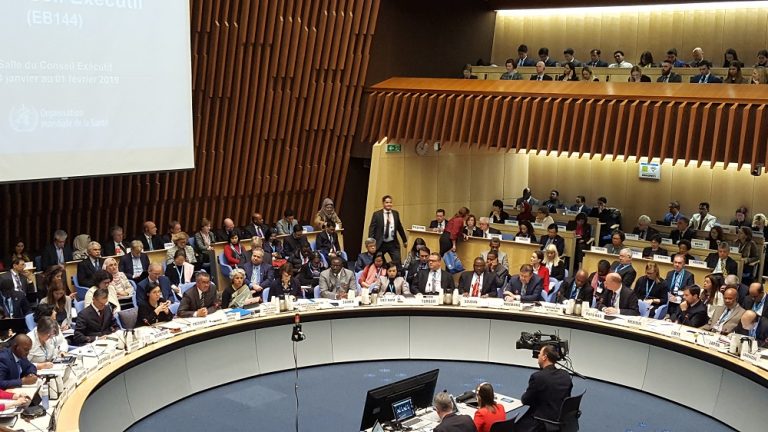
The Roadmap to access to medicines, vaccines and other health products (Roadmap) to be discussed at this week's 144th session of WHO’s Executive Board accommodates vital interest of pharmaceutical TNCs on critical issues such as the approach to access, technical assistance on the use of TRIPS flexibilities and access to biosimilars.

Adoption of the Roadmap in its current form very well accommodates the interest of the Pharmaceutical TNCs and therefore one need not expect any proactive steps by WHO towards promoting access after the adoption of the Roadmap.

US Complaints About Technology Transfer In China: Negotiating The Endgame

Dean Pinkert writes: The United States Trade Representative (USTR) has been open about its view of the difficulties faced by US companies who claim – generally anonymously – that they have been forced to transfer technology to Chinese entities: “The fact that China systematically implements its technology transfer regime in informal and indirect ways makes it ‘just as effective [as written requirements], but almost impossible to prosecute.’” As I explain in this article, I believe such informality is not merely a barrier to prosecutions; it also presents conceptual challenges for US trade negotiators as they attempt to craft effective means to address the concerns of US companies doing business in China.

European Council Advances SPC Waiver For Generics; Negotiations Coming

The European Union Council of member states has approved a mandate for negotiations with the EU Parliament concerning a draft regulation aimed at boosting EU-based generic and biosimilar manufacturing for export by providing an exception to the extended intellectual property protection granted by special protection certificates (SPCs). The mandate brings the draft regulation a step closer to adoption, and it also suggests that Parliament’s recent amendments to the regulation are likely be key areas of debate in the negotiations, which are expected to begin in the coming weeks.

Supporting UHC And Better Explaining IP – The 2019 Pharma Industry Agenda

In 2019, IFPMA work will continue to focus on constructive engagement in supporting UHC and working with others to strengthen health care systems. The association will continue to engage with a range of stakeholders, particularly multilateral organizations, to better explain the benefits of IP and exchange ideas to address issues of coverage, capacity, affordability and sustainability of healthcare.

US IP Attachés: China’s IP Policy ‘Hijacked’ By Local Interests In 2018; Bad Faith Filings A ‘Cancer’

WASHINGTON, DC – Two out of three United States intellectual property attachés based in China last week had tough words for China’s manipulation of IP policy and law over the past year, suggesting they at times “hijack” the legal process in favour of local interests, and are in a mad rush to become the world’s top patent and trademark filers regardless of quality to the point that it has become a “cancer” on the IP registration system. A third US IP attaché, however, took a friendlier and more patient view of China’s actions, downplaying concerns and urging US companies to allow it to continue.

India Proposes Expediting Patents For Women, Small Entities, Waiving PCT Fees

The Indian Ministry of Commerce and Industry from the Department of Industrial Policy and Promotion recently published draft amendments to the Patent Rules of 2003 that would expand the eligibility for expedited examination of patent applications to include women and small entities, and would waive the fees for online filing of international patent applications through the Patent Cooperation Treaty (PCT), among other changes.

Do Patent Trolls Exist? Two Studies Reach Different Conclusions (Part 2)

Two recent academic papers examine whether Non-Practicing Entities (NPEs) deserve their reputation as patent trolls – but the papers reach conflicting conclusions. As discussed in the first part of this article, a paper published by Stanford’s Hoover Institution found that 26 publicly-listed NPEs invest in R&D and do little harm to America’s high tech sector. These findings, however, are less significant than they appear. Another paper, published by Harvard Business School (HBS), found that NPEs do on average behave as patent trolls. How important – and trustworthy – are the HBS findings?

The Future Of The Ideas Business – The Rise Of Data-Driven Invention

New ideas are getting harder to find, and with less ideas there is a decline in organisational productivity and economic growth. This isn’t new, nor is the fact that to counterbalance the decline in idea generation, research and development have received and continue to require heavy investment. But with daily news of innovation centres opening up across the globe, the question remains whether initiatives like open innovation, crowdsourcing, or simply putting more scientific brains together will do this investment justice.

Last month, leading representatives of the IP, R&D and technology arenas met in Switzerland to discuss a technology-based alternative to human only idea generation. Hosted by data-driven invention company Iprova, the 2nd Data-Driven Invention Forum saw attendees from companies, such as Panasonic, Philips and DuPont as well as many other global organisations explore the future of innovation and the role data-driven invention plays in it. Here are some of the conclusions of the conference.

Licensing Experts Share Experiences At WIPO

Voluntary licences are cited by some as the best way to facilitate access to medicines. Terms of the licences are important, many factors have to be taken into consideration, and the earlier the better, as explained by licencing experts at the World Intellectual Property Organization this week.

OECD Report Presents Policies To Balance Innovation With Access To Medicines

The Organisation for Economic Cooperation and Development (OECD) has released a new report that presents policy options for countries to strike a better balance between promoting financial incentives for pharmaceutical innovation and ensuring affordable access to medicines. Finding this balance, the report explains, will be essential for ensuring the sustainability of health systems.