Category Health & IP

WTO Panel On Australia’s Tobacco Plain Packaging: A Fact Dependent Analysis Of TRIPS Art 20

The WTO Panel’s long-awaited Reports in the four complaints against Australia’s tobacco plain packaging measures were circulated on 28 June 2018, more than 4 years since Panel establishment. Australia’s victory was absolute. It successfully defended its measures against every claim. Yet closer analysis of the Panel’s reasoning regarding specific provisions such as Article 20 of the TRIPS Agreement may cause some concern for policy-makers given how much the Panel’s conclusions relied on its assessment of the facts and evidence before it.

Australian Tobacco Plain Packaging Upheld In Decision At WTO

A World Trade Organization dispute settlement panel has ruled that Australia's law requiring tobacco products be sold in plain packages in the interest of public health does not violate the country's obligations at the global trade body. In Australia and increasingly in other countries, tobacco must be sold with no trademarks or marketing visible other than name. The landmark dispute was seen by some as at the nexus of economic and health interests for the WTO.

WIPO Genetic Resources Expert Group Ponders Disclosure Requirement, Databases

On the eve of this week's meeting of a World Intellectual Property Organization committee on genetic resources, an expert group met behind closed doors to discuss some of the more difficult issues. The report of the expert group to the full committee on 25 June confirmed differences but also common views and avenues to be explored, and has been carried into the week.

US Raises Economic Concerns About Proposals At WIPO On Patents And Genetic Resources

Normally known for sanguine views of rules to strengthen intellectual property rights globally, the United States government this week submitted a paper at the World Intellectual Property Organization putting forward private sector economic concerns about proposals to strengthen international rules for patenting of genetic resources aimed largely at helping developing countries.

The Myth Of IP Incentives For All Nations – Q&A With Carlos Correa

Dr Carlos Maria Correa, an Argentinian economist and lawyer, is globally renowned for his expertise on international trade, intellectual property, health, technology transfer, investment policy and especially their impact on developing countries. He has authored several books and academic articles and been a visiting professor at several universities. Additionally, he has consulted with many United Nations agencies, the World Bank, and other regional and international organisations and has advised several governments on intellectual property, innovation policy and public health. Correa was a member of the UK Commission on Intellectual Property, of the Commission on Intellectual Property, Innovation and Public Health established by the World Health Assembly and of the FAO Panel of Eminent Experts on Ethics in Food and Agriculture.

Currently, he is the Director of the Centre for Interdisciplinary Studies on Industrial Property and Economics Law, at the University of Buenos Aires. He takes over as the Executive Director of the Secretariat of the Geneva-based South Centre from 1 July 2018. Correa recently engaged in an interview with Patralekha Chatterjee for Intellectual Property Watch. [Note: this interview is number two of two. The first was with Dr Othoman Mellouk.]


The Myth Behind Health And Trade Agreements – Q&A With Othoman Mellouk

Dr Othoman Mellouk is a Moroccan treatment advocate who has been working on intellectual property and access to medicines for more than a decade. He is the Intellectual Property and Access to Medicines Lead at the international treatment preparedness coalition (ITPC), a global network of people living with HIV and their advocates working together to achieve access to HIV and Viral Hepatitis and a member of the WHO Strategic and Technical Advisory Committee on HIV and Hepatitis. Dr Mellouk started off in the Association for the Fight against AIDS which has been at the forefront of the response to HIV in Morocco and the introduction of the first anti-HIV generic medicines in the country. In a series supported by the Make Medicines Affordable organisation, Mellouk recently engaged in an interview with Patralekha Chatterjee for Intellectual Property Watch. [Note: this interview is one of two. An interview with Carlos Correa will follow.]

Legislation For South Africa’s New IP Policy Likely After Elections Next Year

Legislative changes giving effect to South Africa’s recently published Intellectual Property Policy “Phase 1” will not take place during this term of government, the country’s trade minister has said. Meanwhile, a side-by-side comparison with the 2017 draft legislation shows a series of changes in the final policy, and the pharmaceutical industry is complaining but appears determined to continue investing in the country.

TRIPS Council Debates IP Improving Lives, Competition Law To Increase Medicines Access

Whether intellectual property rights are improving lives or whether they should be reined in by tools such as competition law to increase access to medicine, education, and innovation, was debated this week at the World Trade Organization committee on intellectual property. Also on the agenda was a suggestion by least-developed countries to create incentives for developed country companies and institutions to transfer technologies for the benefit of the poorest countries.

Experts In Geneva: Substandard, Falsified Medicines Not About IP

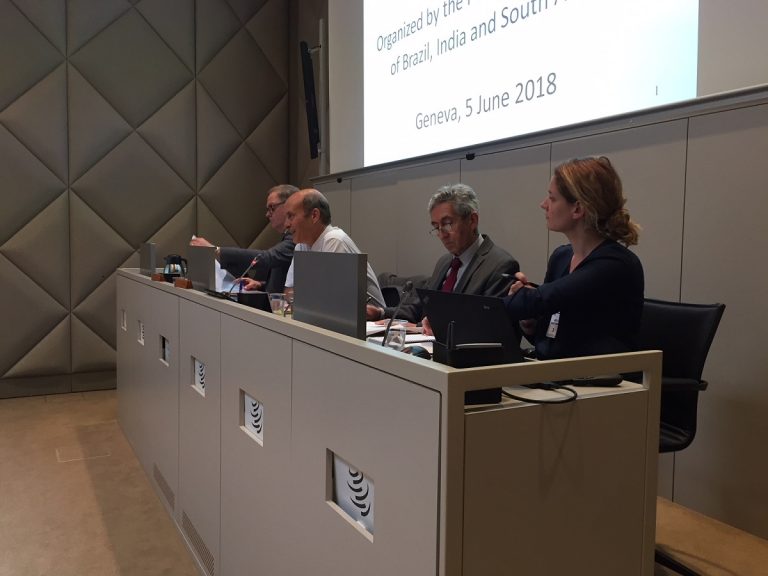
Falsified and substandard medical products continue to be a global concern, and how those products are characterised is important to avoid confusion, particularly with intellectual property rights infringement. A panel convened by Brazil, India and South Africa yesterday at the World Trade Organization looked at the implications of a new definition of such products at the neighbouring World Health Organization.