Category Finance

National And Regional Initiatives To Spur Research For New Antibiotics
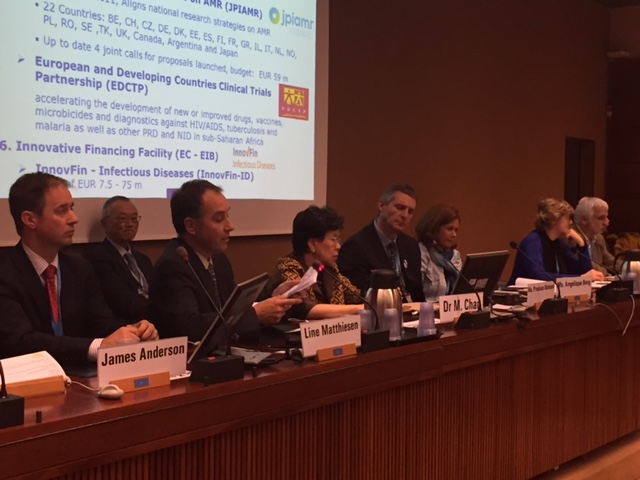
A side event to the World Health Assembly organised by a number of delegations on antibiotic research and innovation reflected the deep global concern about antimicrobial resistance and the lack of candidates to replace what was once considered as a miracle of modern medicine.
Shift In Discussions About R&D At This Week’s World Health Assembly

Public health advocates - and many nations - had high hopes that this year's World Health Assembly could finally agree on some alternative ways to fund research and development that leads to affordable medical products by de-linking R&D costs from prices, through the long-awaited discussion of a landmark 2012 report of a WHO expert group on medical R&D. This week, that discussion has spread across the highest profile topics of the week such as antimicrobial resistance and emergencies, but some are concerned that the public health safeguards recommended by the expert group may be being left behind.

G7, In Japan, Put Their Heads Together Over Crises

Eight ministerial meetings have prepared a fat stack of paper, the “sherpas” have nearly concluded their work, and civil society once more has passed its own resolution on how they propose to tackle the most daunting global problems. Now it's time for the G7 leaders' roundtables – and the photo ops in Ise-Shima, Japan. For two days, the heads of state of Canada, France, Germany, Italy, Japan, the United Kingdom and the United States will talk on trade, foreign policy, climate change and energy. And maybe some digital, R&D and intellectual property issues.

Countries ‘Disappointed’ With WHO Reform Progress

The World Health Organization secretariat this week reported to its member states on progress made in implementing sweeping programmatic, governance, and management reforms. The report? WHO has made progress, but there is still a long way to go. Member states, meanwhile, used the opportunity to express concern about the way it is going.

USITC Finds TPP Benefits US Economy, But Maybe Not Jobs; Unclear On IP Rights

The United States International Trade Commission (ITC), an independent government agency, today released an 800-page analysis of the economic impact of the Trans-Pacific Partnership (TPP) Agreement completed last year.

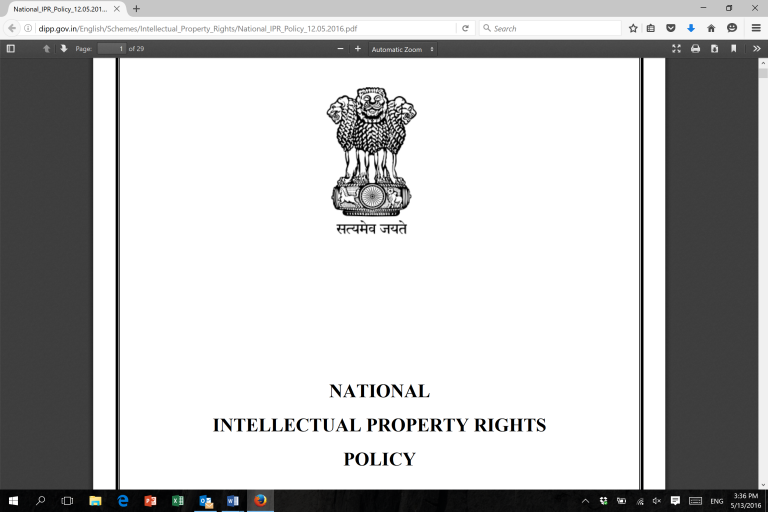
India Releases New Intellectual Property Policy; Reactions Building

The Indian government today released its long-awaited new intellectual property policy, and preliminary reactions appear to be that it caters to international pressures while attempting to provide a national focus. A more careful reading with reactions will follow.

As Patients Wait, WHO Members Chip Away At Decision On Medical R&D Funding

A number of World Health Organization member states attended a meeting last week aimed finding ways to sustainably finance research and development for medical products, especially those for poor populations lacking means to pay high prices. According to the outcome document and a WHO official, they heard many viewpoints from experts and made progress but much was left for the World Health Assembly later this month.

The Bipolar Nature Of Academic Publishing

Since the late twentieth-century shift from the liberal university to the neoliberal university (the latter distinguished by the managerial class installed to leverage and extract value from academic research, plus polish the brand of the franchise), the publications’ ecosystem for academics, foremost in the Arts and Humanities, has been altered beyond recognition. Notably, it has exponentially expanded while at the same time suffering maximum constriction in the form of what legal scholars have called the “great copyright robbery” (Bernt Hugenholtz, 2000), writes Gavin Keeney.