Category Enforcement

Non-Corporate Entities Join Forces Against Adoption Of Plant Breeders’ Rights Regulations In Africa

The United Nations Special Rapporteur on the Right to Food, civil society, and farmers' representatives have raised serious concerns on the upcoming adoption of draft regulations of a protocol protecting breeders' rights in Africa. Civil society groups and farmers' representatives have been blocked from participating in the meeting expected to adopt the regulations, according to them. The Special Rapporteur is calling for a halt to the process, and for starting again with a more transparent, inclusive, and evidence-based process.

Helping Patenters In A Sea Of PAEs: Interview With LOT Network’s Ken Seddon

Patent assertion entity (PAE) activity has skyrocketed in the past decade and much discussion has occurred around what to do in response to patent holders whose strategy is more focused on legal battles than innovating. One notable group has risen up to bring together global companies to address the PAE issue with a novel sharing approach. In an interview with Intellectual Property Watch, Ken Seddon, CEO and President of LOT Network, talks about the group's rapid growth, what's coming next, and how not to bring a squirt gun to a nuclear fight.

Popcorn, Football And Chocolate – US Idea To Prompt Discussions At WIPO TK Committee

What do popcorn, chewing-gum, football, syringes, and chocolate have in common? According to a United States paper tabled at the World Intellectual Property Organization, they are all rooted in traditional knowledge. While most efforts are geared this week towards trying to find consensual language on a treaty protecting traditional knowledge, the US said a discussion on what is protectable and what is not would be instructive. Some other delegations resubmitted proposals introducing alternative means of protection than a binding instrument.

First Attempt At Bridging Textual Gaps On Traditional Knowledge Protection At WIPO

A new text suggested by facilitators in the ongoing discussions on the protection of traditional knowledge at the World Intellectual Property Organization attempts to tighten options to facilitate further discussions. They focused on the policy objectives of the potential treaty, what it should cover, and who should benefit from it - whether only indigenous peoples or states as well. Separately, Switzerland made a suggestion for a way forward with "positive" protection of TK.

WHO Group Suggests New Name For Falsified Medicines, Dropping ‘Counterfeit’

A widely representative World Health Organization technical working group has recommended new terminology for substandard or falsified medicines, after years of sharp disagreement among WHO members that led to the tongue-twister: “substandard/spurious/falsely-labelled/falsified/counterfeit” medical products. The working group recommends a simpler formula: kick out intellectual property rights by dropping the term “counterfeit” and just call the products “substandard and falsified.”

Resale Royalty Right: A Way To Redress Imbalance In Copyright Revenue, WIPO Told

When visual artists sell their work, they usually perceive a price for that work. If it is resold at a much higher price, some countries provide for a resale right, providing artists with resale royalties. In other countries, such a right does not exist, putting visual artists in a disadvantageous situation, particularly indigenous artists, whose work can become very valuable on the international art markets.

What’s Coming On IP For The US, Geneva? An Interview With Q. Todd Dickinson

Q. Todd Dickinson is a shareholder at Polsinelli law firm, and was director of the United States Patent and Trademark Office (USPTO) under President Clinton, a former lead IP counsel for two Fortune 50 corporations, and most recently executive director of the American Intellectual Property Law Association (AIPLA). In an interview with Intellectual Property Watch on 18 November in the margins of the IP Dealmakers conference in New York, Dickinson discussed US prospects for national and international IP policy after the presidential election, changes in Geneva, reform of US IP law, and repairing relationships.

Online Enforcement Index Aims To Aid Patent Filing Decisions

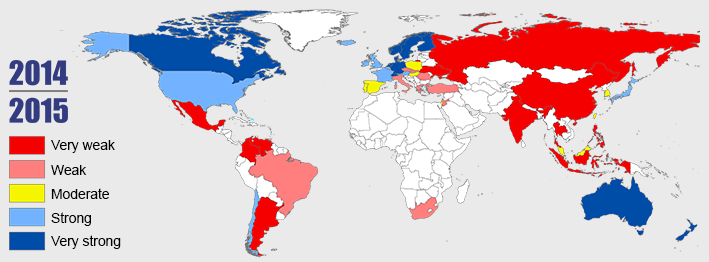
Part of the decision whether to file a patent in a particular country rests on how likely it is the patent can be effectively enforced, but until recently the information needed to answer that question was mostly anecdotal, Nikolaos Papageorgiadis, University of Liverpool Management School (UK) international business lecturer, said at a webinar. To remedy that, he and Cranfield School of Management Economic Policy, Sustainability and Performance Reader Konstantinos Alexiou created the Index Of Patent Systems Strength, which ranks the effectiveness and efficiency of the patent systems of 49 countries.

Message To WIPO: Here’s The Assistance We African Inventors Really Need

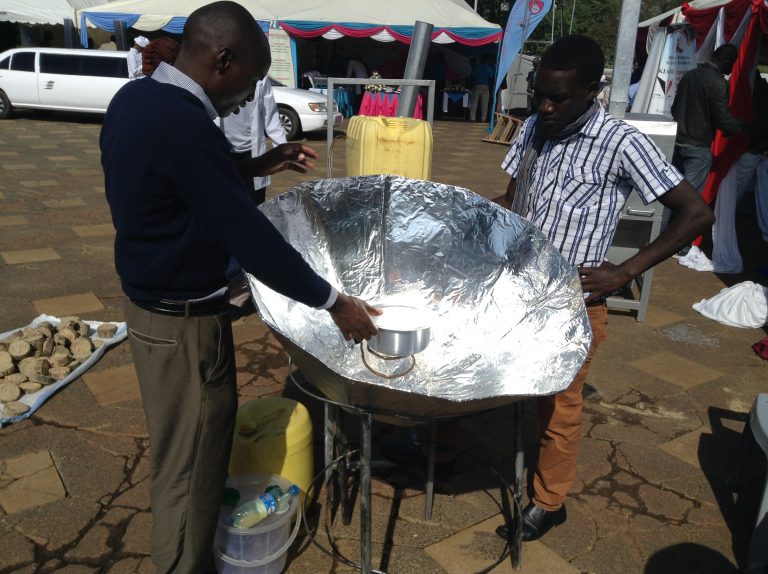
NAIROBI, Kenya -- Patent protection is a challenge to many an inventor in developing countries. Inventors in most African countries, for instance, are compelled to surmount huge obstacles to protect their inventions. In order to remedy the situation, the World Intellectual Property Organization (WIPO) in collaboration with the World Economic Forum has launched an Inventor Assistance Programme (IAP). Now, the local inventor community in Kenya has a few words for WIPO on how to expand the programme to make it more effective on the ground. Trust is one of them.