Category Biodiversity/Genetic Resources/Biotech

Non-Corporate Entities Join Forces Against Adoption Of Plant Breeders’ Rights Regulations In Africa

The United Nations Special Rapporteur on the Right to Food, civil society, and farmers' representatives have raised serious concerns on the upcoming adoption of draft regulations of a protocol protecting breeders' rights in Africa. Civil society groups and farmers' representatives have been blocked from participating in the meeting expected to adopt the regulations, according to them. The Special Rapporteur is calling for a halt to the process, and for starting again with a more transparent, inclusive, and evidence-based process.

New Draft Articles For The Protection Of Traditional Knowledge On Table At WIPO

New draft articles published this morning at the World Intellectual Property Organization committee on traditional knowledge show signs of progress in terms of reducing options. Meanwhile, the United States introduced a proposal for a discussion of what should be protectable and what is not intended to be protected. Delegates have to deliver their take on both documents this afternoon.

FAO Postpones New Director For Office In Geneva

The United Nations Food and Agriculture Organisation (FAO) today announced the postponement of the assumption of duties of the person appointed to become the new director of the FAO liaison office in Geneva. The postponement comes after the government of Peru raised concerns that FAO's appointment of former Peruvian first lady Nadine Heredia Alarcón interferes with a government investigation of corruption and money-laundering against her.

Panel Explores Relation Between Plant Breeders’ Convention And Plant Treaty

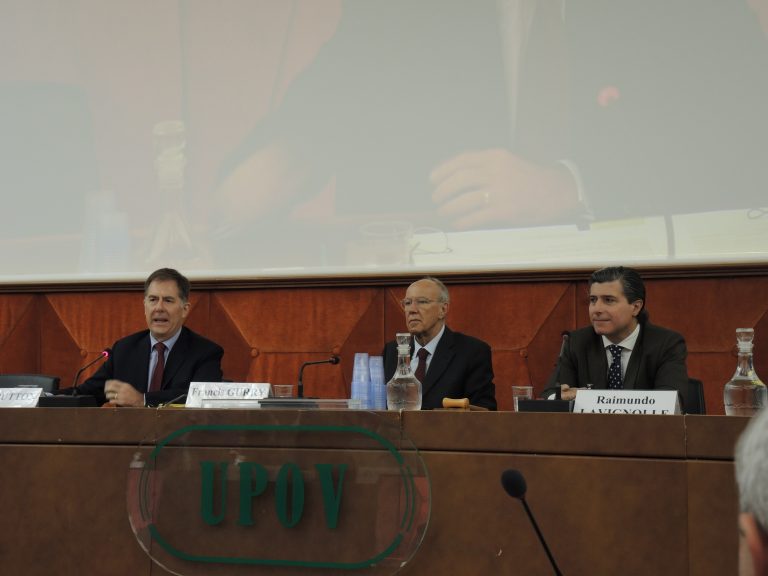
When countries belong to several international instruments, some aspects of those instruments may run contradictory to one another. A symposium held recently by the International Convention for the Protection of New Varieties of Plants (UPOV) sought to explore the interrelations between the convention and the international treaty on plant genetic resources for food and agriculture. Farmers' rights lie at the intersection of the two treaties and while some find the treaties complementary, some others view them as contradictory on farmers' rights. Meanwhile, farmers themselves have been blocked from participating in deliberations.

Countries Asked To Revise IP Laws Preventing Implementation Of Farmers’ Rights

A global consultation on farmers’ rights recently co-organised by Indonesia and Norway provided recommendations to the international plant treaty, calling for the establishment of an ad hoc working group on farmers’ rights. They also recommended that contracting parties of the treaty revise their intellectual property laws and other legislation that may create obstacles for the realisation of farmers’ rights.

WTO TRIPS Council Ponders Regional Innovation Models, Other Issues

This week at the World Trade Organization intellectual property committee a range of mostly developed countries requested to discuss regional innovation models, and countries presented examples of such models. The committee also addressed the issue of “non-violation” complaints and issues of biodiversity and trade, observers, and e-commerce.

Farm-Saved Seeds Sow Discord; Breeders, Users, Seek Clear Definition At UPOV

When a harvested material from a protected plant variety, such as seeds, is used for further sowing and cultivating, royalties need to be paid to the breeder of this protected variety. However, according to breeders, farm-saved seeds are sometimes used as an excuse to avoid paying royalties, and clear definitions should be established internationally. Conversely, small farmer associations think that once farmers buy a protected variety, they should be able to re-use those seeds, exchange or sell them.

The International Union for the Protection of New Varieties of Plants (UPOV) organised a Seminar [pdf] on Propagating and Harvested Material in the Context of the UPOV Convention on 24 October.

Freedom To Utilize Genetic Resources? The Nagoya Protocol Two Years Later

At its second anniversary, the Nagoya Protocol is ushering in an international access and benefit-sharing (ABS) system that may impact the freedom to operate with genetic resources. Those who utilize genetic resources and information should understand the emerging framework and take actions to reduce the risk of patent invalidation, legal liability and reputational harm that may flow from a violation of ABS requirements, writes Bruce S. Manheim.

Panel: WIPO Assistance Should Provide Developing Countries With Choices On Plant Variety Protection

A side event to last week’s annual General Assemblies of the World Intellectual Property Organization looked at ways for developing countries to design sui generis system for protecting new varieties of plant. The event also looked into the technical assistance provided by WIPO, which, according to the groups, focuses only on the International Union for the Protection of New Varieties of Plants (UPOV) system.