Category Access to Knowledge/ Education

High-Level UN Initiative On Global Public Health Gap Holds Landmark Hearing

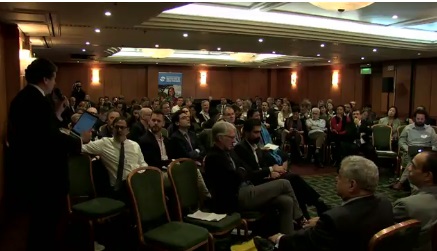
An initiative of the United Nations secretary general yesterday gathered what could be described as an assembly of many of the world’s best thinkers and practitioners on public health and intellectual property rights. Industry, activists, academics, international organisations, and possibly some governments poured out their views for nearly seven hours – at times coming to tears and tension – shepherded by an astute moderator, as they responded to the call to take a longstanding debate on medicines access and high prices to a breakthrough.

UN Global Dialogue On Innovation And Access To Medicines This Week

The United Nations Secretary General’s High-Level Panel on Access to Medicines is holding a global dialogue this month, attended by governments, civil society, industry and academia, to discuss potential solutions to promote innovation and at the same time increase access to medicines. The first public dialogue session is this week, on 10 March in London.

Alleged R&D Costs: Not A Transparent Driver Of Drug Prices

Whether laws enforcing transparency on costs would help curb extortionate drug prices in today’s world is hardly predictable now that pharma companies and their allies are lobbying governments to scupper any rules that would require them to disclose the real R&D costs and profits of their medicines and the rationale for charging what they do, writes Daniele Dionisio.

Year Ahead In Internet Governance: Where The Internet Stewards Will Go In 2016

Transitioning of the Internet Assigned Numbers Authority (IANA) out of the United States government - or not – is the top issue of a narrower internet governance community in 2016. Yet looming behind the many high-level government events are some more controversial topics that are attracting a wider set of stakeholders: the unresolved issues of privacy, free flow of data, surveillance and encryption, as well as the security or rather insecurity of a space of networked machines, including military machines.

US Copyright Office Recommends No Change To The “Making Available” Right

The “making available right,” affirmed by the 1996 World Intellectual Property Organization “Internet Treaties”, gives authors the prerogative to authorise digital access to their copyrighted works “in such a way that members of the public may access these works from a place and at a time individually chosen by them.” But while United States government officials have routinely held that the Digital Millennium Copyright Act (DMCA) which implements the treaties covers all of the conduct envisioned by the right, courts have been less consistent, the US Copyright Office said in a 23 February congressionally-ordered report that recommended no change to current law.

TTIP: Alternative ISDS No Real Alternative, NGOs Warn

Just days before the restart of negotiations for the Transatlantic Trade and Investment Partnership (TTIP) on 22 February in Brussels, a large coalition of non-governmental organisations led by the Corporate Europe Observatory (CEO) published a critical report on new proposals for the highly debated investor-state dispute settlement (ISDS) mechanisms. The activists called the Investment Court System (ICS) prepared by EU Commissioner Malmstroem as an alternative a mere “ISDS zombie.”