Category Access to Knowledge/ Education

News Reports And Fair Dealing: Moneyweb v Media24

The recent decision involving Moneyweb and Media24 (Moneyweb (Pty) Limited v Media 24 Limited & Another [2016] ZAGPJHC 81) is an important one for copyright lawyers in South Africa because it is the first time that two provisions relating to news reporting of the Copyright Act 1978 (the Act) have been judicially considered, namely, sections 12(1)(c)(i) and 12(8)(a). In fact, it is the first time that the application of the fair-dealing provision, section 12(1), has received any judicial consideration, whether in the context of news reporting or otherwise.

WIPO Copyright Committee In Freewheel Mode; Conversation Continues

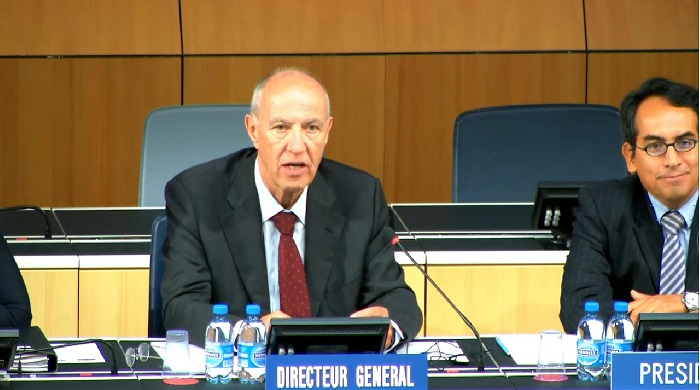
It is difficult to understand whether the prospect of a treaty protecting rights of broadcasters is getting nearer or farther away at the World Intellectual Property Organization, as some countries are still calling for a diplomatic conference to finish the treaty, while others are saying agreement on core issues such as what and who the treaty should protect seems elusive. And the committee discussion of copyright exceptions and limitations was nourished by non-governmental entities explaining the need for those exceptions.

The Bipolar Nature Of Academic Publishing

Since the late twentieth-century shift from the liberal university to the neoliberal university (the latter distinguished by the managerial class installed to leverage and extract value from academic research, plus polish the brand of the franchise), the publications’ ecosystem for academics, foremost in the Arts and Humanities, has been altered beyond recognition. Notably, it has exponentially expanded while at the same time suffering maximum constriction in the form of what legal scholars have called the “great copyright robbery” (Bernt Hugenholtz, 2000), writes Gavin Keeney.

Infojustice.org – Australian Commission Recommends Fair Use To Restore Balance In Copyright Law

Infojustice.org reports: A draft report by the Australian Productivity Commission (APC) concludes that the current copyright law fails to properly balance the interests of copyright holders and users. It warns that “Australia’s copyright arrangements are weighed too heavily in favour of copyright owners, to the detriment of the long-term interests of both consumers and intermediate users.” The APC makes recommends changes to the law to address the imbalance, including “the introduction of a broad, principles-based fair use exception.”

MSF Issues In-Depth Report On R&D And Drug Prices

Médecins Sans Frontières (MSF, Doctor Without Borders) today announced a report detailing what it calls failings in the current system for developing new drugs in ways that all patients can afford and access, and providing proposed policy options for addressing the problems.

Surprise! Much Work Being Done On Transparency Of Patents On Medicines

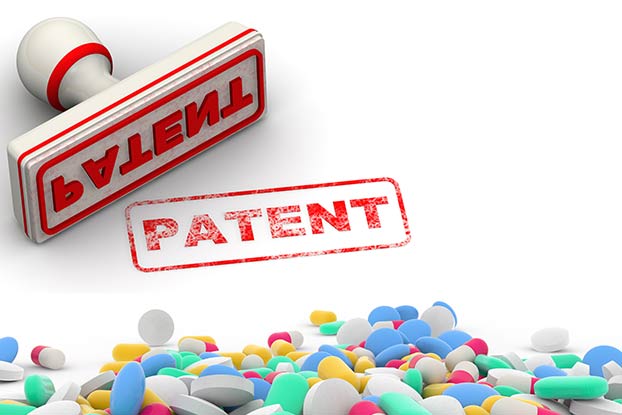
James Love writes: In a recent paper by Reed F. Beall and Amir Attaran [KEI's April 12, 2016 comment here: http://www.keionline.org/node/2467], and in the WIPO seminar discussions about the paper, the authors have held themselves out as more or less lonely voices calling for transparency of patent landscapes on essential medicines. This surprised and offended the many people who have not only been concerned about the lack of transparency on patent landscapes, but have been doing most of the work in digging out the facts, and/or proposing remedies.

Why We Celebrated World Intellectual Property Day 2016

Corey Salsberg writes: Yesterday was World Intellectual Property Day. April 26 is the day we celebrate and call attention to the global intellectual property (IP) system. Why do we set aside a day for the entire world to stop and reflect on a subject that, for many, may seem more at home in board rooms, lecture halls, and legislatures, than in cafes, farms, and internet blogs?