Category Subscribers

Brexit Could Have Broad Impact On UK Audiovisual Sector

It is too soon to say precisely what impact the United Kingdom's departure from the European Union might have on Britain's audiovisual sector, but among other things, Brexit could bring changes to the scope of copyright law and protections, rights clearance, online AV services and content creation, lawyers said.


International Trademark Interoperability Projects Advance

Projects aimed at creating a more interoperable international trademark system are moving forward, according to the US Patent and Trademark Office and the Japan Patent Office (JPO). Among those in the works are the USPTO-led TM5 ID List Project, which USPTO Commissioner for Trademarks Mary Boney Denison said will lead to faster processing of high-quality trademarks around the world.

WTO DG Sees Positive Changes, More Engagement; Would Consider A Second Term

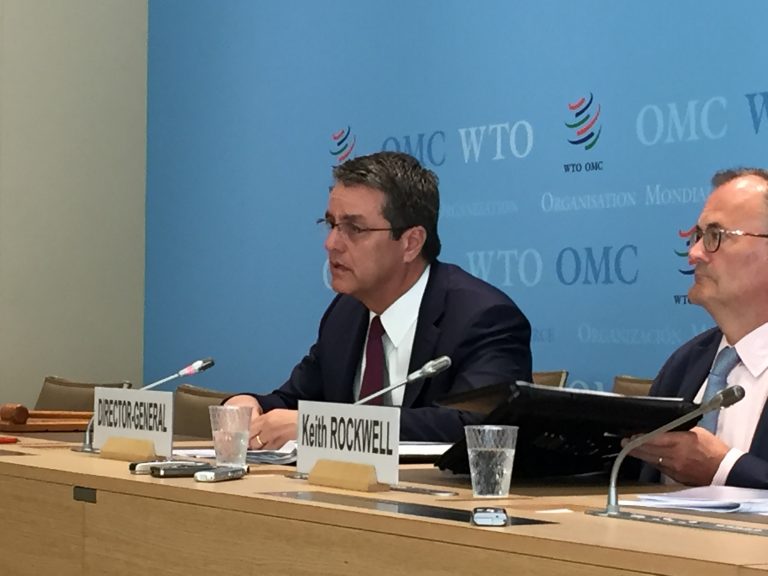
World Trade Organization Director General Roberto Azevêdo today said he would consider a second mandate at the head of the organisation. He also described a positive momentum in the organisation in the first semester of 2016, after two successful ministerial conferences, with members coming up with new ideas. About Brexit, potential scenarios are being explored but it seems a lot of renegotiations might be on the United Kingdom's plate.

Google Anti-Piracy Report Criticised By Content Owners

Google is doing more to counter online copyright infringement than ever before, it said in its “How Google Fights Piracy 2016 Update,” claiming takedowns of over 500 million webpages in response to rights holder requests. Yet the music industry and an academic said the company needs to up its game.

US High Court Restores Treble Damages For Patent Infringement

Pulse Electronics was guilty of patent infringement. That had been decided long ago. The only remaining issue was how much Pulse must pay for its wrongdoing. The company could be liable for treble damages, provided its infringement was willful. Fortunately for Pulse, willful infringement was almost impossible to prove, thanks to a standard established by the Federal Circuit. Unfortunately for Pulse, its lawsuit reached the US Supreme Court. And in its recent ruling on the case, the high court threw out the Federal Circuit’s standard, making it far easier to prove willful infringement. The decision is likely to have an important impact on patent litigation, the courts, and companies doing business in the US.

Swift Decision On Plain Packaging At WTO Unlikely; Ukraine Drops Out

As the list of countries adopting legislation making the packaging of tobacco products a lot less sexy is growing, the long-awaited decision of a World Trade Organization panel on Australia's decision to enforce such legislation might not be coming before the end of the year. Meanwhile, one of the countries complaining about Australia's legislation has left the fight.

Post-Huawei v ZTE: Are FRAND Negotiations Finally More Balanced In Europe?

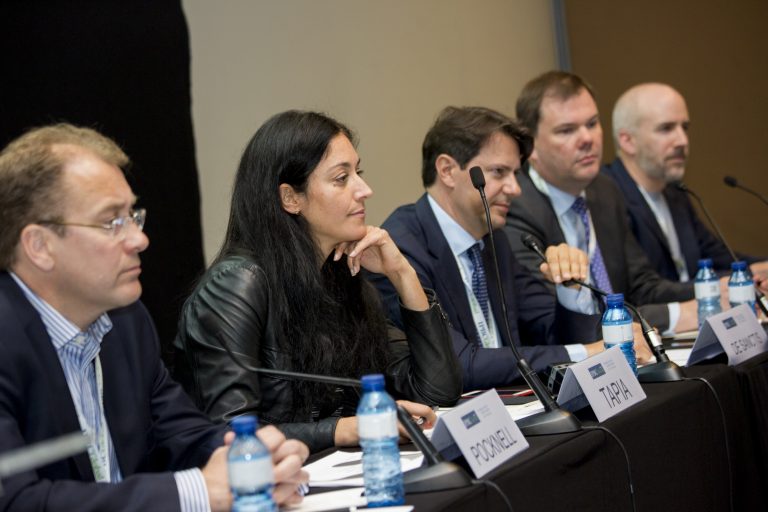
BARCELONA, Spain -- The Huawei v ZTE Case C - 170/13, 21 July 2015 prescribed some guidelines for fair, reasonable and non-discriminatory (FRAND) licensing negotiations, for both standard-essential patent holders and users. A recent private-sector panel addressed European FRAND case law and the latest information and communications technology industry policy opinions, in particular concerning royalty assessment rate (end-user or technology), royalty stacking, patent pool approach and injunctions.