Category English

EU Copyright Reform Proposal Clears Lead Legislative Committee, To Cheers And Jeers

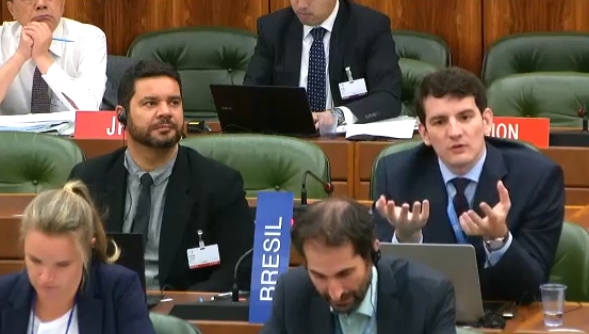
The European Parliament Legal Affairs Committee (JURI) adopted its report on the European Commission-proposed copyright in the digital single market directive yesterday. The vote, by the lead committee vetting the proposal, sparked a continuation of the acrimonious debate that has raged for many months over several controversial provisions: The creation of a new right for online publishers and a requirement that Internet platforms monitor users’ uploads for copyright infringements. The narrow majority that approved the report by German Member of the European Parliament (MEP) Axel Voss, of the European People’s Party, “suggests that the struggle is still long,” telecom consultant Innocenzo Genna blogged.
The Myth Of IP Incentives For All Nations – Q&A With Carlos Correa

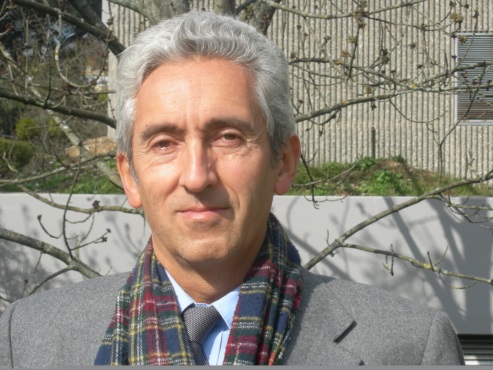
Dr Carlos Maria Correa, an Argentinian economist and lawyer, is globally renowned for his expertise on international trade, intellectual property, health, technology transfer, investment policy and especially their impact on developing countries. He has authored several books and academic articles and been a visiting professor at several universities. Additionally, he has consulted with many United Nations agencies, the World Bank, and other regional and international organisations and has advised several governments on intellectual property, innovation policy and public health. Correa was a member of the UK Commission on Intellectual Property, of the Commission on Intellectual Property, Innovation and Public Health established by the World Health Assembly and of the FAO Panel of Eminent Experts on Ethics in Food and Agriculture.

Currently, he is the Director of the Centre for Interdisciplinary Studies on Industrial Property and Economics Law, at the University of Buenos Aires. He takes over as the Executive Director of the Secretariat of the Geneva-based South Centre from 1 July 2018. Correa recently engaged in an interview with Patralekha Chatterjee for Intellectual Property Watch. [Note: this interview is number two of two. The first was with Dr Othoman Mellouk.]

WIPO Workshop Looks At Potential Impact Of Reducing Patent Fees For Universities

The World Intellectual Property Organization's main financial resource is from the global patent treaty it manages, allowing inventors to file international patent applications and gain protection in a large number of countries. WIPO members have been debating for some time whether universities should benefit from a fee reduction, in particular those from developing countries to encourage patent filing. A workshop held at WIPO this week pondered whether a fee reduction would lead to more patenting of inventions by universities. The answer is apparently not clear-cut.

EPO Staff, Users List Priorities For Incoming President

As the European Patent Office (EPO) prepares to welcome a new president, staff members and patent practitioners are setting out their priorities and suggestions for the newcomer, António Campinos. Topping the list for patent examiners is ending the contentious relationship between management and employees. Patent attorneys and litigators, meanwhile, want to see more attention paid to creating a fair balance between the speed of patent grants and patent quality.

Прекратить неавторизованный доступ к генетическим ресурсам (а именно, Биопиратство): принцип ограниченной открытости

«Доступ к генетическим ресурсам» и «справедливое и честное распределение выгод от их использования» были камнем предкновения на всех тринадцати Конференциях сторон-участников Соглашения Организации Объединенных Наций от 1993 года о Биологическом разнoобразии (CBD). Слова в кавычках составляют третью задачу договора, которая переплетена с двумя первыми, а именно с задачей консервации и устойчивого использования. По первым буквам английского названия эта задача сокращенно обозначается как «ABS». Несмотря на 25 лет усилий и при размерах био-экономики порядка 1 триллиона долларов [1], было заключено немного контрактов [2]. И в этом малом количестве контрактов денежная часть так незначительна, что их участники не пожелали ее обнародовать. «Закон ABS Бразилии» от 2015, который вошел в силу 6 ноября 2017, позволяет чтобы отчисления от суммы продаж составляли всего одну десятую процента[3]. Используя выражение известного ученого-законоведа, потребитель платит «пшик» авторам биоресурсов.

The Myth Behind Health And Trade Agreements – Q&A With Othoman Mellouk

Dr Othoman Mellouk is a Moroccan treatment advocate who has been working on intellectual property and access to medicines for more than a decade. He is the Intellectual Property and Access to Medicines Lead at the international treatment preparedness coalition (ITPC), a global network of people living with HIV and their advocates working together to achieve access to HIV and Viral Hepatitis and a member of the WHO Strategic and Technical Advisory Committee on HIV and Hepatitis. Dr Mellouk started off in the Association for the Fight against AIDS which has been at the forefront of the response to HIV in Morocco and the introduction of the first anti-HIV generic medicines in the country. In a series supported by the Make Medicines Affordable organisation, Mellouk recently engaged in an interview with Patralekha Chatterjee for Intellectual Property Watch. [Note: this interview is one of two. An interview with Carlos Correa will follow.]

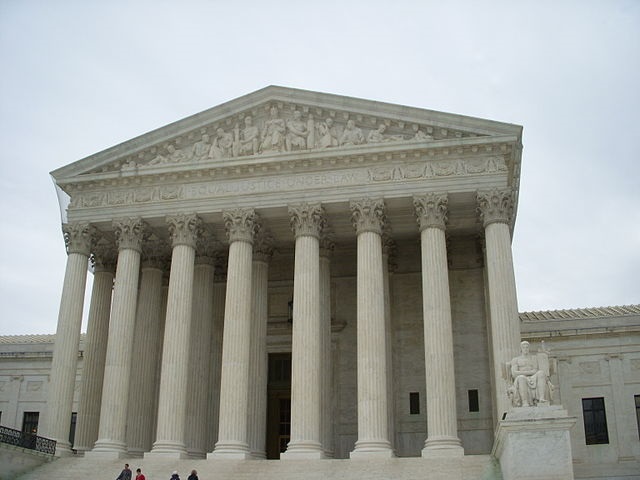
Rethinking Article III Standing In IPR Appeals At The Federal Circuit (US)

If the Federal Circuit will not correct its misplaced jurisprudence, then it is time for the Supreme Court to correct course, and bring into line the Federal Circuit’s IPR standing to appeal jurisprudence, with the Supreme Court’s (and other Circuits’) more forgiving law of allowing petitioners whose petitions are denied, to challenge such denials, particularly when Congress has set forth reasonable conditions, like Section 319, upon which such challenge is to occur, write Charles Macedo, Chandler Sturm, and James Howard.

Deference, Not Delegation! – WIPO PCT Negotiations

A new PCT Proposal seeks to amend the PCT Regulations so as to provide Member States to enter into a voluntary or opt-in arrangement that would allow such Member state to ‘outsource’ it’s patenting mechanism to another country/ regional treaty office even if it is not a member of such regional treaty. However, a patenting office with a full-fledged examination cadre acts a core component in capacity building for the Member State and serves to protect against imposition of TRIPs plus provisions by being an active part of the national policy discourse. Instead of opting in for full-fledged ‘outsourcing’ of their patenting function, it may be a better idea (in the long term) to develop their internal patent office cadre, develop appropriate IP policies best suited to their stage of development and at the same time, giving deference to the patenting decisions of like-minded countries. Developing countries will stand to benefit more by showing deference to decisions of like countries, rather than delegating the power to make those decisions. By granting a Contracting state the power to grant and reject patents of another State, this proposal could tantamount to introducing substantive patent law provisions through the backdoor: an endeavour to harmonize substantive patent law that the WIPO has failed to achieve over the years.