Category English

Intangible Capital Rising, IP Key For Start-Ups, Traditional Growth Model Has To Change, Panellists Say
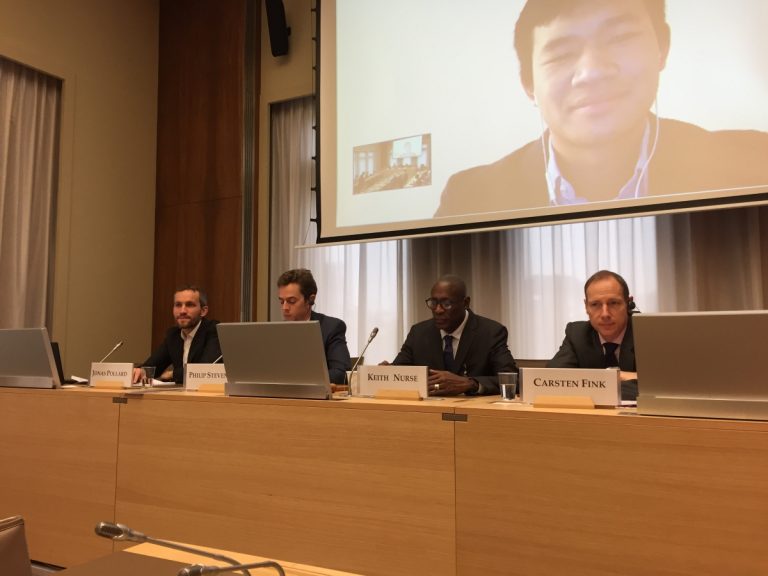
The importance of intangible capital is growing and so is the significance of intellectual property, according to some, and in particular in the new economy. Start-ups see intellectual property as an indispensable tool to attract investors and put their innovations onto the market. Developing countries still mainly stuck in what some call the "commodity trap" have to identify and exploit their intellectual property assets, according to panellists at an event held at the World Trade Organization yesterday.
New EU Directive Limits Hate Speech, Establishes European Content Quotas

A new directive adopted today by European Union member governments updates and strengthens regulations on video-sharing platforms and other newer forms of media, emphasising the public interest, elevating protections for children, and establishing a 30 percent quota of European content in on-demand audiovisual media services.

Report Finds “Overpatenting”, Overpricing Of Top Diabetes Drug In US

Non-profit patent researchers studying the most prominent prescription insulin drug to treat diabetes in the United States found it is “overpatented” and “overpriced,” enabling unwarranted price-hikes resulting in rising costs for patients and taxpayers.

USPTO Solicitor/Deputy General Counsel Leaves For DC Law Firm

Nathan Kelley has stepped down from his role as solicitor and deputy general counsel at the United States Patent and Trademark Office (USPTO) to join the Perkins Coie law firm in Washington, DC. Kelley also had served as chief administrative patent judge in charge of the Patent Trial and Appeal Board (PTAB).

WTO TRIPS Council Agenda: IP Key For New Businesses, Competition Law To Counter Abuses

World Trade Organization intellectual property committee members gather this week for their annual autumn session. On the agenda are now-usual topics looking at intellectual property from two perspectives: IP as an indispensable tool for innovation in particular in the new economy, and IP as a potential threat to access if misused. In addition, India has put forward further questions on goods in transit to the European Union in its directive on custom enforcement of IP rights.

UAEM: In ‘Historic” Shift, Universities In Canada Adopt Licensing Promoting Access To Medicines

Universities Allied for Essential Medicines (UAEM) announced today that University of Calgary and McGill University are joining University of British Columbia in adopting Global Access Licensing Principles. These principles promote public access to publicly-funded medicines and life-saving health technologies developed in universities, according to a UAEM press release [pdf].

UN International Telecommunication Union Re-Elects Leadership For Another Four Years

Houlin Chao of China has been re-elected secretary-general of the UN International Telecommunication Union (ITU) in Geneva, with Malcolm Johnson of the United Kingdom re-elected as deputy secretary-general. Chao ran unopposed and received 176 votes, while Johnson defeated an opponent by garnering 113 votes. And in one of several other posts, ITU hailed the election of the first woman to a leadership position in the agency's 153-year history.

Group Proposes Regulating Internet Hate Speech Through Decentralisation

French advocacy group La Quadrature du Net has declared recent French government plans to regulate internet hate speech insufficient, and is calling for more in-depth reforms. These could include the promotion of alternative social media platforms and a decentralised approach to regulation, according to an organisation press release.