Category IP Policies

Qatar WTO Dispute Case: An Issue Of IP Or National Security?

The United Arab Emirates (UAE) this week blocked the first request by Qatar for a World Trade Organization dispute settlement panel to rule on measures by UAE that Qatar alleges interfere with trade in goods and services and with protection of Qatar's intellectual property rights. Neighbouring countries say they have taken actions out of concern that Qatar is providing financial support for terrorist groups.

CARB-X Makes Award For First Topical Antimicrobial; Could Be Used In Emergency Settings

CARB-X, an initiative aimed at accelerating innovation in antibacterial treatment, today announced an award to a company to accelerate development of a new bioengineered antimicrobial intended to be applied directly to affected tissues. This follows an announcement earlier this month of funding another firm to develop a new antibiotic class to treat drug-resistant Gram-negative bacterial infections.

Consultation On Future Of WHO Pandemic Flu Programme To Look At Seasonal Viruses, Genetic Information

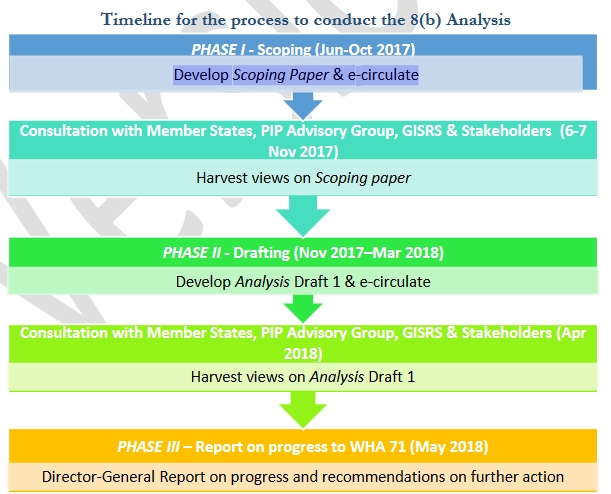
The World Health Organization mechanism to prepare the world for the next influenza pandemic is pondering its future and possible improvements. Among them are its extension to seasonal influenza, and the inclusion of genetic virus information along with biological samples to keep pace with technological developments. Member states and stakeholders (except the media) have been invited by the WHO to a consultation next month to discuss an analysis showing the potential beneficial or deleterious effects of the suggested changes to the system.

Staff Union Welcomes Next EPO President, Hopes For Dialogue

In a letter to its members, the Staff Union of the European Patent Office (SUEPO) in The Hague, Netherlands has welcomed the election of Antonio Campinos as new President of the EPO a week ago, expressed hope for a change in EPO management-workforce relations and has some recommendations for next steps.

TRIPS Council Serves As Ground For Discussion Of Compulsory Licensing

The escalating prices of medicines has become a growing global concern. Among many issues, intellectual property has been pointed to as providing monopolies that allow for unaffordable prices, in particular in developing countries. Though there is consensus among countries that IP is but one of the issues, the extent of the IP influence is not agreed. The use of compulsory licences as a way for developing countries to grant access to medicines to their populations was discussed during the World Trade Organization committee on intellectual property last week, with divergent opinions.

TRIPS Council: Fears That Non-Violation Complaints Could Undercut Flexibilities In IP Trade Rules

World Trade Organization committee members this week were asked to recommend to the upcoming ministerial conference whether to lift or indefinitely prolong a moratorium shielding intellectual property from complaints between members not involving a breach of a WTO agreement. Short of a consensus, the intellectual property committee will have to reconvene next month to try to find agreement. Separately, a two-year extension was granted to countries not yet having ratified the public health amendment to WTO IP rules.

WIPO Report To Annual Assemblies Contains Some Interesting Facts

Among all the high-profile issues on the stage and the countless side meetings and cultural celebrations happening at the annual World Intellectual Property Organization annual Assemblies, there were some interesting facts and figures presented about the UN agency itself.

On Eve Of TRIPS Council, Experts Promote Benefits Of IP For Small Enterprises

The importance of intellectual property protection for micro, small and medium-sized enterprises and the challenges they might encounter to ensure that protection was the focus of an event organised this week by a group of developed and middle-income countries at the World Trade Organization. According to the group, the event aimed at drawing connections between IP policies that are under discussion in the WTO IP committee.

World Health Summit: Failing Business Models In AMR And Vaccination

BERLIN -- With antimicrobial resistance (AMR) on the rise worldwide there is no time to lose for developing new antibiotic drugs, experts said during one of the last panels of this year’s World Health Summit in Berlin Tuesday. As in several other rounds during the three-day event, industry representatives underlined that there is an issue with the business model due to high risk and low return of investment for research in this area.