Category Features

US Supreme Court To Examine Outsized Infringement Damages

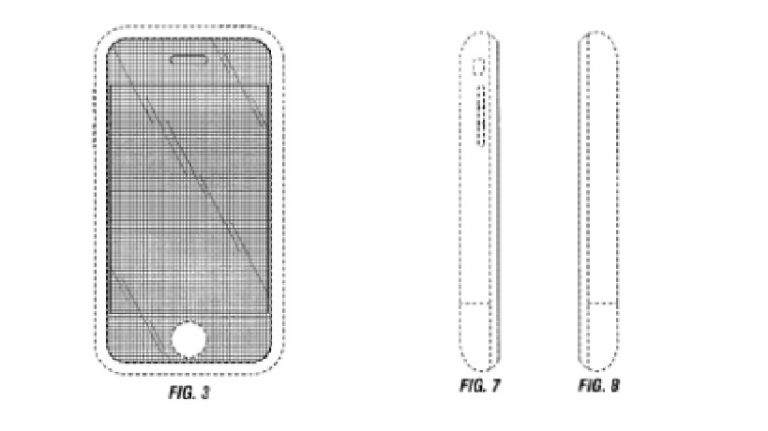
Patent infringers are supposed to pay damages, but the award in this case struck many as ridiculous. Some Samsung smartphones contained one or two purely decorative design elements that had been patented by Apple. But instead of paying modest damages for what many see as a tiny infringement, Samsung was ordered to pay $399 million – all the profits the company had made from its infringing phones. The Federal Circuit said it had no choice but to approve those damages; it was constrained by statute. Critics, however, said that the Federal Circuit had misinterpreted the statute. They fret the court’s error will unleash a wave of design patent infringement suits that will harm innovation, stifle competition, and empower patent trolls. Which is why so many will be paying close attention on 11 October, when this dispute comes before the US Supreme Court.

Despite Ongoing Efforts, USPTO Still Faces Patent Quality Issues

The US Patent and Trademark Office continues to face claims of low patent quality despite a major initiative to address the situation. The agency has been the subject of several critical reports by oversight agencies and recently defended its patent quality improvements before Congress. Patent practitioners say that while patent quality may not actually have worsened over the past few years, the USPTO's ongoing lack of financial and other resources, and inconsistent judicial decisions, are among the factors causing problems.

Rebuttal Letter – WIPO Human Resources Report A “Whitewash”

Ed Flaherty writes: Please be advised that I represent the duly elected members of the World Intellectual Property Organisation's Staff Council. On their behalf, I must respond to the inaccuracies contained in the article entitled: "WIPO Human Resources: All Is Harmony, Secretariat Says" published on the IP-Watch website on 29 August 2016.

The HRMD report from which this article is lifted presents a whitewashed and totally unrealistic picture of the current situation at WIPO.

A Principle Of Balance: Top Official Explains India’s IP Policy

Adopted in May, the first Indian intellectual property policy brought some concerns that the focus on IP rights might dampen India’s willingness to use the IP flexibilities to safeguard national policy space. It was also perceived by some as giving in to pressure from the foreign pharmaceutical industry for India to strengthen patent protection. However, a high level Indian official in an interview this week said the policy caters to Indian development needs and India is aware of its pioneering role in certain sectors like access to medicines.

Rajiv Aggarwal, Joint Secretary at the Indian Department of Industrial Policy & Promotion Ministry of Commerce & Industry sat down with Intellectual Property Watch’s Catherine Saez to describe how India's IP policy came into being, to what aim, what it is expected to change in the Indian IP landscape, and how Indian is standing fast to its principle of balance.

Innovation And Access: Fission Or Fusion? Interview With Jennifer Dent, President, BIO Ventures For Global Health (BVGH)

In the light of the UN High-Level Panel on Access to Medicines, this series of sponsored articles challenges experts to give their views on the policies that best support the development of solutions to societies’ greatest challenges and how enabling policy environments, including IP systems, influence the development and flow of new technologies and services in different sectors, fields of technology, and jurisdictions. The views expressed in the articles are those of the authors. Below is an interview with Jennifer Dent, President, BIO Ventures for Global Health (BVGH).

The Expert On IP For Internet Protocol: Interview With Scott Bradner

Fluent in both types of IP: Scott Bradner has been an architect of intellectual property (IP) policy for internet protocol (IP) standards. He played a core role in the development of internet protocol, leading to the very digital revolution we know today, as well as the next generation IPv6, all the while designing intellectual property policy to go along with it. Here is an interview with Bradner.

The Downfall Of Invention: A Broken Patent System

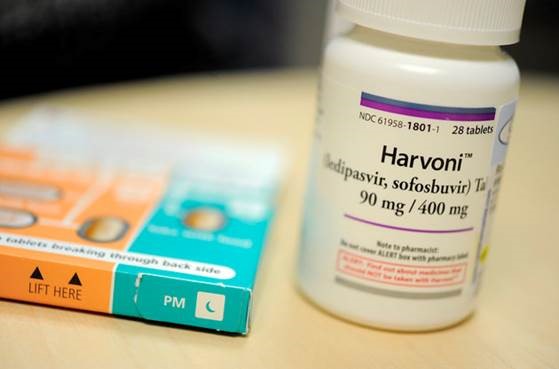
The cost of dozens of brand-name drugs have nearly doubled in just the past five years. Public outrage over drug prices extends from Capitol Hill to the presidential candidates to patients. In response, pharmaceutical executives are spending more on lobbying and marketing. Yet for all this attention, most of the proposed solutions for reducing prescription drug costs—tougher negotiations, appeals for transparent R&D costs or investigations into insurers—miss one of the primary sources of the problem: the way we award patents, writes Tahir Amin.

Number Of Unique Patent Assertions Declined Over Years, Patexia Finds

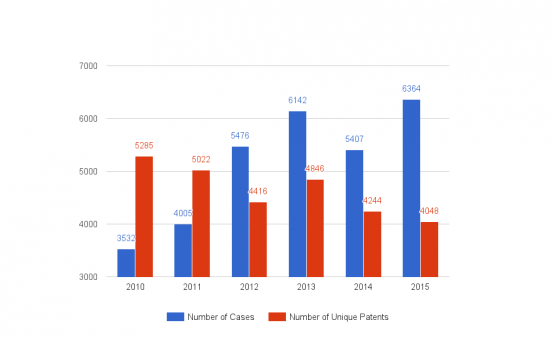
Pedram Sameni of Patexia writes: We recently studied the PTAB data and suggested that although the rise and fall in litigation indirectly affected the rise and fall in IPR challenges, the true driver of IPR challenges is the number of unique patents asserted each year. To learn more, we decided to look at the number of unique patents asserted against different defendants since 2010. We made several interesting discoveries, including the surprising fact that even though the number of cases has been rising, the number of unique patents asserted each year has been declining.

Growing Call For Transparency Within African CMOs To Ensure Membership Confidence

KAMPALA, Uganda -- Collective management organisations (CMOs) in African Regional Intellectual Property Organization (ARIPO) member states, and Africa at large, have the potential to contribute to the growth and development of creative industries. However, they need to be supported, guided and supervised to ensure that they achieve the purpose for which they are established.