Category Inside Views

Morrison & Foerster’s 2018 Predictions On Intersection Of Technology And Law—From Web Scraping To Blockchain

From the Morrison & Foerster Socially Aware blog: Happy 2018 to our readers! It has become a Socially Aware tradition to start the New Year with some predictions from our editors and contributors. With smart contracts on the horizon, the Internet of Things and cryptocurrencies in the spotlight, and a number of closely watched lawsuits moving toward resolution, 2018 promises to be an exciting year in the world of emerging technology and Internet law.
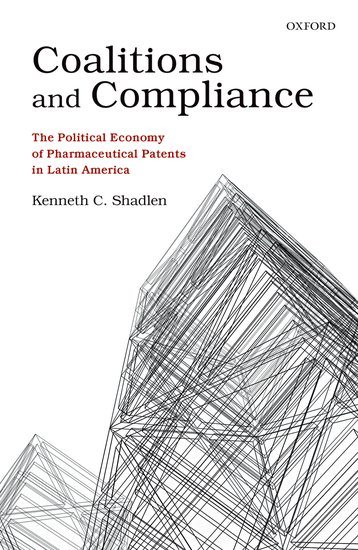

How International IP Policy Reconfigured National Politics: An Interview With Prof. Ken Shadlen

The recently published book Coalitions and Compliance by Professor Ken Shadlen of the London School of Economics examines how international changes can reconfigure domestic politics. Since the late 1980s, developing countries have been subject to intense pressures regarding intellectual property rights. These pressures have been exceptionally controversial in the area of pharmaceuticals. Historically, fearing the economic and social costs of providing private property rights over knowledge, developing countries did not allow drugs to be patented. Now they must do so, an obligation with significant implications for industrial development and public health. This book analyses different forms of compliance with this new imperative in Latin America, comparing the politics of pharmaceutical patenting in Argentina, Brazil, and Mexico. The book focuses on two periods of patent politics: initial conflicts over how to introduce drug patents, and then subsequent conflicts over how these new patent systems function. Intellectual Property Watch recently conducted a Q&A with Prof. Shadlen, which appears below.

What Could Have Entered The Public Domain On January 1, 2018?

Current US law extends copyright for 70 years after the date of the author's death, and corporate “works-for-hire” are copyrighted for 95 years after publication. But prior to the 1976 Copyright Act (which became effective in 1978), the maximum copyright term was 56 years—an initial term of 28 years, renewable for another 28 years. Under those laws, works published in 1961 would enter the public domain on January 1, 2018, where they would be “free as the air to common use.” Under current copyright law, we’ll have to wait until 2057.1 And no published works will enter our public domain until 2019. The laws in other countries are different—thousands of works are entering the public domain in Canada and the EU on January 1, writes the Duke University Center for the Study of the Public Domain.

Internet Society Official On Internet Governance Challenges, Role In Solving Issues

The Internet Society has participated in the Internet Governance Forum since its inception. Since then, the forum has been able to build trusted relationships with the different groups of stakeholders, but it should be able to attract more participants from all those groups of stakeholders, such as ministers and CEOs, according to Constance Bommalaer, senior director of Global Policy of the Internet Society. Bommalaer sat down with Intellectual Property Watch’s Catherine Saez in the margins of this week’s Internet Governance Forum in Geneva to explain the pressing issues of internet governance, such as the trust issue, and the internet of things, and the work of the Internet Society to bring tangible answers.

Obviousness In The Wake Of Arendi

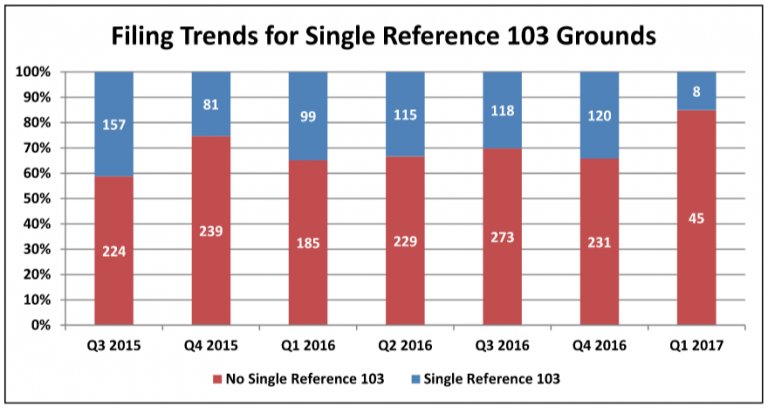
Since the U.S. Court of Appeals for the Federal Circuit issued its opinion in Arendi S.A.R.L. v. Apple Inc. last August,[1] many patent commentators have asserted that the decision marked a significant change in the analysis of obviousness under 35 U.S.C. § 103, especially as a weakening of single-reference obviousness grounds. Notwithstanding this decision, petitioners and the Patent Trial and Appeal Board have continued to rely on single-reference obviousness to assert and find that claims are obvious, write Amy Simpson and Kyle Canavera.

Global Biotech Industry Tests Policy Waters In Geneva

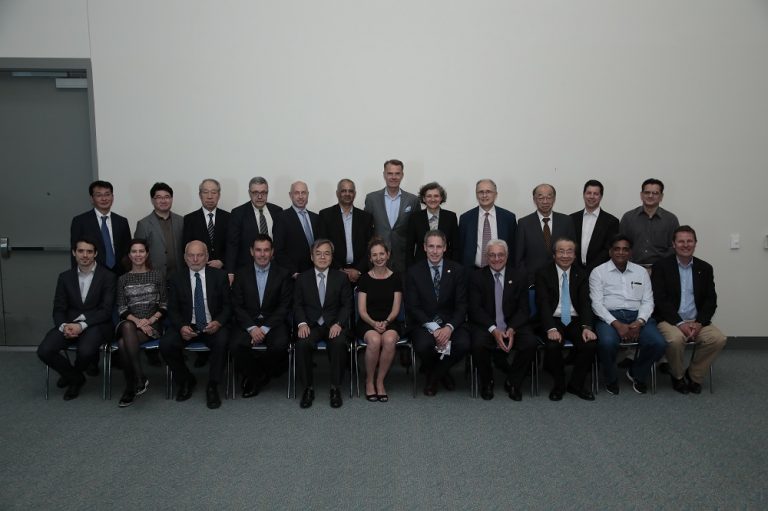
A delegation of heads of biotechnology companies visited Geneva this month to present the International Confederation of Biotechnology Trade Associations (ICBA). The ICBA was created in 2012, but is now looking to make its voice heard in Geneva and inform policy discussions, and is finding it is not easy to become an observer in some organisations. They also underlined the importance of intellectual property for the biotech sector, in particular to attract indispensable capital. The delegation sat down with Intellectual Property Watch’s Catherine Saez to talk about their Geneva visit.

EU-MERCOSUR FTA Puts At Risk Access To Medicines In Brazil, New Impact Assessment Study Finds

The European Union (EU) is currently negotiating a free trade agreement (FTA) with the four founding members of Mercosur (Argentina, Brazil, Paraguay and Uruguay), which comprises a chapter on intellectual property rights (IPR). A new round of negotiations is taking place from November 29th to December 8th in Brussels[1]. Word is that they aim to announce the closure of the agreement at the next World Trade Organization (WTO) Ministerial Conference that will be held from 10-13 of December in Buenos Aires and the clock is ticking to close all the chapters before that. The authors have conducted a study that shows the adoption of the measures proposed by the EU could put the sustainability of access to health policies in Brazil at risk, as they could sharply increase public expenditures on medicines.

TWN – Proposed WHO Criteria On Medicines In Transit Open Door For Seizures

Geneva, 21 Nov (TWN) - A discussion document prepared by the Secretariat of the World Health Organization (WHO) proposes criteria to justify interventions with respect to medicines in transit. This document is prepared for the 6th meeting of the Member State Mechanism (MSM) to be held from 28 November to 1 December at the WHO headquarters in Geneva, writes Third World Network.

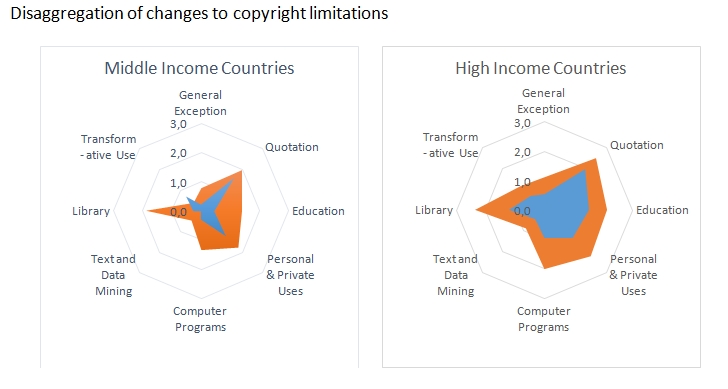
The User Rights Database: Measuring The Impact Of Copyright Balance

PIJIP’s Copyright User Rights Database tracks changes to copyright user rights (aka limitations and exceptions) over time in a sample of 21 countries of different development levels. The data assesses the degree to which other countries have adopted exceptions that are as open as the US fair use right – i.e. open to a use of any kind of work, by any kind of user and for any purpose. The instrument and results are available at infojustice.org/survey.

A Look Back: Challenges Of Open Access In 2017 (An Industry Perspective)

Suzanne Kavanagh writes: Over the course of the year, three issues repeatedly reared their heads as barriers to the successful implementation of Open Access: the burden of expected author OA expertise; the underutilization of metadata in the publication lifecycle, and the challenges posed to authors and institutions by one-off solutions. As the tenth Open Access Week draws to a close, with its focus on the concrete benefits of making scholarly research openly available, where have we gotten to in solving these problems and realizing the potential of OA?

EU To Get Rid Of Big Pharma-Friendly SPCs

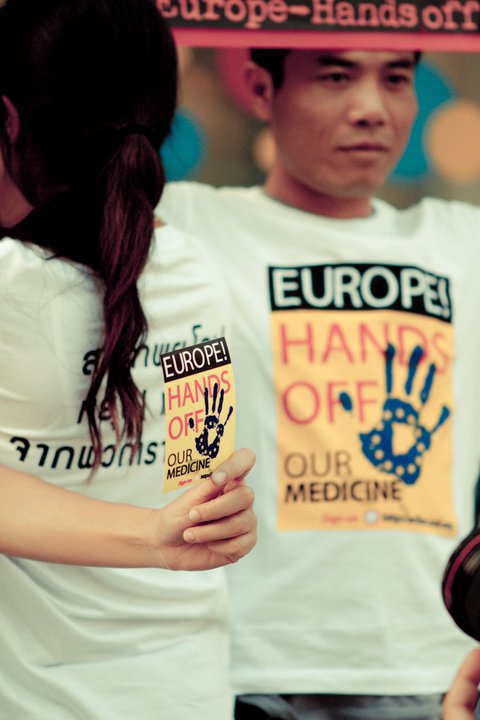
Extended monopoly protection by the Regulation EC 469/2009 concerning the supplementary protection certificate (SPC) mechanism for medicinal products has led to spiralling prices in Europe for lifesaving medicines, while exhausting the national budgets and depriving patients of fair access to treatments. The EU Commission should repeal the SPCs and put in practice the recommendations signed on 8 September 2017 by thirty-three civil society organisations, in alignment with the final report of the UN High Level Panel on Access to Medicines, writes Daniele Dionisio.