Category Inside Views

Giving Process Its Due When An SDO Changes Rules Of The Game

George Willingmyre writes: The process a Standards Developing Organization (SDO) employs to revise its patent policy is an aspect of the SDO’s competitive posture in the global marketplace. A dearth of research exists on the processes SDOs employ to revise their patent policies. Generally, the processes an SDO uses to revise its patent policy are part of the governance processes of the SDO. As a baseline, the governance processes of an SDO must be consistent with the applicable legal system defining what is acceptable and unacceptable behavior. What an SDO says about its governance processes is a further consideration. Thus the procedures themselves, the procedures’ relationship to the applicable legal system and what the SDO says about the procedures all play a role in understanding how an SDO revises its patent policy.


Expensive Medicines Increase The Pressure

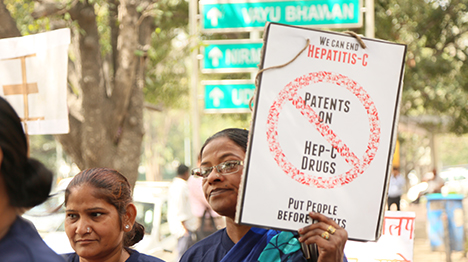
When Gilead brought its new antiviral medicine – Sovaldi – for the treatment of Hepatitis C to the US market for USD 84,000, it triggered a storm of protest. Demand for this revolutionary treatment was so high that the price (despite reductions) became an enormous burden on the American healthcare system. Although the product is cheaper in Switzerland at CHF 48 307, treatment is rationed for reasons of cost.

TPP May Be Dead – But Its Impact Lingers

Despite the Trans-Pacific Partnership (TPP) being - to all-intents-and-purposes - dead in the water, pursuit of some of the most egregious objectives of the corporate interests driving the TPP agenda rolls on. Pharma is persisting in its push for countries to adopt not just TRIPS-Plus, but in some cases even TPP-Plus intellectual property rules - presumably groundwork for the later emergence of a ‘son-of-TPP’ agreement, three authors write.

Protecting Online Access To Safe And Affordable Medication

High drug prices are a global public health crisis. This is mostly the case among lower income countries but also for citizens and residents in the US, where tens of millions are not filling prescriptions due to cost. The international online marketplace is a much-needed lifeline for consumers who cannot afford prescription medication where they live. People deserve the widest possible access to safe and affordable medication, including online access, and the Internet community can help, says Gabriel Levitt.

Which “Brazil” Will Chair The Marrakesh Treaty Assembly?

The supposedly impossible happened: The Marrakesh Treaty entered into force on 30 September, three months after reaching the necessary minimum of 20 ratifications. By then, 22 countries had done so – two more did so during the Marrakesh Assembly.

Rebuttal Letter – WIPO Human Resources Report A “Whitewash”

Ed Flaherty writes: Please be advised that I represent the duly elected members of the World Intellectual Property Organisation's Staff Council. On their behalf, I must respond to the inaccuracies contained in the article entitled: "WIPO Human Resources: All Is Harmony, Secretariat Says" published on the IP-Watch website on 29 August 2016.

The HRMD report from which this article is lifted presents a whitewashed and totally unrealistic picture of the current situation at WIPO.

A Principle Of Balance: Top Official Explains India’s IP Policy

Adopted in May, the first Indian intellectual property policy brought some concerns that the focus on IP rights might dampen India’s willingness to use the IP flexibilities to safeguard national policy space. It was also perceived by some as giving in to pressure from the foreign pharmaceutical industry for India to strengthen patent protection. However, a high level Indian official in an interview this week said the policy caters to Indian development needs and India is aware of its pioneering role in certain sectors like access to medicines.

Rajiv Aggarwal, Joint Secretary at the Indian Department of Industrial Policy & Promotion Ministry of Commerce & Industry sat down with Intellectual Property Watch’s Catherine Saez to describe how India's IP policy came into being, to what aim, what it is expected to change in the Indian IP landscape, and how Indian is standing fast to its principle of balance.