Category Contributors

Case Shows European Luxury Brands Must Be Popular In Japan To Be Protected There

In a recent decision, the Opposition Board of the Japan Patent Office dismissed an opposition filed by CFUB Sisley, a French producer of cosmetics and fragrances founded in 1976, against the word mark “SISLOY” written in a standard character. The case shows that the status of European luxury brand will not automatically enjoy broader scope of protection in Japan unless the brand obtains a high degree of popularity and reputation among Japanese consumers, writes Masaki Mikami.


Case Study – Building Effective IP Coverage Efficiently Within An International Engineering Conglomerate

This article describes how to build up an effective IP coverage for an international industrial conglomerate by defining the basic IP shield construction for all group companies, setting up IP generation programs and developing an IP focus while doing this efficiently by engaging the management into the IP decisions and managing the mix of internal and external IP service resources.

US, European Views On IP Management And Digital Business

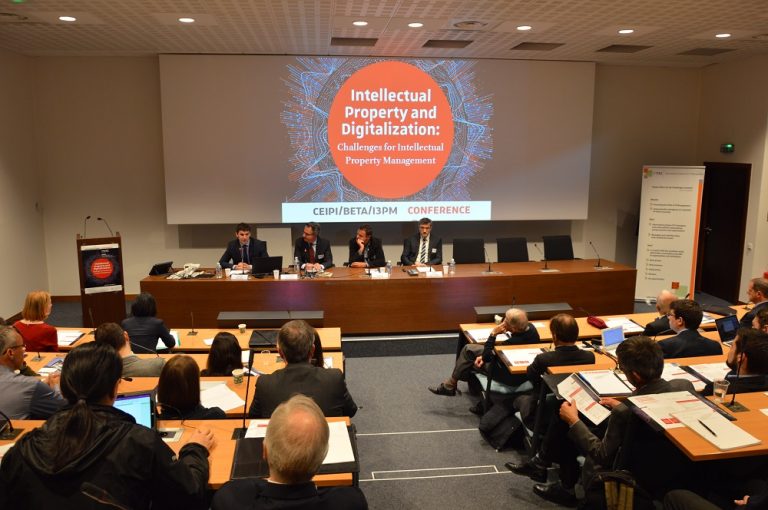
Data-driven technologies are enabling the expansion of trade and data flows around the world. We have disruptive smart products, smart industrial processes, smart clouds and smart services. Traditional industries such as pharmaceuticals, chemical and mechanical engineering digitally transform production processes to generate custom-tailored services and improve competitiveness using artificial intelligence while new companies emerge with disruptive offers. Such artificial intelligence-based business models, however, are bringing about a rethinking in European regulations in relation to copyrights, such as that deployed by DeepMind and Pinterest, for instance, because machine learning may reproduce countless amounts of proprietary content to generate raw solutions. A recent event in Paris delved into these and other issues, including data ownership and access rights, as well as inventions by computers.

Global Health R&D: Evidence, Priorities, Coordination

World Health Assembly Agenda Item 13.5 is descriptively-yet-uninformatively labelled “Follow-up of the report of the Consultative Expert Working Group on Research and Development: Financing and Coordination (CEWG).” But that anodyne title actually masks an important milestone in the World Health Organization’s long-running efforts to increase R&D around neglected diseases and diseases of poverty.

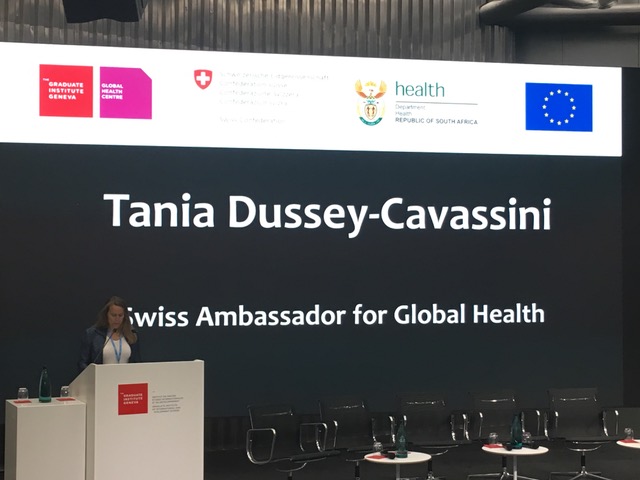
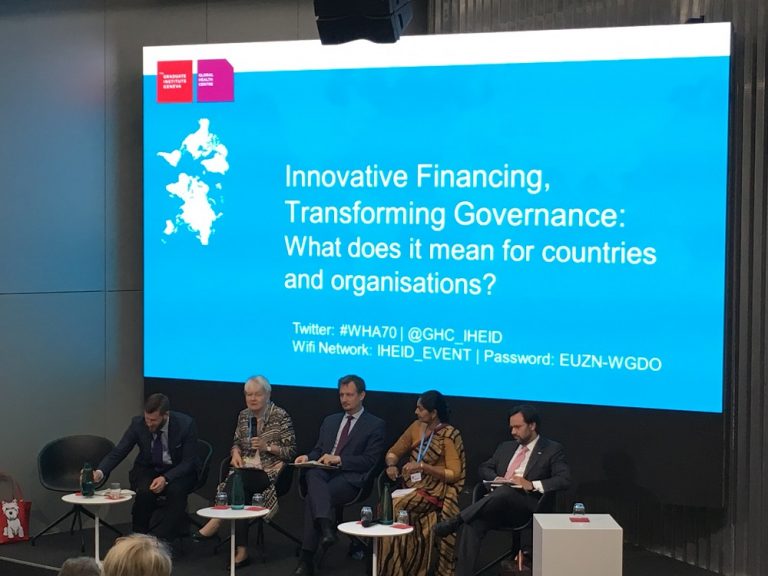
Will The Money Keep Rolling?: Innovative Global Health Financing And Governance

We are in a liminal moment for global health financing. The “golden age” of increasing donor funding is clearly over, arrested by the 2008 financial crisis. But while donor contributions are no longer climbing, they have not been falling, either. And it is possible this status quo will hold… But it’s equally possible that this is just the pause before the roller-coaster drops. Considering that Gavi, the Global Fund, and the World Bank will all be launching another replenishment round in 2019—and given the uncertainty surrounding US foreign aid commitments and post-polio financing—that drop may prove very steep indeed.

Expanding Access To Medicines: What Role For Transparency?

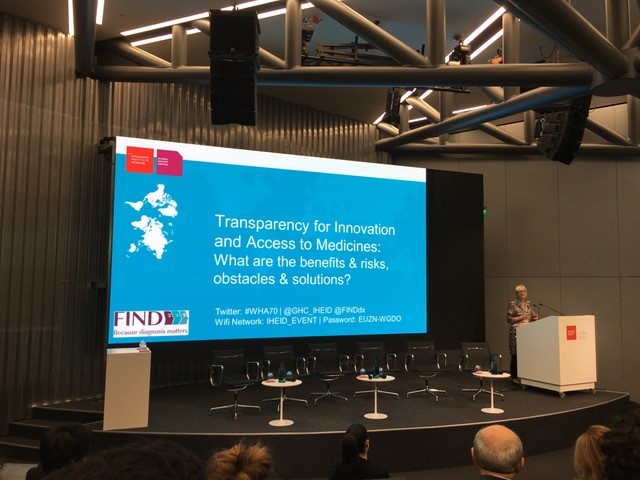
Transparency” and “accountability” are familiar buzzwords. Like salt and pepper, they pop up on nearly every list of ingredients for sound policy and good governance. But, as Ilona Kickbusch and Suerie Moon of the Graduate Institute Global Health Centre in Geneva point out, their details are rarely specified: transparency for what? Accountability to whom? On Tuesday afternoon, those not busy casting a vote for the next World Health Organization director general got the chance to dig into these questions at a panel co-sponsored by the Graduate Institute and FIND. In particular, discussion focused on transparency in terms of public access to two types of information: drug R&D costs and clinical trial data.

Interplay Between Inter Partes Reviews (IPRs) And ITC Section 337 Proceedings

Since the passage of the America Invents Act (“AIA”) in 2011, Inter Partes Reviews (“IPRs”) before the Patent Trial and Appeal Board (“PTAB”) have assumed growing importance in patent litigation in federal district courts. Until recently, IPRs have not played a significant role in International Trade Commission (“ITC”) Section 337 investigations. While the ITC is unlikely to stay a Section 337 investigation, pending IPRs will likely have an increasing impact at the ITC, especially when an IPR proceeding reaches an advanced stage before or during the pendency of a Section 337 investigation. This article examines the limited interplay to date between IPRs and Section 337 proceedings and discusses potential implications for future investigations.

The Changing Perspective Of Well-Known Trademarks In India

The innovative advertisements of famous trademarks we come across remind us of the image they have created in our minds and the quality of the respective products or services they reflect. Millions are spent by the owners of such marks to build their reputation and maintain their popularity in this competitive globalised world.

Amendment To The Polish Reimbursement Act For Medical Devices: Challenges For The Market

The Polish Ministry of Health has commenced consultations on an amendment to the act on reimbursements for drugs, foods intended for particular nutritional uses and medical devices. This bill envisions an entirely new system of refunds (full and partial), fixed maximum prices and fixed maximum margins for medical devices based partly on HTA, similar to the system currently in place for pharmaceuticals. The current wording leads one to believe that gradually all groups of medical devices could be introduced into this system. If the amendment is passed in the current shape, it has the potential to transform the medical devices market in Poland.