Monika Ermert

Monika Ermert

EPO Official Aggressively Promotes Software Patents At CEBIT Fair

At the world‘s biggest computer fair, the CEBIT in Hannover, Germany today, an official of the European Patent Office promoted patents for computer-implemented inventions (CII), also called software patents by critics. CII continues to grow considerably, according to EPO.

Social Media Providers Could Face Stiff Punishment For Hate Speech, Fake News In Germany

German Justice Minister Heiko Maas today presented draft legislation to whack social media providers for what the minister described as reluctance to take down hate speech and fake news.

Inertia Slows Evolution For Open Scientists

It is still a long way to a new generation of "open scientists", German open data researcher Christian Heise found out in his just-published PhD thesis. Heise not only investigated drivers and barriers for what he expects to be an evolution from open access to open science by theory and a survey of over 1100 scientists. He tried the concept open science the hard way, opening up the writing of his thesis paper on the net.

Revelations Illustrate Aggressive CIA Hacking, Sloppy Security Of Smart Services

Thought about buying a smart phone, smart TV, smart car? – think twice. Wikileaks today (7 March) released over 8,000 documents illustrating hacking activities of the Central Intelligence Agency, CIA. In what has been described by some commentators as a bigger leak than the Snowden revelations about the National Security Agency in 2013, the whistleblower platform allowed a glimpse into the CIA hacking into smart TVs and smartphones and presented a list of zero day vulnerabilities found, bought and sometimes shared with colleagues in other agencies, including British colleagues. Wikileaks announced that today’s leak was the “Year Zero” tranche of the much bigger “Vault 7” project: more redacted details from the documents and much more documents will be published.

Switzerland Next In Line To Gamble With Net Blocking

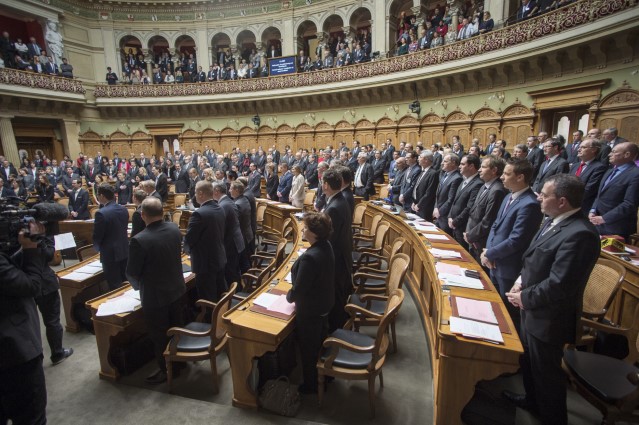
The Swiss Parliament this week adopted new legislation to regulate offline and online gambling by limiting it to a fixed number of Swiss-based operators only. While heavily criticised by opponents inside and outside the Parliament in Bern, the main goal was to harvest revenue streams for the general public and enforce a number of obligation. A number of opponents in the Parliament sided with activists in their call for caution against the ‘slippery slope’ of net filtering. A look at other countries illustrates that filtering on an IP or domain name basis is on the rise.

Journalists Surveilled By German Intelligence Agency

The German Federal Intelligence Agency (Bundesnachrichtendienst, BND) spied on foreign journalists, according to a report of German magazine “Der Spiegel”. A document obtained by the magazine showed that the BND had taps on at least 50 phone numbers, fax numbers and email addresses of journalists from the BBC, Reuters and the New York Times.

Many Questions On Potential Multilateral Investment Court System

The European Commission is pushing ahead with its Multilateral Investment Court (MIC) project, but called requests to eliminate specialised investor protection mechanisms unrealistic during a dedicated meeting with stakeholders in Brussels today.

Dismantling Of LiMux On Eve Of Pirate Party Security Conference

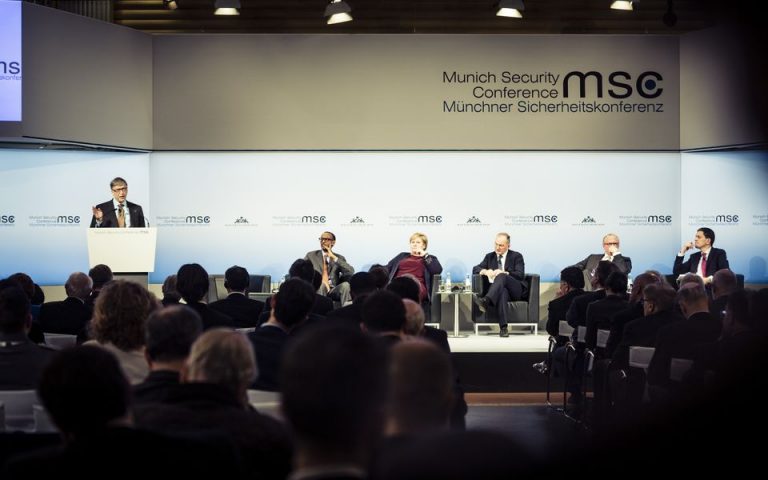
MUNICH -- For the Pirate Party gathered at the Pirate Security Conference (PirateSecon) in Munich this is bad news. On the eve of the PirateSecon, held alongside the big Munich Security Conference, the city council of Munich decided to reverse the once-celebrated migration to LiMux, its much reported about Linux platform. For the German Pirate Party, the dismantling of “LiMux” is a step in the wrong direction. At the third edition of the Pirate Security Conference Pirate Party members from Luxembourg, Iceland, Switzerland and the Czech Republic discussed how to take back data and even algorithms – and how to win elections.

European Parliament Passes CETA After Debate Over Whether It’s A Good Or Bad Deal

After a somewhat tumultous debate, the European Parliament today in Strasbourg voted in favor of the Comprehensive Economic and Trade Agreement (CETA) with Canada. With 408 members of Parliament voting in favour and 254 against (33 abstentions) the 1598-page thick deal can become provisionally effective as early as April. The national parliaments still have to ratify it over the coming months, and possibly years.