Monika Ermert

Monika Ermert

Better Cyber Security Problematic, Says US Financial Industry: Power Struggle Over Encryption
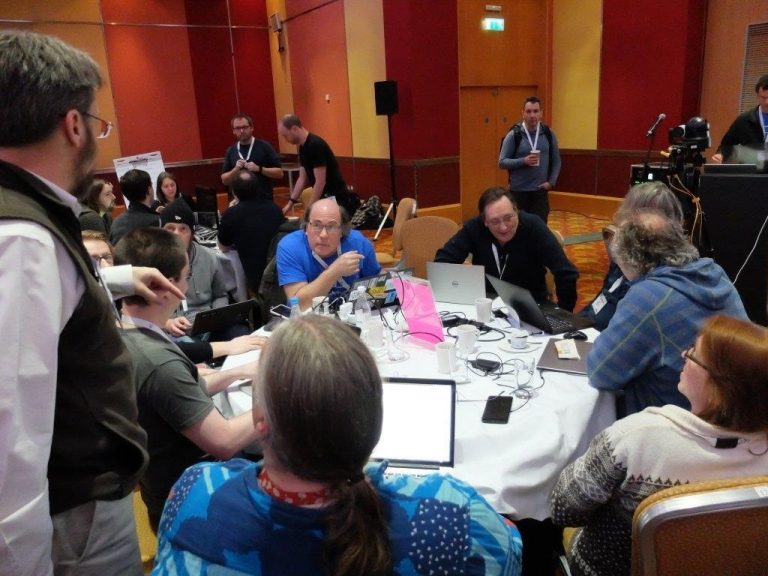
A decision to keep third party listeners out of communications on the internet taken by the Internet Engineering Task Force (IETF) at their recent meeting in London elicited an alarmist message from the US financial industry. The premier internet standardisation body would provide “privacy for crooks,” and practically prohibit “bank security guards from patrolling and checking particular rooms” online, BITS, the technology division of the Financial Services Roundtable, argued in a press release last week. Has standardisation gone rogue?

US NTIA Boss On Whois Debate: ‘Keep Data Open For IP Rightsholders, Others’

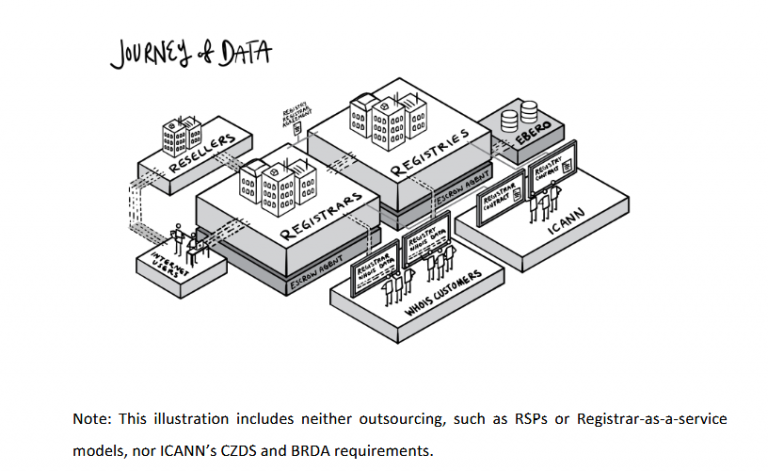
US Assistant Secretary of Commerce for Communications and Information David Redl today weighed in on the debate over changes to the storage and public display of personal information of domain name registrants at the meeting of the Internet Corporation for Assigned Names and Numbers (ICANN) in San Juan, Puerto Rico. Redl urged negotiators to keep the so-called Whois database, described by some as a public phone book for the owners of domain names, as open as possible while implementing the new General Data Protection Regulation (GDPR) of the European Union.

Fight Ahead Over Website Owner Data At ICANN Meeting This Week

Some of the data collection practices of the Internet Corporation for Assigned Names and Numbers (ICANN), private overseer over the domain name industry, “appear to be excessive, disproportionate, and obtained without the free consent of the individual,” the International Working Group on Data Protection in Telecommunications (IWGDPT) wrote in a paper published on the eve of the 61st ICANN meeting in San Juan, Puerto Rico (9-15 March). During the meeting, controversial discussions about ICANN's just-published interim model for compliance with the European Union General Data Protection Regulation (GDPR) can be expected after ICANN published a “cookbook” for GDPR compliance.

UN Rapporteur For Privacy Rebuffed On Surveillance Oversight Negotiations

The United States, China and the European Union were unanimous yesterday in their rejection of international consultations for a possible legal instrument on government-led surveillance and privacy. During the 19th meeting of the 37th session of the UN Human Rights Council in Geneva, they called a possible legal instrument against uncontrolled cross-border surveillance proposed by the UN Special Rapporteur on Privacy, Joseph Cannataci, “unnecessary.” But Cannataci responded that the problems cannot be ignored.

Tough Talk On Transatlantic Privacy, Once Again

The EU Commissioner for Justice, Consumers and Gender Equality, Věra Jourová, ahead of her US visit announced “a tough tone” on remaining gaps in the implementation of the privacy shield, the arrangement that allows to transfers of data of EU citizens to the United States. Speaking before the EU Parliament's Committee on Civil Liberties (LIBE), Jourová said while she had heard the privacy shield was not a priority of the US administration, “it will be a priority, if we make clear that we will suspend the system if it doesn't work,” adding, “My patience is coming to an end.”

WTO Stalemate Concerns Include Non-Violation Complaints, E-Commerce; TRIPS Health Amendment Extended

A few weeks after the failure of the World Trade Organization ministerial meeting in Buenos Aires to cut deals advancing issues from fisheries to e-commerce, some governments and trade experts around the world are concerned about the WTO’s future. Meanwhile, a couple of intellectual property-related provisions moved ahead after the ministerial without change.

Internet Governance Forum – An Encyclopaedic Endeavour

The 12th Internet Governance Forum has closed its doors and sent home the last of the more than 2,000 die-hard internet governance adepts from 142 countries who stayed until a mere three days before Christmas in the halls of the United Nations in Geneva. Asking the adepts and the critics about what has changed in the forum that started because governments just could not agree on how critical internet infrastructures should be managed during the 2005 UN World Summit on Information Society, the first answer always is just “big”.

With originally 3,000 registered, it is the biggest international internet politics conference. But “big” is not only the size of the meeting, it is also the number of workshops, panels, best practice forums and bi-, pluri- and (nearly) multi-lateral meetings taking place over the five days. So this year Intellectual Property Watch, having participated substantively all week, decided to make an encyclopaedic endeavour to bring you the first IGF dictionary (or to make a dictionary about that encyclopaedic endeavour) in an effort to give credit to the richness of the forum, but highlight some problems, too.

In Break From Past Leadership Role, US Gov Largely Missing From Internet Governance Forum

The United States has been a steadfast supporter of the UN-led Internet Governance Forum since its inception over a decade ago, regularly bringing large and high-level delegations to the Forum. The US must have seen the forum as the lesser evil when governments from many continents pounded the desks during the 2005 World Summit on the Information Society (WSIS) conference in Tunis over the US special role in overseeing the Internet Corporation for Assigned Names and Numbers (ICANN) and thereby the heart of the domain name system, the root zone. But IGF 2017, held this week, saw a dramatic change in that regard.

State Hacking An Option To Overcome Encryption, IGF Hears

The days of unfettered access to internet content are over, Riana Pfefferkorn of the Stanford Center for Internet and Society told government representatives during a panel dedicated to state interference in encryption, organised by Brazil's registry Nic.br and CGI.br at the 12th Internet Governance Forum this week in Geneva. “Governments have to adapt,” the cryptography researcher said. A concern is, though, that governments will adapt by either lashing out to get backdoors in code, weaken encryption or legalize state hacking.