Dugie Standeford

Dugie Standeford

German Court To Hear Unified Patent Court Challenge, As EPO Staff Questions Persist

The German Federal Constitutional Court has agreed to take up a challenge that could potentially derail the Unified Patent Court (UPC). The special - and opaque - procedure under the national constitution allows a single individual to claim constitutional breaches, said Hogan Lovells (Dusseldorf) patent litigator Clemens Plassmann. The lawsuit leaves the UPC in disarray at least until next year, he said.

Meanwhile, in the never-ending feud between European Patent Office (EPO) management and staff, President Benoȋt Battistelli was forced to back off from a planned rule change that would allow him to fire staff members “if the exigencies of the service require abolition of their post or a reduction in staff.”
Andrei Iancu Named US Patent And Trademark Office Director

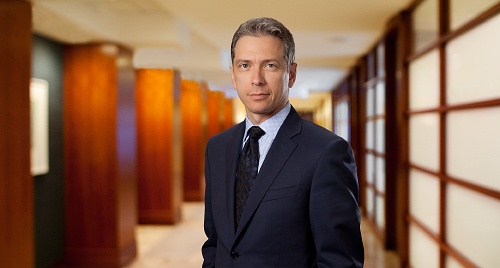
By a vote of 94-0, the United States Senate on 5 February confirmed California intellectual property litigator Andrei Iancu as next director of the US Patent and Trademark Office (USPTO). The new Under Secretary of Commerce for Intellectual Property is currently managing partner of Irell & Manella LLP’s Los Angeles firm. The patent and trademark communities wished Iancu luck but said there are many issues at the agency that need his attention.

Year Ahead: Copyright, Unified Patent Court Remain High On EU Priority List

Plans to update European Union copyright rules advanced in 2017 but remain contentious heading into the new year. The proposal for a directive on copyright in the digital single market is the subject of intense debate between the EU Presidency and the European Parliament, with no clear end in sight to the negotiations. Several issues, including a possible “ancillary right” for news publishers and a plan to force online platforms to filter all uploads to combat copyright infringement, remain unresolved.

Other copyright matters, such as a regulation on broadcasting and a review of the EU database directive, are in the works. On the patent side, a pressing question is whether – and when – the EU unified patent and patent court (UPC) might finally launch.

Several EU comprehensive trade agreements, which include provisions on intellectual property rights, are under negotiation.

Cases to watch in the European Court of Justice include a referral from the Netherlands on the issue of whether the taste of cheese can be copyrighted.

International Labour Organization Orders Reinstatement Of EPO Appeals Judge

In an extraordinary 6 December session, the UN International Labour Organization Administrative Tribunal (ILOAT) handed down five decisions involving the European Patent Office (EPO), one of which reinstated a suspended Board of Appeals judge. The cases are just “the tip of the iceberg,” said the Staff Union of the EPO (SUEPO).

Retransmissions Of TV Shows From Cloud Services Need Copyright Owner’s Consent, EU High Court Rules

VCAST, a UK company that makes available to its customers internet retransmissions of Italian television programmes stored in the cloud, must obtain right holders’ consent first, the Court of Justice of European Union (CJEU) ruled on 29 November.

European Commission Announces Guidance On Copyright Enforcement, SEP Licensing

The European Commission today announced plans to ratchet up the fight against counterfeiting and piracy, and to introduce more clarity in licensing standard-essential patents (SEPs). The first involves guidance on the 2004 EU directive on the enforcement of intellectual property rights (IPRED); the second recommendations for making the relationship between patent owners and technology users more “balanced and efficient.”

EPO: New Employment Rules Roil Staff; Management Responds On Demand For More Productivity

Outgoing European Patent Office President Benoȋt Battistelli has proposed a new “employment framework” that includes fixed-term contracts for patent examiners, reigniting anger among staff members already in a tense relationship with management. There is also concern that Battistelli’s apparent push – which the EPO denies - for more products (defined as prior art searches and proposals for patent grants) is hurting patent quality.

Disparity In Access To Medicines Spurs “Humanitarian” Patent Licensing

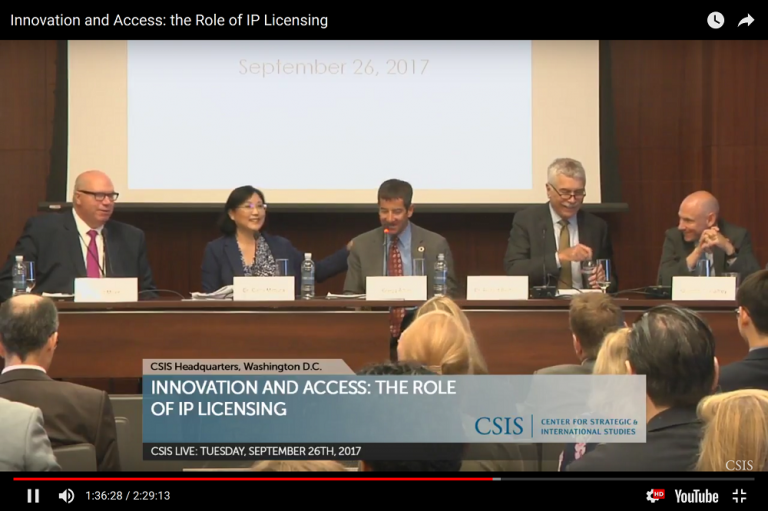
“There are shameful access disparities around the world” to life-saving medicines, Harvard University Global Access in Action project Co-Director Quentin Palfrey said at a 26 September Center for Strategic and International Studies event in Washington, DC. And while some of the challenges to fuller access involve pricing, getting medicines to poorer countries or populations means overcoming the obstacles of insufficient research and development (R&D) incentives, access barriers and polarised politics, he said.

Panel Debates Potential Impact Of Reversal Of US Administration Patent Review

The United States Supreme Court recently agreed to hear arguments in Oil States Energy Services v. Greene’s Energy Group, a case involving a patent on a device used for hydraulic fracturing (fracking). After the patent was granted, Greene’s petitioned for, and was granted, an “inter partes review (IPR)” by the US Patent and Trademark Office’s Patent Trial and Appeal Board (PTAB). After losing at the board, Oil States asked the high court to determine that IPR, which is used to analyse the validity of existing patents, is unconstitutional because it takes away private property rights by denying Art. III jury trials.