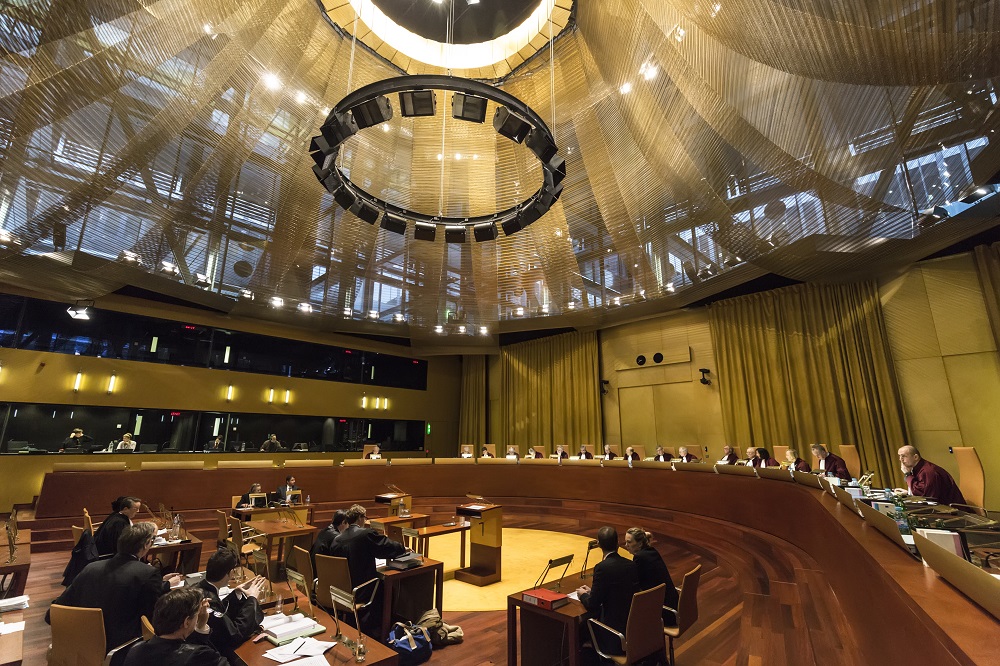
According to a study by a watchdog group released this week, numerous judges at the International Court of Justice (ICJ) have worked or are working on at least 90 investor-state dispute settlement cases, despite a prohibition on them doing work outside their ICJ duties. Fees paid to the judges ranged above USD 1 million among three judges in a number of cases.
The full announcement is reprinted below:
Sitting International Court of Justice Judges Worked as Arbitrators in At Least 90 Investor–State Cases: study
Geneva–November 27, 2017–At least seven current and thirteen former International Court of Justice (ICJ) judges worked as arbitrators during their tenure, according to a study published Monday by the International Institute for Sustainable Development (IISD).
The Statute of the ICJ prohibits judges from engaging “in any other occupation of a professional nature.”
IISD researchers identified 90 investor–state dispute settlement (ISDS) cases in which sitting ICJ judges have worked–or are currently working–as arbitrators. The true number may be higher given that many ISDS cases are not public.
A total of more than USD 1 million in fees was paid to ICJ judges in nine of those 90 cases. The full amount is unknown because arbitrator fees are typically not disclosed in ISDS cases. The average fee paid to a three-arbitrator panel is USD 1.28 million per ISDS case, according to the OECD.
“We are not questioning the integrity of the judges who are being pulled into these other functions,” said lead author Nathalie Bernasconi-Osterwalder, Director of IISD’s Economic Law and Policy Program.
“However, we are concerned that the court’s reputation could be damaged by the fact that some judges are simultaneously working as arbitrators in multiple cases. The ICJ is the world’s most important and respected court charged with the sound administration of international justice. Its representatives need to be held to the highest standards of independence.”
ICJ judges are accepting work as arbitrators in an increasing number of ISDS cases, she noted. A third of the 90 cases identified were registered in the past five years.