Original news and analysis on international IP policy
Uganda In The Process Of Signing Swakopmund And Arusha Protocols
KAMPALA -- The Republic of Uganda is in the process of signing the Swakopmund Protocol on the Protection of Traditional Knowledge and Expressions of Folklore, and the Arusha Protocol for the Protection of New Varieties of Plants.
KAMPALA — The Republic of Uganda is in the process of signing the Swakopmund Protocol on the Protection of Traditional Knowledge and Expressions of Folklore, and the Arusha Protocol for the Protection of New Varieties of Plants.
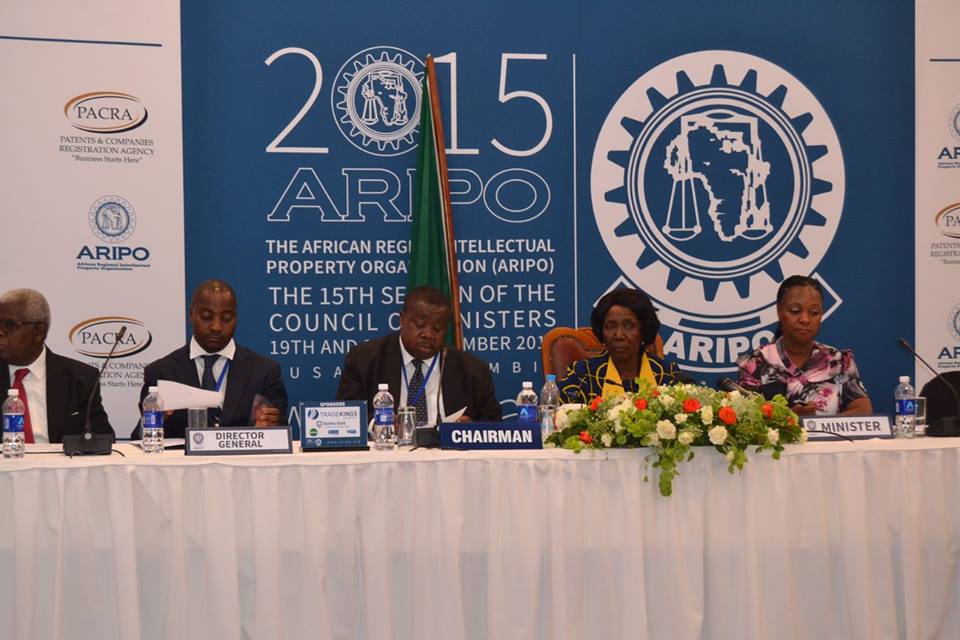
This was revealed by Kahinda Otafiire, the country’s minister for Justice and Constitutional Affairs. Otafiire was opening the Ugandan leg of the African Regional Intellectual Property Organization (ARIPO)’s national roving seminars. The seminar took place in Kampala from 29 March to 1 April.
Kahinda Otafire. Uganda’s Minister for Justice and Constitutional Affairs. Photo credit: URSB
The seminar was organised under the theme: Making better use of intellectual property for business competitiveness and development in Africa.
ARIPO holds roving seminars amongst member states, promoting utilisation of intellectual property aspects.
The Arusha Protocol was adopted by ARIPO member states in July last year during a diplomatic conference meeting in Arusha, Tanzania. The protocol seeks to provide member states with a regional plant variety protection system that recognises the need to provide growers and farmers with improved varieties of plants in order to ensure sustainable agricultural production.
According to Emmanuel Sackey, “plant breeding has a role in meeting the multiple challenges of a fast-changing world.”
“These include: contribution of plant breeding to agricultural production and output; the use of modern biotechnology and molecular breeding methods for crop improvements; development of national breeding capacity; enhancing productivity with new plant varieties and traits; and linking plant breeders’ rights in the plant variety development chain,” Sackey added.
Sackey, ARIPO’s Intellectual Property Development Executive, was making a presentation titled: Development of the Arusha Protocol, Key Provisions and its Implementation.
Member states that have already signed the Arusha Protocol are: Gambia, Ghana, Tanzania, Mozambique, and São Tomé and Príncipe. ARIPO has 18 member states.
The Swakopmund Protocol was adopted in August 2010 at Swakopmund in Namibia. It came into force in May 2015.
According to a presentation by Sackey, the Swakopmund Protocol is meant to protect creations derived from the exploitation of traditional knowledge against misappropriation and illicit use through biopiracy and illicit grant of patents.
Other legal frameworks that ARIPO relies on for the protection of genetic resources, traditional knowledge and folklore are the Draft Legal Framework for the Protection of Geographical Indications, and Policy Framework on Access and Benefit Sharing Arising from the Use of Genetic Resources in the ARIPO Member States.
During the seminar, the Ugandan delegation revealed that government has started documenting some of the country’s traditional knowledge and folkloric products.
This step is expected to complement ARIPO’s efforts in establishing a regional database of the same as an integral step towards the implementation of the Swakopmund Protocol.
According to an ARIPO document, “traditional knowledge has been and continues to be an element in the commercialization of natural products.It is currently supplied to commercial interests through databases, academic publications or field collection.”
“This undue exploitation needs to be paid for in some form. Concern over the growing interest in and economic importance of traditional knowledge has generated a wide range of public policy issues including those associated with intellectual property protection,” the document adds.
There’s a global resurgence in the utilization of traditional knowledge. This is seen in the growing use of natural products as sources of biochemical compounds for drugs, chemical and agro-product development; wide usage of traditional medicine; environmental management; and identifying innovative patterns in socio-economic development.
According to Sackey, “Eighty percent of the world’s population depends on traditional plant medicine exclusively. And the remaining twenty percent still relies on plant products by extension.”
The paradox is that the medicinal plants acquired in Africa deplete the continent of its biodiversity and make the people eventually poorer while strengthening the economies of the developed nations by selling the finished products at high rates.
The Ugandan leg of the ARIPO National Roving Seminars was organised in three parts. The first part of the seminar discussed matters relating to the registration, commercialization and monetization of patents, utility models, industrial designs, trademarks and geographical indications.
In the second part, the presentations were on issues of the protection and utilization of traditional knowledge, expressions of folklore and genetic resources, while the third part discussed copyright and related rights issues.
According to Maureen Fondo, head of ARIPO’s Copyright & Related Rights division, “copyright has to be valued because it plays a big role in commercialization of works.”
She added that Uganda has copyright laws that conform to international norms, but there’s need to use these laws to establish a sustainable system for copyright administration, management & enforcement so that the rights holders benefit from their works, provide access, limit piracy and be equitably remunerated.