Original news and analysis on international IP policy
The Year In Biotech/Biodiversity: Patentability, Plant Varieties, Treaty Implementation
Intellectual property-related developments expected this year could profoundly impact the fields of biotechnology and biodiversity. In addition, ongoing issues relating to plant variety protection and public health are expected to be at the forefront of discussions this year. The following is a look at many of the top issues to come.
Intellectual property-related developments expected this year could profoundly impact the fields of biotechnology and biodiversity. In addition, ongoing issues relating to plant variety protection and public health are expected to be at the forefront of discussions this year. The following is a look at many of the top issues to come.
In Europe, pending decisions at the European Patent Office, and at the European Commission could change the rules of patentability while in the United States, the industry is concerned about the interpretation of gene patentability by the patent office, and the push from ecommerce industries for a change in patent law.
International developments expected in 2015 include the effects of entering into force of the Nagoya Protocol on Access to Genetic Resources and the Fair and Equitable Sharing of Benefits Arising from their Utilization to the Convention on Biological Diversity. A high-level negotiating meeting should also open the way for an international registration and higher protection of geographical indications at the World Intellectual Property Organization, and the international plant treaty is expected to continue looking for ways to secure its financial sustainability. Meanwhile, as biotech crosses over with medicines, civil society is concerned with the high price of biotherapeutic medicines and what they see as fierce attempts at protecting monopoly by the private sector.
EU Biotech Patent Law
The European Commission is expected to produce a report, following the outcome of an expert group on the development and implications of patent law in the field of biotechnology and genetic engineering.
According to a Commission decision [pdf], the expert group’s task includes “providing the Commission with “the necessary legal and technical expertise regarding intellectual property law practice and intellectual property law administration, public and industrial research and development, life sciences including plant and animal breeding, and biotechnology in the context of the application of Directive 98/44/EC, with the exception of ethical issues related to that Directive, which are the mandate of the European Group on Ethics in Science and New Technologies.”
The 7th meeting of the expert group was held on 30 October 2014. According to a European Union official, the dates for the next meetings of the expert group were not yet fixed as of presstime. The Commission is in the process of identifying dates, the official told Intellectual Property Watch.
“It is not possible to indicate when the group will finalise its work and communicate its analysis and opinions to the Commission,” she said.
The summary minutes [pdf] of the 7th meeting show that sub-group discussions within the expert group have focussed on two priorities issues: the patentability of human stem cells, and the patentability of plant-related material. According to the spokesperson, the current mandate of the group runs until the end of this year.
Denise Dewar, executive director for plant biotechnology for industry group Croplife International, told Intellectual Property Watch, “We hope that this report on the legal and technical landscape related to patents on biotech innovations confirms the continued need for effective patent protection for all biotechnology inventions, including green biotechnology.”
EPO and the Patentability of Plants
According to an EPO spokesperson, a ruling is expected in the “Tomato II/Broccoli II” cases this year on the patentability of plants and plant products obtained from non-patentable breeding methods involving essentially biological steps.
The “Tomato II” case relates to “method for breeding tomatoes having reduced water content and product of the method.” The Broccoli II case relates to “method for selective increase of the anticarcinogenic glucosinolates in brassica species.”
“What has been established so far is that such breeding methods as marker-assisted breeding cannot be patented under the applicable law, but we don’t know what the situation is with the products derived from such methods,” the spokesperson told Intellectual Property Watch.
“Public oral proceedings have taken place in November 2014 already, so we are expecting their ruling in the coming months,” he said. “A precise date has not been given.”
Dewar said “we hope that this decision will confirm the patentability of plant material and decide that the unpatentability of an essentially biological process does not extend to the plant material obtained with an essentially biological processes.”
“CropLife has always stated that exceptions to patentability be interpreted narrowly. The exclusion of a process should not have a negative effect on the allowability of a product claim and the patentability of plant material obtained with an essentially biological process should therefore be secured,” she said.
A decision could have consequences on future patent applications on plants bred by an essentially biological process, which civil society groups maintain should not be patentable. In March 2014, the No Patents on Seeds coalition filed an opposition to a patent on soybean held by Monsanto on grounds of alleged bio-piracy (IPW, Biodiversity/Genetic Resources/Biotech, 12 March 2014).
Challenges for Biotech in the US
Developments in the United States in 2015 will keep the industry watchful of decisions that might impact their businesses.
According to Hans Sauer, deputy general counsel for intellectual property at the Biotechnology Industry Organization (BIO), in 2015 “we expect that Court decisions will provide clarity on the dispute resolution and the information exchange requirements contained in the Biologics Price Competition and Innovation Act (BPCI Act). An ongoing case between Amgen and Sandoz (Novartis) is one of such cases that are expected to provide important guidance for large biotech companies on both sides of the issues,” he told Intellectual Property Watch.
Also of concern are initiatives from the high-tech and the e-commerce industries to push for changes in patent law, according to Sauer. “The biotech industry is very concerned with those initiatives, which could potentially hamper biotech companies’ ability to use patents the way they need to use them under their business model,” he said. “We want a uniform patent system that works the same way for all.”
This year should also see a significant rise in court cases relating to inter partes review (IPR) and post grant review (PGR), he said.
“These administrative patent challenge proceedings put into place by the US Patent and Trademark Office (USTPO) have drawn a lot of requests and the biotech industry feels that the procedure for these proceedings is probably weighted against patent owners,” said Bauer. “In 2015, possibly hundreds of these cases are foreseen to be appealed to court.”
Also, the Supreme Court decision on the patentability of human genes had a deleterious effect on some biotech patent applications, Sauer said. The interpretation of the decision by the USPTO led to a large number of patent applications being rejected on antibiotic substances, antibodies, vaccine compositions, industrial enzymes used for laundry detergents and a range of things that have nothing to do with human genes, he argued.
For the full IP-Watch interview with Sauer, see here.
Nagoya Protocol, Time for EU Implementation
The Nagoya Protocol on Access to Genetic Resources and the Fair and Equitable Sharing of Benefits Arising from their Utilization to the Convention on Biological Diversity entered into force on 12 October 2014, 90 days after the 51st instrument of ratification in July. A first meeting of the Parties to the Protocol was held in October.
The second meeting of the Conference of the Parties for the Nagoya Protocol will be held during the Conference of the Parties to the Convention on Biological Diversity from 4-17 December 2016, in Los Cabos, Mexico.
The European Parliament and Council adopted a new regulation (Regulation ((EU) No 511/2014) on 16 April 2014 relating to the Nagoya Protocol. According to the European Commission, “some of the provisions of the Regulation will only become applicable one year after that [entry into force of the protocol on 12 October 2014], because additional measures need to be put in place before they can be applied.”
According to an EU official, the next meeting of the Comitology committee is expected to take place the last week of February, when the first draft of the Implementing Act of the regulation. The Comitology committee, the official told Intellectual Property Watch, “is there to assist the Commission in executing its implementing powers by giving an opinion on draft implementing measures before they are adopted.” Comitology committees include representatives from all EU member states and are chaired by a Commission official, the official said.
“Articles 5 [Register of collections] and 8 [Best practices] are applicable as of October 2014 and Article 7 [Monitoring user compliance] as of October 2015,” the official noted. Article 5 and 8 are of voluntary nature and are already partly applied. The ‘secondary legislation’ will put all articles in place by October 2015. The Commission will publish guidance documents at the time of implementation in October, he said.
Dewar gave the industry view on this. “CropLife believes that a number of challenges and areas of uncertainty remain and currently prevent an effective, consistent and beneficial implementation of this Regulation, including with regard to the burden and costs of such implementation,” she said.
“In its current form, this Regulation could interfere with the breeders’ exemption and the utilization of plant genetic resources and could have a chilling effect on the breeding process. The implementing acts foreseen for articles 5, 7, and 8 of this regulation should address some of these issues and provide the necessary legal and practical clarification in their regard.”
UPOV Meetings, ARIPO Draft Protocol
The International Union for the Protection of New Varieties of Plants (UPOV) bi-annual series of its governing bodies meeting will take place from 23-27 March. The Technical Committee will be held on 23-25 March, the Administrative and Legal Committee on 26 March, and the Consultative Committee on 27 March. Also on the 27 March, an extraordinary session of the UPOV Council will examine the conformity of the draft provisions of a plant variety protection law of Egypt with the 1991 Act of the UPOV Convention.
The second meeting of the UPOV governing bodies is scheduled from 26-30 October.
The African Regional Intellectual Property Organization (ARIPO) has scheduled a high-level negotiating meeting (diplomatic conference) to adopt its draft plant variety protection protocol. According to a source, it is expected to take place in August 2015. The draft protocol has been highly criticised by several civil society groups, which have requested that the diplomatic conference be postponed (IPW, Biodiversity/Genetic Resources/Biotech, 13 November 2014).
Plant Treaty
The International Treaty on Plant Genetic Resources for Food and Agriculture (ITPGRFA) has been looking for ways to increase monetary contributions to its multilateral system of access and benefit-sharing. The treaty is for the moment essentially funded by country contributions and is encountering funding shortcomings.
An “Ad Hoc Open-ended Working Group to Enhance the Functioning of the Multilateral System of Access and Benefit-sharing” was established at the fifth session of the ITPGRFA Governing Body, on 24-28 September 2013, with the aim of exploring solutions. The working group held its first meeting from 14-16 May 2014 in Geneva (IPW, Biodiversity/Genetic Resources/Biotech, 14 May 2014). A second meeting was held from 8-11 December. The third meeting of the Ad Hoc Open-ended Working Group is set to take place from 20-24 April in Brasilia, Brazil. According to the ITPGRFA, the meeting will be preceded by a day of regional and inter-regional consultations on 20 April. The report of the first and second sessions are here and here.
The sixth session of the ITPGRFA Governing Body is expected to take place from 3-10 October, in Rome. It will be preceded by two days of regional consultations and related events, according to the ITPGRFA.
According to Dewar, Croplife “hope[s] the Governing Body can agree on an effective funding mechanism, enhancing the benefit sharing provisions of the Multilateral System. Any revision of the ITPGRFA needs to be in recognition of the purpose of the ITPGRFA to facilitate access to plant genetic resources to enable research and innovation to ensure food security.”
Civil society and farmers’ groups are very favourable toward the ITPGRFA, because the treaty recognises farmers’ rights and, according to a source, will follow the development of the discussions with keen attention.
Farmers groups have also been concerned with an effort to examine possible areas of interrelations between the ITPGRFA, UPOV, and the World Intellectual Property Organization.
In a letter sent in September to the ITPGRFA, voicing concerns about the impact of UPOV’s requirements and WIPO’s technical assistance on farmers’ rights to save, use, exchange and sell farm-saved seed. According to a source, this issue should be addressed in the next session of the ITPGRFA Governing Body in October.
The 2015 World Seed Congress held by the International Seed Federation will be held in Kraków, Poland on 25-27 May 2015.
WIPO, GIs, Genetic Resources, Traditional Knowledge
WIPO is preparing for a diplomatic conference due to meet from 11-21 May to adopt a new act of the Lisbon Agreement for the Protection of Appellations of Origin and their International Registration.
The new act will extend the status currently enjoyed by appellations of origin (AOs) to geographical indications (GIs). GIs are signs used on products to show their specific geographical origin and qualities derived from that origin. AOs are GIs with more stringent rules (IPW, Trademarks/Geographical Indications/Domains, 15 October 2014).
The 2014 WIPO General Assembly could not reach a decision on a work programme for the Intergovernmental Committee on Intellectual Property and Genetic Resources, Traditional Knowledge and Folklore (IGC). No formal meetings are planned for 2015. However, according to several sources, informal meetings between member states are ongoing.
WIPO is convening a seminar on Intellectual Property and Genetic Resources, Traditional Knowledge and Traditional Cultural Expressions: Regional, National and Local Experiences, from 30 March-1 April.
Biologics, Future of Medicine, New Challenges
As biotherapeutic medicine is described by the healthcare industry as the future of medicine, strong concerns are being voiced by civil society groups on the high prices of such products, placing them out of reach of most patients.
According to a joint statement by civil society groups in August, “exorbitant price also makes it impossible for governments to include biotherapeutic products in the public health program in a sustainable manner and without compromising the allocation of funds intended for other equally important health services and technologies.”
In 2007, the global market of biotherapeutics was around US$ 100 billion. In 2012 it surpassed $170 billion and is expected to reach $250 billion by 2020, according to infojustice.com.
According to the group, two factors are preventing access to those products: intellectual property rights in the form of patents and trade secrets, and “unnecessarily stringent regulatory framework.”
Public interest group Public Citizen claims that “for traditional, small molecule medications, generic competition often leads to price reductions of 80 percent or more. But the brand-name biologics industry has manoeuvred to block competition for biologics.”
Public Citizen’s recent report [pdf], Competition Inhibitors – How Biologics Makers Are Leveraging Political Power to Maintain Monopolies and Keep Prices Sky-High, claims that “biologics are more complicated to manufacture than traditional, small-molecule pharmaceuticals. But the super-high cost of biologics is a result not of research-and-development or manufacturing costs, but government-granted monopolies.”
According to the International Federation of Pharmaceutical Manufacturers & Associations (IFPMA), “In 2008, 633 biotherapeutic medicines were under development, including 254 for cancer. As with all medicines, the research and development process for biotherapeutics involves a high degree of scientific and economic risk. It is estimated that an investment of $1.2 billion (US) is required to develop one new medicine … to continue research into new biotherapeutics, strong intellectual property rights remain a crucial incentive for innovation,” their dedicated webpage says.
[…] The decisions relate to the so-called “Tomato II” case on a “method for breeding tomatoes having reduced water content and product of the method;” and the so-called Broccoli II case involving a “method for selective increase of the anticarcinogenic glucosinolates in brassica species,” (IPW, Biodiversity/Genetic Resources/Biotech, 16 February 2015). […]




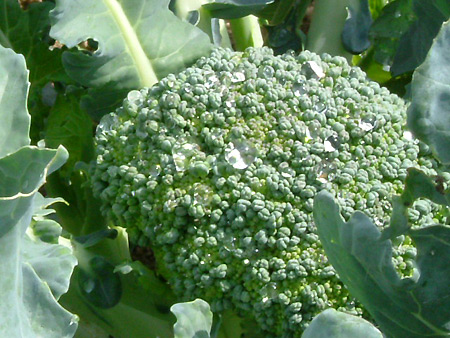
[…] The decisions relate to the so-called “Tomato II” case on a “method for breeding tomatoes having reduced water content and product of the method;” and the so-called Broccoli II case involving a “method for selective increase of the anticarcinogenic glucosinolates in brassica species,” (IPW, Biodiversity/Genetic Resources/Biotech, 16 February 2015). […]