Original news and analysis on international IP policy
Civil Society Files Opposition To Monsanto Climate-Related Soybean Patent
A civil society coalition is after one of European Monsanto's patents, accusing the giant seed corporation of biopiracy. The patent granted in February was challenged by the No Patents on Seeds coalition, which filed an opposition a few days ago.
A civil society coalition is after one of European Monsanto’s patents, accusing the giant seed corporation of biopiracy. The patent granted in February was challenged by the No Patents on Seeds coalition, which filed an opposition a few days ago.
The patent EP2134870 (Utility of SNP markers associated with major soybean plant maturity and growth habit genomic regions), granted by the European Patent Office, covers the selection of soybean varieties adapted to various climate zones for further breeding, according to a 2 December release by the Berne Declaration and Swissaid, members of the coalition.
The opposition to the patent is here [pdf] (in German).
The patent documents mention that soybean varieties grown in the United States “have a narrow genetic base,” with six varieties contributing to nearly 70 percent of the germplast represented in 136 cultivars. According to the patent documents, “the genetic base of cultivated soybean could be widened through the use of exotic species.”
According to the NGO coalition, “Monsanto screened more than 250 plants from ‘exotic’ species closely related” to soybean. The species were screened for particular genetic diversity regarding climate adaptation and their maturation period, according to the release, which alleges that Monsanto, in the patent, claims the usage of “hundreds of DNA sequences originating from natural genetic diversity.” The release notes that the patent was also granted in the United States in September 2014.
According to the release, the European Patent Convention provides an explicit ban on any patent on the process for obtaining a plant variety. Article 53 (Exceptions to patentability)(b) of the convention [pdf] states that European patents should not be granted “on plant or animal varieties or essentially biological processes for the production of plants or animals; this provision shall not apply to microbiological processes or the products thereof.”
“This patent is a striking example of the legal absurdity intentionally created by the EPO to serve the interests of companies such as Monsanto,” François Meienberg from the Berne Declaration says in the release, adding that “skilful wording” in a patent application can avoid the legal prohibitions.
The coalition calls for political action “to stop the EPO from granting any more of these patents,” and for the contracting states of the EPO to “take political control” so that the current interpretation of the patent law is changed.
The patents, such as the one delivered to Monsanto, “are endangering agro-biodiversity and adaptability of food production systems needed to meet the challenges of climate change,” and endangering food security, according to Meienberg.
The coalition recently released a report [pdf], titled “European patents on plants and animals – is the patent industry taking control of our food?” The report states that only five companies control 75 percent of the EU maize market, and that some 95 percent of the EU vegetable seed market is controlled by the same number of companies.
According to the report, the EPO “has already granted several thousand patents on plants and seeds, with a steadily increasing number of patents on plants and seeds derived from conventional breeding.” The report further states that “Around 2400 patents on plants and 1400 patents on animals have been granted in Europe since the 1980s. More than 7500 patent applications for plants and around 5000 patents for animals are pending.”
Such patents “promote market concentration, hamper competition and serve to promote unjust monopoly rights,” and are based “largely on trivial technical features,” the report states.
“They are an abuse of patent law using it as a tool for misappropriation…,” it says.
EPO: A Different View
An EPO spokesperson confirmed that the opposition to the Monsanto patent has been filed and will now be sent to Monsanto, who is invited to file a response to it. According to the spokesperson, there is no binding time limit for the opposition process, which takes an average of two to three years for a decision to be reached by the Opposition Division competent in the case. The decision can be challenged before a second-instance Board of Appeal of the EPO, he explained.
The invention challenged by the coalition “relates to methods for screening and selecting a soybean plant for a preferred plant maturity using single nucleotide polymorphism (SNP) technology. It concerns selection processes, and does not contain any steps of sexual crossing,” according to the spokesperson.
Referring to the coalition, he said the group “advocates a broader interpretation of the European patent law and ultimately aims at the exclusion of patentability of plants.” He added that “the EPO has an approach that is based on a long list of case law developed over the last 40 years.”
The spokesperson said he could not comment the case prior to the decision that will be reached in the procedure.
No Patents on Seeds includes 10 national organisations from different EU countries and Switzerland, and says it is supported by “several hundred other organisations.”
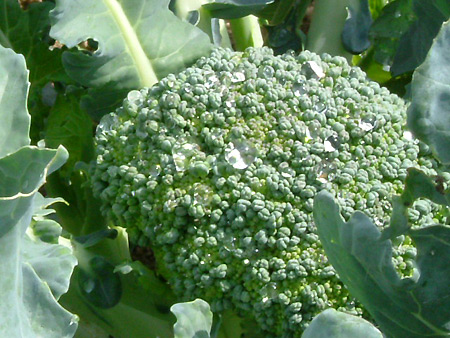
According to the coalition’s report, examples of incriminated patents are: a patent granted to Syngenta (May 2013) “claiming insect-resistant pepper and chilli plants,” derived from conventional breeding (EP2140023); a patent granted to Seminis (owned by Monsanto) (June 2013) claiming “plants derived from conventional breeding grown in such a way as to make mechanical harvesting easier” for broccoli (EP1597965); and in March 2013, a patent granted to Rijk Zwaan, covering “lettuce which shows less discoloration of its surface after cutting” (EP1973396).


[…] German […]
[…] Civil Society Files Opposition To Monsanto Climate-Related Soybean Patenthttp://t.co/0y2zs4JWAy […]