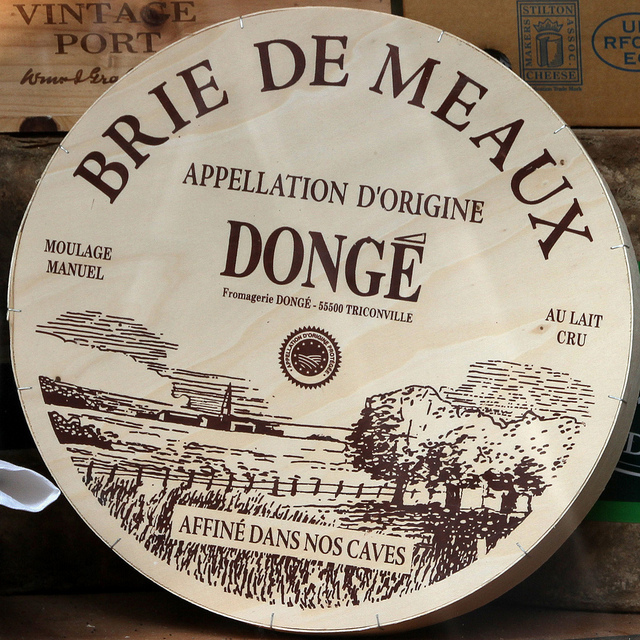
The United States is accustomed to having a strong say in multilateral negotiations, but in the case of a move by a small number of World Intellectual Property Organization members to negotiate higher protection for geographical indications without the full participation of the US and others, the US government is particularly fuming. Today, it questioned the very validity of the move.
A group of mainly European countries last week agreed with WIPO’s blessing to move to a high-level final treaty negotiation (diplomatic conference) to raise the level of protection on geographical indications (GIs) without giving equal say to non-Lisbon members. It would give elevated status to intergovernmental organisations. GIs are products with specific geographical origins and characteristics.
But several of the world’s other largest economies – which don’t use the same practice of protecting GIs and fear harm to their exports – forcefully want in on the talks. This includes the United States, Japan, Australia, South Korea, Argentina, Chile and others.
At issue is the Lisbon Agreement for the Protection of Appellations of Origin and their International Registration, managed by WIPO. Lisbon has 28 members, WIPO has 187 members. Last week, 27 of the Lisbon members – over strong protest of 28th member Israel – decided to move ahead with negotiating a revision of Lisbon to include GIs under rules of procedure that put non-Lisbon members on the sidelines.
The Working Group on the Development of the Lisbon System (Appellations of Origin) met from 27-31 October. The first three days worked on minor changes to a draft text of the treaty revision. The final two days were dedicated to a meeting of the Preparatory Committee of the Diplomatic Conference for the Adoption of a Revised Lisbon Agreement on Appellations of Origin and Geographical Indications. The final document of the preparatory committee is available here. The diplomatic conference will be held on 11-21 May at WIPO. (IP-Watch reporting on the meeting is here and here.)
In some ways, the tension represents the coming to head of two rival systems for dealing with GIs. In a statement last week, the US signalled concern that this move within WIPO could lead to Lisbon attracting more members – exactly what the negotiators are hoping to do – at the possible cost of steering countries away from the system favoured by criticising countries.
Lisbon members wonder where these complaining countries were during the past five years since negotiations began in 2009. They also assert that they are within their rights at WIPO, which does not appear to formally state that consensus of the full membership is required in such a case. And they say that the treaty will only apply to the Lisbon members who ratify it, so it will not have a negative impact on non-treaty members.
A delegate from Lisbon member Bulgaria said at the end of last week’s meeting that he did not see the word “consensus” anywhere in the procedures of WIPO, calling it an “emotional” construct. He said if the membership does not like the current rules, it can “change them one day,” but for this initiative, “we followed the rules.”
Lisbon member Algeria’s delegate said at the meeting’s end that it was “not really comfortable” with the fact that some limits at WIPO were redefined at last week’s meeting. But, she said she was happy the diplomatic conference was going ahead. She said Algeria did not want to support any instance where the work of WIPO can be done in a closed process. But “sometimes, what goes on in a family needs to stay within a family. I think that’s what’s going on with Lisbon.”
Furthermore, Lisbon members say they have made an effort to include the others as observers, and to hear their views, and that they will continue to include them at the diplomatic conference – albeit in a limited status.
France said it is important that the process is moving forward, WIPO procedure has been adhered to, but there were “exceptional circumstances that required an exceptional approach.”
The European Union, which will gain status in Lisbon under the new rules of procedure, said over the last years all delegations have had an opportunity to express opinions in an open way.
Preparing for a Fight
Meanwhile, countries on the outside have dug in their heels, seeing a more profound impact to the global IP system and their economies, and an inauspicious precedent of smaller agreements within the UN’s IP agency. With diplomacy having failed, it is not clear what legality they have left with which to fight the process, but they are waving rhetorical sabres.
Argentina called the outcome a precedent and said it will examine steps to take. It raised a question of the credibility of WIPO.
South Korea likened being allowed to attend the diplomatic conference as an observer to being “invited to a dinner where there is no fork or knife provided.”
Chile said the decision was taken without consensus, which shows an “institutional deficit” and “affects the confidence and trust which is a basic element” of an organisation.
The US statement said it is “deeply disappointed by the outcome and conduct” of the preparatory committee. The statement was posted today on the website of the US mission in Geneva. It is uncommon to post statements about WIPO committee meetings.
“The meeting was a missed opportunity to find common ground on how to protect geographical indications (GI) and chart a way forward agreeable to all WIPO members,” it said. “The United States and many other countries sought an open, cooperative, and inclusive process whereby all WIPO members would have an equal say in a Diplomatic Conference that will affect their export markets and GI stakeholders.”
“Instead,” the US said, “a small fraction of WIPO’s members worked to exclude the majority from having a voice in the upcoming Diplomatic Conference to revise the Lisbon Agreement. Such a non-democratic move in an international organization sets a deeply troubling precedent whereby countries representing a mere 15 percent of WIPO’s membership have aggressively empowered themselves to decide issues affecting all WIPO member states.”
“In particular,” the US concluded, “we cannot accept such a result when it is manufactured in disregard of rules of procedures and of WIPO’s longstanding commitment to cooperation and the practice of consensus. Neither at WIPO nor in other international fora does the United States support such an approach.”
“We can only conclude that because there was no consensus, there was therefore no agreement on how to proceed with the Diplomatic Conference to amend the Lisbon Agreement,” it said.
But at press time, it was unclear what recourse these countries might have. The WIPO legal counsel was consulted on various issues last week and did not seem to offer any open doors.
Minor Changes to PrepCom Report
There were a few changes to the draft text of preparatory committee report made on the last afternoon. Again, the adopted report of the preparatory committee is available here.
Some changes were simply to correct the names of countries or organisations listed in various categories.
The only significant discussion regarding the text itself was around how to make mention of the observers’ contributions.
Paragraph 10 was modified to add a reference, so that it now reads:
- While noting the statements made by a number of WIPO Member States participating in the meeting in an observer capacity, the Preparatory Committee, with the exception of one Member of the Lisbon Union, agreed to transmit the draft Rules of Procedure of the Diplomatic Conference (document LI/R/PM/2, with the editorial changes as announced by the Secretariat) to the Diplomatic Conference and agreed to recommend them for adoption at the Diplomatic Conference meeting in Plenary.
Most observers offered critical comments during the week, according to speakers, but some were supportive, so the reference to their statements was left neutral. Old paragraph 11 was deleted as it duplicated new paragraph 10.
New paragraph 13 deletes reference to “regret” over Portugal’s withdrawal of its offer to host the diplomatic conference.
Also, in paragraph 15, a verbatim report of the preparatory committee session will be posted on the WIPO website by 1 December, and comments on the report are due by 1 January.
Image Credits: JIPO