
Whether countries can bring intellectual property complaints against each other under the World Trade Organization even if they don’t violate WTO rules was a topic of debate this week, but could not be resolved.
The WTO Council for Trade-Related Intellectual Property Rights (TRIPS) met on 11 June. The meeting ended after only one day.
A proposal on the ability to bring so-called non-violation complaints under the TRIPS agreement was raised by the United States and discussed inconclusively. Another item put forward by the United States and Taiwan on “innovation hubs” for small-and-medium-sized enterprises led to many countries sharing their experiences, while discussions on the relationship between IP and technology transfer on green technology are expected to be pursued at the next meeting.
Non-Violation Complaints
The United States put forward a text [pdf] arguing in favour of non-violation complaints under TRIPS. If so, it would allow a country to bring a WTO dispute settlement case against another if it feels it has been deprived of expected benefits by the other’s actions, even if it did not violate a WTO rule. WTO backgrounder here.
A moratorium on non-violation complaints under TRIPS has been extended several times. But the decision of the December Bali WTO ministerial meeting includes a request that WTO members decide by the 2015 WTO ministerial whether to make the moratorium permanent, or allow non-violation complaints under TRIPS.
Most countries are in favour of a perpetual extension, except the United States and Switzerland.
The US proposal offers lengthy reasons why non-violation complaints are appropriate under TRIPS, such as that they have “long been a part of” WTO and the preceding General Agreement on Tariffs and Trade (GATT).
“Non-violation complaints serve an interest all WTO Members share, which is to assist Members in protecting against measures that nullified or impaired concessions,” the US paper says. “Non-violation complaints were part of the balance of rights and obligations in the TRIPS Agreement.”
The paper details provisions of the WTO agreements relating to non-violation complaints, such as Article XXIII of GATT 1994 (Nullification or impairment), Article 64 of TRIPS (Dispute settlement) and articles 3.2 (General provisions) and 26 (Non-violation complaints) of the Understanding on Rules and Procedures Governing the Settlement of Disputes (DSU).
It also addresses concerns such as that the TRIPS agreement as a sui generis agreement establishing minimum standards of IP protection rather than protecting market access, to which the paper argues that the TRIPS agreement is indeed a market access agreement.
The document also seeks to settle concerns about use of these complaints to undermine flexibilities in TRIPS, such as for public health. It restates a statement made by Switzerland at the February TRIPS Council that it is their “firm view that a non-violation complaint cannot be brought against another member for utilizing a flexibility foreseen in the TRIPS Agreement.”
Examples of Non-Violation Complaints
A developing country source told Intellectual Property Watch that proponents of ending the moratorium did not provide any concrete examples of what a non-violation complaint could be under TRIPS, and its potential usefulness.
According to a summary note [pdf] issued by the WTO secretariat in 2012, several hypothetical examples have been raised during discussions between member states over the years. For example, “a member may decide to apply a heavy taxation on certain goods with intellectual property rights whose use is deleterious to the environment,” to which another member responded that “a non-violation claim based on this example would be unsuccessful because no benefits would be found.”
Another example was on cigarette advertising. “A Member could ban all advertising of cigarettes, including their trademarks, for health reasons. This ban, although strictly complying with Article 15.4 of the TRIPS Agreement by allowing trademarks for cigarettes to be registered, could nullify or impair benefits accruing to the owners of the trademarks.” This was answered by another member saying, “Bans on cigarette advertising could easily have been anticipated at the time of the TRIPS negotiations. Many countries either already had such bans in place or were actively discussing them.”
The WTO is currently arbitrating a dispute by five WTO members (Dominican Republic, Cuba, Ukraine, Honduras, and Indonesia) against Australia for its legislation requiring plain packaging for tobacco products (IPW, WTO/TRIPS, 26 April 2014).
Other examples mentioned by members, according to the document, were laws and regulations which affected the exploitation of an IP right and which might reduce the value of IP, registration schemes for handguns that leads to a reduction in exports of patented handguns, and prohibitions by school authorities on collectible trading cards that lead to reduced sales of trademarked goods or services.
Positions Unchanged
During a press briefing today, a WTO official said positions on non-violation complaints remain unchanged. Switzerland supported the US proposal and a number of developing countries referred to a position paper [pdf] issued in 2002 by Argentina, Bolivia, Brazil, Colombia, Cuba, Ecuador, Egypt, India, Kenya, Malaysia, Pakistan, Peru, Sri Lanka and Venezuela, raising concerns on non-violations complaints under TRIPS.
According to several sources, a number of countries asked for more time to consider the US paper, which was submitted the day before the TRIPS Council meeting. According to a WTO source, the European Union and Japan remained noncommittal.
Extensions of the moratorium TRIPS non-violation complaints must be decided by consensus.
Innovation Hubs
The United States and Taiwan proposed an agenda item on innovation incubators as the next in a series on innovation at TRIPS Council.
Incubation centres provide integrated resources to help small and medium enterprises (SMEs), such as office space, access to equipment, research and development technology and funding, IP protection and management consultancy, the Taiwan official said in his statement. This reduces the cost and the risks faced by small new business.
By the end of 2012, he said, over 130 innovation incubators had been set up, nurturing some 5,620 SMEs, creating some 90,000 jobs and securing 3,300 patents and 1,559 technology transfers.
According to a WTO official at the press briefing, a number of countries shared their experience with innovation hubs. The US presented its history of innovation incubators since the 1950s, he said. Other countries contributing to the debate were Panama, Hong Kong, Chile, Canada, Switzerland, El Salvador, and Botswana.
India’s Doubts about Innovation and IP
India, as it has in the past, raised concern about the inclusion of agenda items on innovation on the TRIPS Council agenda.
In his statement [pdf], the Indian delegate said the word innovation appears only once in the TRIPS Agreement, in relation to IP contributing to the promotion of technological innovation and on the transfer of and dissemination of technology, to the mutual advantage of producers and users.
“Even today, the view that IP does not necessarily have a positive effect on economic development is still predominant among economists,” he said. “There is no doubt that the innovation incubators promote the development of new technologies,” he added, “but their success depends on several factors like infrastructure, resources, level of education, quality of universities and their linkage with industry.”
“We are afraid that by looking at innovation through the narrow prism of IP, we would not only undermine the spirit of innovation amongst the people but would create barriers in providing affordable, low cost and appropriate technologies to the developing countries,” he said. India, he went on, has set up several such incubators in universities and technical institutes to promote low-cost innovation. These centres are based on open source models, he said.
Transfer of Green Tech
Meanwhile, Ecuador requested that the contribution of IP to the transfer of green technology be once again on the agenda. Ecuador had put forward a communication paper [pdf] in February 2013, which has been discussed ever since.
Ecuador proposed an amendment to its communication paper to be discussed at the next TRIPS Council session in October, an Ecuador official told Intellectual Property Watch. It also proposed that an information session be held prior to the October session, which was opposed by some developed countries, he said.
Some countries supported this proposal, according to the WTO official, such as Cuba, El Salvador, Nigeria and Venezuela. Other speakers, such as Chile and China, said flexibilities already existed in the TRIP that could be used for transfer of green technology. The Ecuador communication paper suggests a review of Article 31 of TRIPS (Other Use Without Authorization of the Right Holder).
A number of developed countries, in particular the US, Switzerland, Japan, Canada and the European Union, said IP helps with transfer of green technology. The EU cited studies that found less than 1 percent of green technologies are currently patented in Africa, the WTO official said.
Also at TRIPS Council, according to the WTO official, Turkey and Uruguay have accepted the so-called “paragraph 6” TRIPS amendment that allows poorer countries to import cheaper generic drugs made under compulsory licences if they have no manufacturing capabilities themselves. This is currently the subject of a waiver that will become a permanent amendment when two-thirds of member countries have agreed to it.

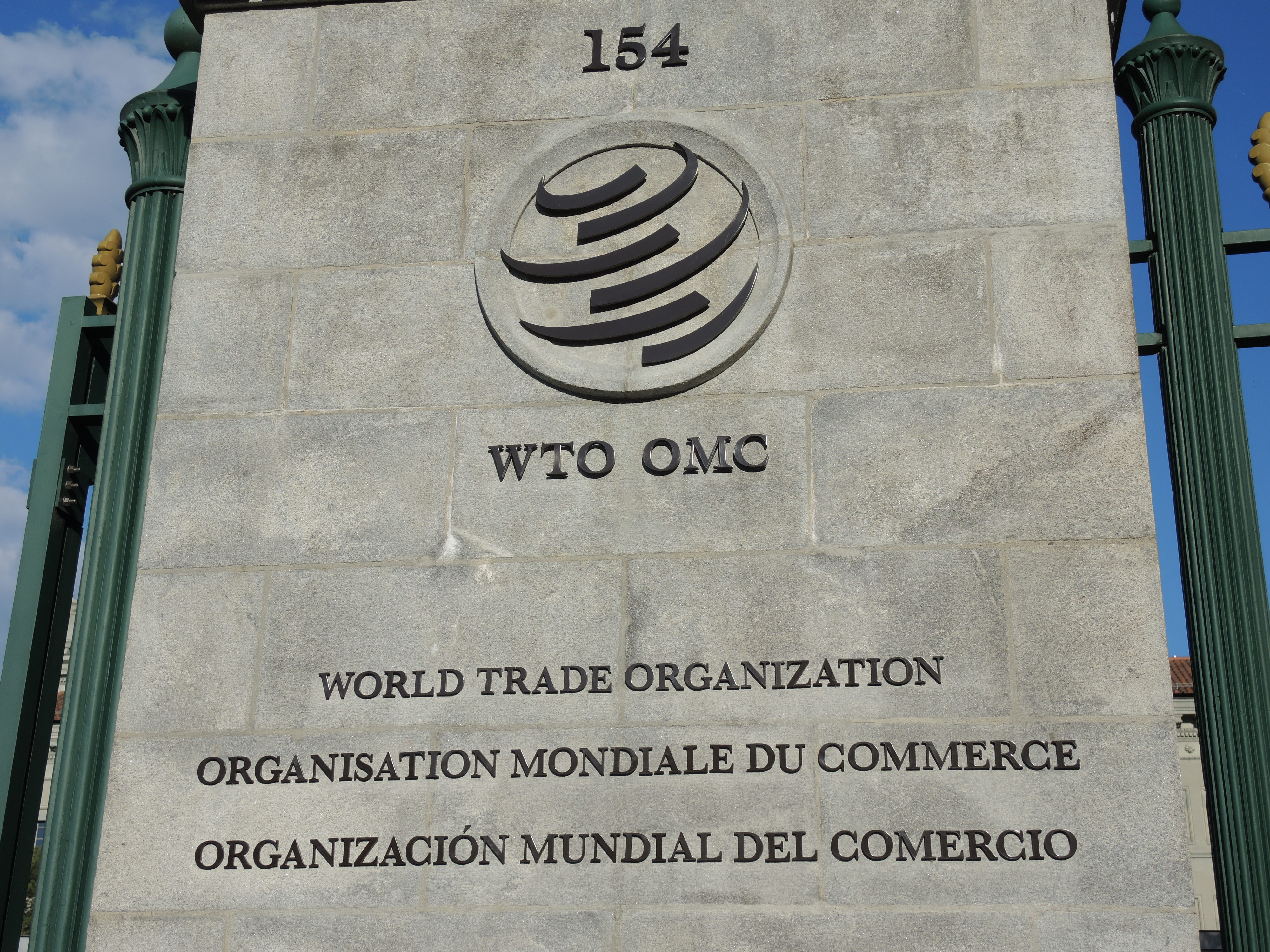
[…] Read the full article at: http://www.ip-watch.org/2014/06/12/trips-council-debates-non-violations-innovation-green-tech-transf… […]
[…] Property and Innovation: Innovation Incubators” was tabled by the United States and Taiwan. According to the Taiwan official, incubation centres provide a set of integrated resources including research, access to equipment, […]
[…] The moratorium on non-violation complaints under TRIPS has been extended several times. But the decision of the December Bali WTO ministerial meeting includes a request that WTO members decide by the 2015 WTO ministerial whether to make the moratorium permanent, or allow non-violation complaints under TRIPS (IPW, WTO, 12 June 2014). […]