

What if you get an aggressive form of breast cancer, and the treatment exists but it is too expensive for you to get? You die. Tragic stories and the possibilities to avert them were centre stage at a panel last week on the margin of the ongoing World Health Assembly. Delinking the cost of research and development from the market prices of medicines was urged by speakers on the panel: representatives of cancer patients, civil society, and a senior Brazilian official.
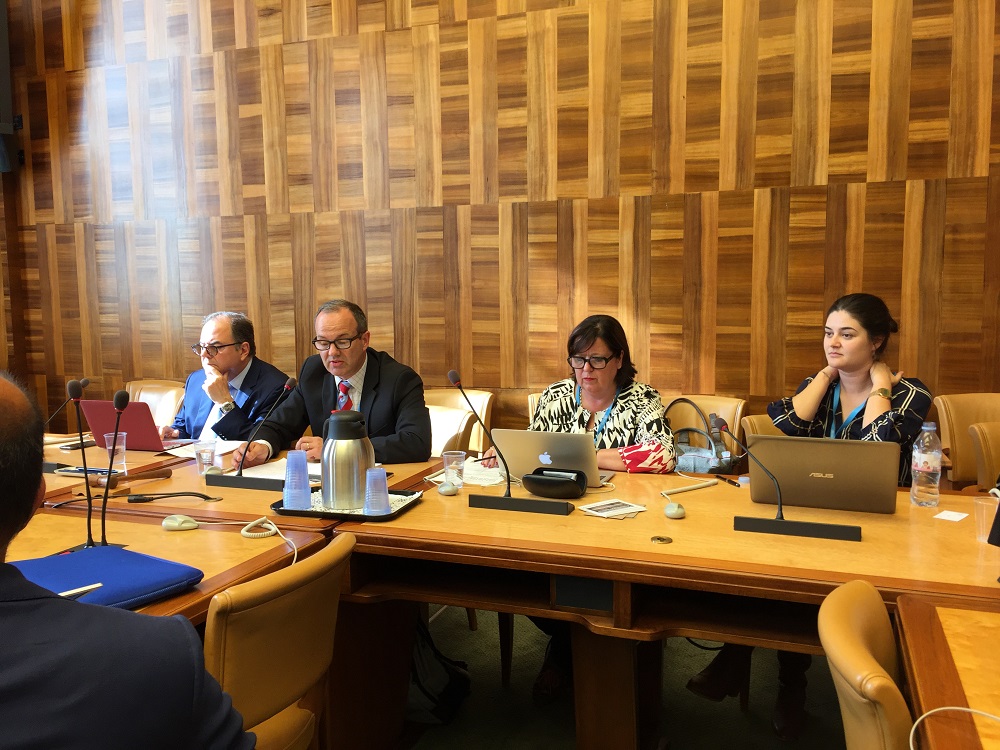
Knowledge Ecology International (KEI), Oxfam, and Stichting Health Action International (HAI) organised a 24 May side event to the World Health Assembly, taking place from 22-31 May.
Today, WHO members are expected to consider a draft resolution proposed by Brazil, Canada, Colombia, Costa Rica, France, Netherlands, Nigeria, Panama, Peru, Russia, Thailand, and Zambia, on cancer prevention and control in the context of an integrated approach. The resolution calls for increased access to affordable, safe, effective and quality medicines and diagnostics and other technologies.
The side event explored access barriers and affordability challenges for cancer drugs.
Governance at Issue, Investors at the Table
Brazilian Deputy Permanent Representative to the UN Guilherme Patriota said the discussions on access to medicines need to be broader than HIV, malaria, and tuberculosis, as it has been difficult to go beyond those three diseases in terms of international commitment. He said noncommunicable diseases have become a burden for health budgets and an economic issue, and the cancer resolution is an emerging mandate on the problem of access, prices and accessibility.
The draft resolution on cancer is a breakthrough but not as clear-cut as hoped, he said, as it does not include the concept of the delinkage of the cost of research and development (R&D) from the end prices of the medicines, but still “a great beginning.”
During the question and answer session, he said governance is a big issue, and added there is a greater outsourcing of decision-making towards the private sector, and big private actors, which are the industry themselves, or “governments that believe that their position should be the industry position … or philanthropic organisations which work strictly in accordance with their patrons, which are private patrons.”
Some 80 percent of the WHO’s budget is made of voluntary contributions, most of which are earmarked, he noted.
Gavi the vaccine alliance, the Global Fund to Fight AIDS, Tuberculosis and Malaria, UNITAID, and UNAIDS have all gone through a financial crisis and the trend now is to have multi-stakeholder structures, Patriota said, adding that politically, getting a resolution such as the cancer resolution is getting “every day more difficult.”
“Everywhere you go, decision-making is beginning to be shared with representatives from the private sector that have a very inflexible perception on how to deal with these issues…and they have a financial stake, and an investment stake,” he said, adding “you are dealing with investors directly sitting on the decision-making rooms.”
Cancer Patients Held Hostage
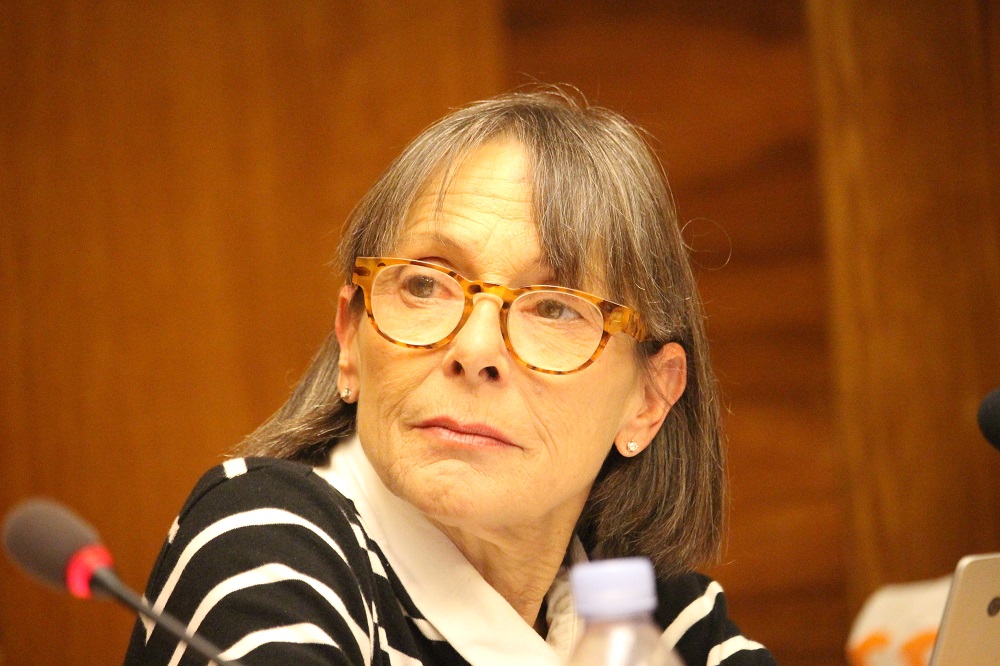
Manon Ress, founder and acting director of the Union for Affordable Cancer Treatment (UACT), and also a cancer patient, said the global market for pharmaceuticals is about US$1 trillion.
According to Dying for a Cure, global sales of cancer drugs were US$107 billion in 2015, and forecast to rise between US$148 billion and US$178 billion by 2020.
The profit margin of industry is “astronomical,” she said, adding her own treatment, Roche’s kadcyla or TDM1, is sold between US$ 2.000 and $5,000 a week. Most women in the world cannot access that medicine, she said, and even in the United Kingdom, the drug is not reimbursed by the health system.
The WHO Model List of Essential Medicines [pdf] should be reformed and changed, she said, as it does not contain the newest breast cancer drugs, in particular second line treatments. Second line treatments are used when the patients stop responding to first line treatments.
A Long-term R&D funding reform is needed, she said, adding that governments should support delinkage, and monopolies on medicines should be replaced by innovation prizes. Transparency should be increased in particular from pharmaceutical companies, governments, and drug approval agencies, she said, adding that the real cost of R&D needs to be available to the public, such as through a pricing information database.
Ress said cancer patients, who are “held hostage” of high prices, should “at least” be able to sit at the negotiations table.
South Africa: Courts Go with Patent Holders
Catherine Tomlinson of the Cancer Alliance, South Africa said it is difficult to define the number of people dying of cancer in South Africa and sub-Saharan African in part because cancer is being underdiagnosed. However, it is estimated that the incidence of cancer in Africa is expected to double by 2030.
Many cancer treatments are inaccessible to most South African and sub-Saharan health systems due to excessive prices, she said. South Africa did a “dismal job” at introducing the World Trade Organization Agreement on Trade-Related Aspects of Intellectual Property Rights (TRIPS) in the country’s legislation, she said, with no examination of prior art, and no opposition mechanism for third parties or competitors.
The only way to challenge a patent is through litigation against the patent holder, and “the companies you are taking on have very deep pockets, and they will take it as far as they can,” she said.
South African courts tend to apply a very low threshold of patentability, and also tend to go with the patent holders, when a litigation is brought up, she added.
Another challenge for access to medicines is India now being compliant with the TRIPS agreement, and not providing generic version of new cancer medicines, she said.
Patents Less Worrisome, Bigger Threat in Exclusivity
Ellen ‘t Hoen from Medicines Law & Policy/Global Health Unit – University Medical Center Groningen said, there is a very wide difference between the cost of production of cancer medicines versus their market price, showing “there is enormous” space for change, and those medicines can be made more available and much more affordable.
For example, she said, imatinib, a cancer drug, has a cost of production between US$119-159, and a market price between US$30,000 and US$100,000 per year.
“Patents these days are the least of our worries,” she said, pointing out to “a myriad of exclusivity, rules and regulations … beyond patents that create these market exclusivities,” which have been put in place with the argument that it will stimulate innovation.
“We need to break that cycle of exclusivities, the high prices, and innovation that people cannot access,” ‘t Hoen said, adding that the way to achieve that goal is through delinkage, and urging the audience to check out a dedicated website.
High Prices, Innovation Blackmail
James Love, director of KEI, said Roche got a large profit from the sale of TDM1. “After you get the first US$67 billion, you think it might be appropriate to say let’s make the drug available for cheap now, let’s be a good sports,” he added.
“Why are drugs expensive in the first place?” he asked. Because “that’s the system that we have to encourage people to invest in R&D,” he said. The usual argument from companies in the face of efforts to bring down the prices is that the result will be less R&D, he said.
He pointed to the United Kingdom, where they health system is not reimbursing cancer patients with kadcyla or TDM1, because of its price. By resisting those high prices, the United Kingdom is “letting one women after the other … die ” for lack of access to a very effective drug, he said.
He advocated for delinkage, and said governments do not protect the sick persons but the ideology of the patent system, and the shareholders, “that’s who’s first”.
WHO: Patent System Questioned
Peter Beyer, senior adviser at the WHO Department of Essential Medicines and Health Products, underlined the “tremendous progress” achieved in the conversation, with European Ministers of health complaining about high drug prices. Under the EU Dutch presidency the EU started a review of the orphan drug legislation, and drug prices are high on the agenda of the EU, he said.
This is not yet about abolishing the patent system, but it is more than anybody would have expected a number of years ago, he remarked.
He said the very expensive cancer drugs on the WHO Essential Medicines List is a message that those drugs should be affordable.
Today, the expiry of patents on bio-pharmaceuticals, which include cancer treatments, does not necessarily translate into savings, he said, because biosimilar drugs are much more difficult to manufacture, regulatory approval is more complicated, so fewer companies are on the market.
Pharma: Cancer Drugs Only Fraction of Cancer Costs
In the audience, a representative from the International Federation of Pharmaceutical Manufacturers and Association (IFPMA) remarked that data shows that only 1 percent of health care budgets is spent on cancer drugs in Europe, and only a quarter of the total cost of cancer care is actually from drugs.
It is important to look at the context, when talking about the cost of cancer drugs, she said, such as the infrastructure that is needed to make use of the innovative medicines, in particular personalised medicines requiring a lot of diagnostics and identification of the right patient. The representative added that the industry recognises that the prices of cancer drug is a factor that “we need to talk about,” but not in isolation, rather in the broader context.
Tomlinson replied that developing countries need investment in R&D so that treatments and diagnostics are adapted to the needs of their populations. She also remarked on the difficulties to strengthen health systems, and said ompanies should also be looking at ways to ensure access considering the supply chains and health care settings present in developing countries, she said.
UCLA Asked to Withdraw Patent Pursuit in India
Earlier the same day, Love, Ress and ‘t Hoen gave a press briefing to journalists.
Ress mentioned a 24 May letter from UACT to the University of California, asking the university to withdraw its effort to obtain a patent on the prostate cancer drug enzalutamide (brand name Ytandi) in India. The patent would prevent generic competition, and affordable prices both in India and in other countries where there is no patent, the letter says.
Enzalutamide was developed by researchers at UCLA with the support of US taxpayers, through grants from the National Cancer Institute and the National Institutes of Health, and the US Army Prostate Cancer Research Agency, the letter goes on.
According to the letter, the Times of India reported on November 2016 that Astellas, the manufacturer of the drug, sold it in India for around US$44.77 per pill, and US$179 per day.
The Indian patent office denied the patent after pre-grant opposition proceedings, the letter signatories said, adding that the University of California filed a petition before the Delhi High Court.
Image Credits: John Zarocostas, Catherine Saez
The IFPMA 1 percent number is low, but maybe they can provide a cite. For additional perspective, consider the share of cancer drugs in cancer treatment budgets. In a 2013 article, Ramon Luengo-Fernandez, Jose Leal, Alastair Gray and Richard Sullivan estimated the costs of drugs, as a share of the cancer treatment budget, to be 36 percent in Denmark, 44 percent in Portugal and 56 percent on Hungary, to mention a few countries. Since then, prices for cancer drugs have gone up, not down.
[…] Intellectual Property Watch: Cancer Drugs: Innovation ‘Blackmail’ Leads To Unaffordable Prices, Delinkage Needed, Speakers Say“…Tragic stories and the possibilities to avert them were center stage at a panel last week on the margin of the ongoing World Health Assembly. Delinking the cost of research and development from the market prices of medicines was urged by speakers on the panel: representatives of cancer patients, civil society, and a senior Brazilian official…” (Saez, 5/30). […]
[…] the panel: representatives of cancer patients, civil society, and the Brazilian deputy ambassador. Fonte:https://www.ip-watch.org/2017/05/30/cancer-drugs-innovation-blackmail-leads-unaffordable-price… Author: Catherine […]
While its convenient for Governments to point fingers at pharmaceutical companies and it elevates a politicians career – the EU and the Netherlands in particular need to understand the basics of business. If – as a country – you force pharmaceutical companies through multiple approval processes – each costing millions of euro’s – then you cannot expect low prices. Citing production costs is ridiculous – as a new drug or device needs north of 18 approval processes in Europe – often in countries that have a patient population that could benefit that is less than 2000 people. You can’t expect cheap while putting onerous processes out there. European countries should unify in regions where a single approval process, a single study process that allows medicines and drugs to be negotiated once for multiple countries. This means national insurance providers need to go away – and block systems need to be enacted. Supply and demand – note that the countries paying the highest prices are the smallest countries – a study in 2015 found that the Netherlands pays the most. Dr’s were interviewed stating ‘we don’t understand why – pharmaceutical companies need to provide transparency. At the same time, in a recent review of Optune for glioblastoma – the country asked for a trial, study, and cost benefit analysis all at the cost of the device provider. This – while only having a patient population of 1000. Oncologists admit such studies cost north of multiple million Euros. Another aspect is Dr’s are not accountants and should not be in the business of judging costs. Let the blame fall where it belongs – national boundaries and repetitive approval processes – as well as pharmaceutical profit motives. It is clear that this drives costs up – not down. I’d appreciate politicians have a bit of self awareness and not always demonizing businesses. There are clearly things that could be done to reduce costs on both sides – but as long as the governments are unwilling to collaborate and give up some power to increase patient supply -the situation cannot change.