

The World Intellectual Property Organization, as a United Nations specialised agency, has a role to play in the implementation of the UN Sustainable Development Goals (SDGs) for the year 2030. How that might happen, and which goals the organisation should pursue are a matter of ongoing discussion at the WIPO Committee on Development and Intellectual Property this week. Views diverge on whether the 17 SDGs should be considered as a whole, of if the organisation should focus on what is considered as its particular expertise and mission.
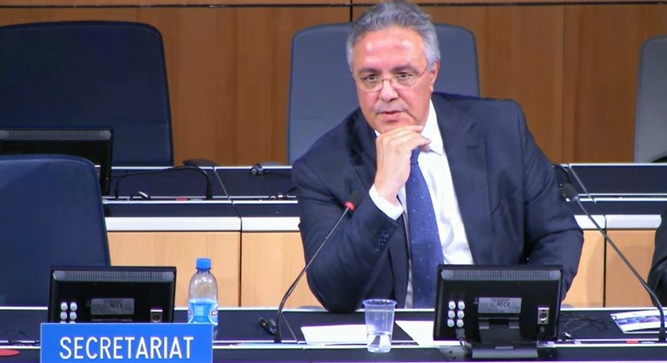
The 19th session of the Committee on Development and Intellectual Property (CDIP) is taking place from 15-19 May.
On 16 May, CDIP delegates heard a report [pdf] on WIPO’s Contribution to the Implementation of the SDGs and its Associated Targets, a first of its kind, delivered by recently appointed Representative of the WIPO Director General on the UN Sustainable Development Goals (SDGs), Ridha Bouabid.
Bouabid, from Tunisia, is former permanent representative of the International Organisation of la Francophonie in Geneva. According to the WIPO report, Bouabid was recruited in March to coordinate the subject of SDGs “internally and externally.”
The report includes three parts, one on the activities and initiatives undertaken individually by WIPO; one on the activities undertaken by WIPO as part of the UN system, and the last part on the assistance provided by WIPO to member states upon their request on the implementation of the SDGs.
Also included in the report (annex) is a presentation made by WIPO Director General Francis Gurry on 9 February to ambassadors and permanent representatives in Geneva on “WIPO and the SDGs.”
In addition to the events already listed in the report, which was issued on 10 March, Bouabid said WIPO participated in the Multi-stakeholder Forum on Science, Technology and Innovation for the SDGs, held in New York on 15-16 May.
Developing Countries: SDGs Holistic and Indivisible
A number of developing countries taking the floor, such as the Group of Latin American and Caribbean countries (GRULAC), Iran, Indonesia, Chile, Brazil and Nigeria, said the SDGs are “holistic” in nature and “indivisible”, so the 17 of them should be considered as a whole by WIPO, and discussed at the CDIP.
In past session of the CDIP as well as this week some countries gave examples of SDGs that they find directly relevant to WIPO’s work, such as Goal 3 (Ensure healthy lives and promote well-being for all at all ages), Goal 4 (Ensure inclusive and equitable quality education and promote lifelong learning opportunities for all), and Goal 8 (Promote inclusive and sustainable economic growth, employment and decent work for all).
The WIPO Group B (developed countries) in contrast said that WIPO should focus on these SDGs and targets which are of the greatest relevance to WIPO’s work and its mandate to promote the protection of IP throughout the world, in particular SDG 9 (Build resilient infrastructure, promote sustainable industrialization and foster innovation), and SDG 17 (Revitalize the global partnership for sustainable development).
Gurry’s presentation details SDG9 (Innovation) and says that innovation has an impact on a number of other SDGs, such as SDG2 (End hunger, achieve food security and improved nutrition and promote sustainable agriculture), SDG3, SDG6 (Ensure availability and sustainable management of water and sanitation for all), SDG7 (Ensure access to affordable, reliable, sustainable and modern energy for all), SDG 8, SDG11 (Make cities and human settlements inclusive, safe, resilient and sustainable), and SDG13 (Take urgent action to combat climate change and its impacts).
Some delegations, such as Egypt, Uganda, and Indonesia, also asked for more details on the kind of information WIPO is delivering when it participates in meetings with other organisations.
The report notes that at the time of its preparation, “the Secretariat has not received any request from Member States seeking assistance related to the attainment of the SDGs,” a fact which was underlined by Japan, speaking on behalf of Group B.
However, it appeared that the issue was more related to some lack of information than disinterest as several developing countries, such as Iran, Indonesia, and Tunisia, said they need more information on how the WIPO secretariat could provide technical assistance relating to the implementation of the SDGs. Senegal, for the African Group, said it is urgent to define a framework for the assistance provided by WIPO to its member states.
Indonesia remarked that most of the activities listed in the report predate the SDGs – which were agreed in 2015 – and asked whether WIPO is considering upscaling programmes that predated the SDGs.
Bouabid said the concerns of member states came as “no surprise,” and noted member states’ request for more substantive information on activities in which WIPO participates on the SDGs, and said the reporting on the WIPO implementation of the SDGs is a work in progress.
On the fact that no member states requested technical assistance on the implementation of the SDGs, he said that when making request for assistance, member states do not always specify that this request comes under this or that particular SDG, and added that WIPO might consider a more proactive approach.
Permanent Agenda Item on SDG Implementation
Brazil has proposed in previous sessions of the CDIP the inclusion of a permanent item on the agenda on the implementation of the SDGs.
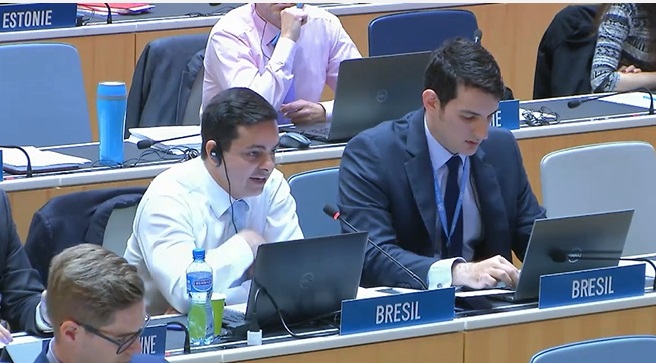
This week, Brazil again advocated for such an agenda item, supported by a number of countries, such as Senegal for the African Group, China, Iran, and Uganda.
There is a difference between technical assistance and development, the Brazilian delegate said. Technical assistance is a variable of a much broader equation, while development is a more complex and comprehensive concept different elements, such as economic growth, social justice, and environment sustainability.
WIPO’s technical assistance mostly seeks to enhance countries’ ability to improve their national IP system, he said, but technical assistance should also focus on increasing the ability of member states, and in particular least-developed countries, to explore flexibilities contained in the international IP legal framework.
A standing agenda item, the Brazilian delegate said, would help member states and WIPO to have more accountability, and more ownership over the implementation process, and provide for better reporting. He qualified the report provided earlier in the day as “timid.”
He also said that adopting a standing agenda item on the implementation of the SDGs at the CDIP would be sending an important message that WIPO, as a UN specialised agency, is doing its part to fulfil the UN General Assembly’s recommendations. “A small and symbolic diplomatic gesture with important political consequences,” he said.
Malta for the European Union and Japan for Group B said a standing agenda item is not necessary, as nothing prevents the CDIP from discussing SDGs under existing agenda items. Malta said the EU remains open to examining alternative proposals on relevant SDGs in the future on an ad hoc basis.
No agreement was found at press time, and it is likely that the discussion on how WIPO should participate in the implementation of the SGDs and whether this can become a standing agenda item on the agenda of the CDIP will continue at the next session.
Image Credits: WIPO
[…] of if the organisation should focus on what is considered as its particular expertise and mission. Fonte:https://www.ip-watch.org/2017/05/19/wipo-sdgs-differing-views-committee-ip-development/ Author: Catherine […]
[…] item on SDGs was suggested by Brazil and supported by a number of countries, but not approved (IPW, WIPO, 19 May 2017). Discussions are expected to continue on the proposed agenda item and on the way to address SDGs […]
[…] The WIPO secretariat remarked that under programme 8 (Development Agenda Coordination), reference to SDGs is made (third bullet point of the implementation strategies). The secretariat also underlined the fact that a SDG coordinator had been appointed in the director general’s office to coordinate the WIPO activities in support of the SDGs (IPW, WIPO, 19 May 2017). […]