

By David I. Berl and Christopher A. Suarez, Williams & Connolly
The estoppel provision of the America Invents Act, 35 U.S.C. 315(e), was touted originally as a check against patent challengers using inter partes review (“IPR”) proceedings to attack patents serially on the same or similar grounds. That provision precludes an IPR petitioner, or the real party in interest or privy of the petitioner, from asserting invalidity challenges in subsequent IPR, district court, or International Trade Commission (“ITC”) proceedings “on any ground that the petitioner raised or reasonably could have raised during” an IPR that resulted “in a final written decision.” Given the frequency of IPR and associated district court challenges, the scope of the AIA’s estoppel provision, with respect to the parties and arguments it estops, has become and will continue to be a critical and frequently contested issue for litigants.
Estoppel Typically Applies to the Petitioner and To Parties that Controlled Prior Proceedings
The estoppel effected by section 315(e) applies to the petitioner in an IPR that reached a final decision, in addition to (1) the petition’s real parties in interest (“RPIs”) and (2) the petitioner’s privies. Under the Patent Trial and Appeal Board’s (“PTAB’s’”) regulations and case law, to be an RPI, a party must control the IPR proceedings. Zoll Lifecor Corp v. Philips Elecs. North America Corp., 2014 WL 1253100 at *5 (P.T.A.B. 2014); 77 Fed. Reg. 48,759-48,760. Though the precise level of control required to be an RPI has not been resolved conclusively by the PTAB or the Federal Circuit, practitioners should exercise care and assume that estoppel will apply to parties that directly fund or have decision-making authority with respect to the IPR, irrespective of whether the parties were identified as RPIs in the petition.
The question of whether a party has a “privity” relationship with a petitioner such that the party would be estopped under section 315(e) is informed by the six factors propounded by the Supreme Court in Taylor v. Sturgell, 553 U.S. 880, 892-895 (2008). The Taylor factors address the question of whether petitioners and their privies are “‘so closely related’ [with] their interests ‘so nearly identical’ that ‘it is fair to treat them as the same parties’ for the purposes of determining the preclusive effect’ of [a] first judgment” (e.g., a prior IPR). Transclean Corp. v. Jiffy Lube Int’l., Inc., 474 F.3d 1298, 1306 (Fed. Cir. 2007).
IPR Estoppel Typically Applies Only to Instituted Claims and Grounds of the Prior IPR
The next—and fiercely-debated—question is the scope of the estoppel applied against a petitioner, RPI, or privy that did not prevail in a final IPR decision. In particular, the statutory language estopping the assertion of grounds for invalidity that “the petitioner raised or reasonably could have raised during” the prior IPR has been subject to multiple interpretations.
Under Shaw Industries Group, Inc. v. Automated Creel Systems, Inc., 817 F.3d 1293 (Fed. Cir. 2016), estoppel generally applies only to claims and grounds that were instituted in the prior IPR. In Shaw, the Federal Circuit emphasized that Section 315(e) applies to grounds that were raised or reasonably could have been raised “during” the prior inter partes review, and it held that “[t]he IPR does not begin until it is instituted.” Id. at 1300. Accordingly, the Court held that invalidity grounds that were raised in the petition, but on which the Board did not institute, “never became part of the IPR,” and therefore the petitioner neither “raise[d]” nor reasonably could have raised them during the IPR “trial.” Id. On the basis of its interpretation of the IPR as beginning upon institution, the Federal Circuit concluded that estoppel could not apply to non-instituted IPR grounds raised in the IPR petition submitted before—rather than “during”—the IPR.
Courts have relied on Shaw to interpret the scope of Section 315(e) estoppel narrowly. In Illumina, Inc. v. Qiagen, N.V., for example, Judge Alsup followed Shaw and declined to estop a challenger from asserting “grounds raised in a petition but not instituted.” 2016 WL 4719269, at *6 (N.D. Cal. Sept. 9, 2016). Judge Robinson of the District of Delaware interpreted Shaw to permit a party to assert in ensuing district court litigation, over a section 315(e) challenge, an invalidity ground that, though not raised in a prior IPR petition, was “based on publicly available patents and printed publications and could have been raised” in that original petition. Intellectual Ventures I LLC v. Toshiba Corp., 2016 WL 7341713, at *12-13 (D. Del. Dec. 19, 2016) (emphasis added), reconsideration denied 2017 WL 107980 (D. Del. Jan. 11, 2017). In so holding, the Court observed that estoppel on grounds that could have been raised in a petition seemed “perfectly plausible,” but interpreted Shaw to limit estoppel to grounds that were instituted. Id. at *13. Other courts likewise have interpreted Shaw to “limit[] IPR estoppel to grounds actually instituted.” E.g., Verinata Health, Inc. v. Ariosa Diagnostics, Inc., 2017 WL 235048 (N.D. Cal. Jan. 19, 2017).
Other decisions, both before and after Shaw, have interpreted the scope of section 315(e) more broadly. In one pre-Shaw decision, for example, a court interpreted Section 315(e) to mean that “an inter partes review petitioner is estopped from relying on any ground that could have been raised based on prior art that could have been found by a skilled searcher’s diligent search,” rather than merely on instituted grounds. Clearlamp, LLC v. LKQ Corp., 2016 WL 4734389 (N.D. Ill. March 18, 2016), at *27-32. That decision relied on the legislative history of Section 315(e), which it interpreted to suggest that Congress intended a broader estoppel rule. A more recent post-Shaw decision, Parallel Networks Licensing, LLC v. IBM, estopped a challenger from raising in district court several grounds that were not instituted or even included in the IPR petition. 2017 U.S. Dist. LEXIS 28461 (D. Del. Feb. 22, 2017) (Jordan, J.). The Court explained that allowing a challenger “to raise arguments . . . that it elected not to raise during the IPR would give it a second bite at the apple and allow it to reap the benefits of the IPR without the downside of meaningful estoppel.” Id. at *30. Notwithstanding the Parallel Networks decision, which did not discuss Shaw, practitioners should assume at this point that estoppel will apply only to grounds that were instituted.
Practitioners Should Recognize That The Interpretation of the Estoppel Provision Could Change in the Future
While Courts generally have applied estoppel narrowly in view of Shaw, these decisions may not provide durable benefits for challengers. As an initial matter, the Federal Circuit’s decision in Shaw has been subject to criticism and therefore may be reconsidered by the Federal Circuit at some point in the future. In denying a recent petition for mandamus review of the district court’s estoppel decision in Verinata Health, the Federal Circuit declined to re-visit Shaw interlocutorily but did not affirmatively endorse its rule. In re: Verinata Health, Inc. and Illumina Inc., Misc. Docket No. 17-109 at ECF 37 (Fed. Cir. 2017). Meanwhile, the en banc Federal Circuit already has decided to revisit several key IPR issues, including the reviewability of the Section 315(d) time bar in Wi-Fi One and the law relating to motions to amend in In re Aqua. See Wi-Fi One, LLC v. Broadcom Corp., No. 15-1944 (Fed. Cir. Jan. 4, 2017); In re Aqua Prods., Inc., No 15-1177 (Fed. Cir. Aug. 12, 2016). Practitioners should be aware that the Federal Circuit may decide to reconsider the scope of estoppel in the future as well.
Even without modification of the Shaw decision by the Federal Circuit, the PTAB may, as a practical matter, broaden the scope of estoppel by instituting on more grounds of a petition. The PTAB’s typical practice of declining to institute on grounds raised in the petition, including on the basis that the grounds are redundant of instituted grounds, has been criticized repeatedly by Federal Circuit judges, including Judge Reyna in concurrence in Shaw. See, e.g., Shaw, 817 F.3d at 1302-1305 (Reyna, J., concurring specially); Synopsys, Inc. v. Mentor Graphics Corp., 814 F.3d 1309, 1336-37 (Fed. Cir. 2016) (Newman J., dissenting) (“The stay and estoppel provisions become irrelevant if only some of the challenged claims are decided by the PTAB, leaving other claims unresolved.”). Since those decisions, at least one PTAB decision has “recognize[d] the interplay between this proceeding and the related district court action” (i.e., the estoppel effects) and instituted review of more challenged grounds than it otherwise would have instituted on the explicit basis that “we seek to achieve finality of review at the Board and avoid parallel review at the district court.” Resmed Ltd. v. Fisher and Paykel Healthcare Ltd., IPR2016-01716, Paper 12 at 9-10 (P.T.A.B. Mar. 10, 2017). In that manner, the Board may effectively broaden the scope of estoppel—at least with respect to grounds raised in the petition—irrespective of whether the Federal Circuit is inclined to modify Shaw.
Were the PTAB to take that approach more regularly in view of Shaw, so that estoppel would attach to more grounds raised in a petition, but would not extend to grounds that the petition did not raise, petitioners could limit the potential scope of estoppel by including fewer grounds for invalidity in IPR petitions. At this juncture, however, with both the law and the PTAB’s institution practices in flux, practitioners are not encouraged to pursue such a strategy. Rather, given the potential estoppel and adverse inferences associated with failed IPR challenges, petitioners should include their most persuasive arguments in IPR petitions and consider pursuing multiple IPR petitions to maximize the breadth of the IPR challenge.
Meanwhile, until Shaw is modified or limited in its application, or the PTAB adjusts by instituting review more broadly, patent owners should expect that the estoppel provision of the AIA will not prevent serial attacks on the basis of prior art patents or printed publications.
 David I. Berl is a partner at Williams & Connolly LLP focused on patent litigation, principally in the biotechnology, pharmaceutical, energy, and electronics fields. David has served as lead counsel in Hatch-Waxman trials, in appellate proceedings in the Court of Appeals for the Federal Circuit, and in inter partes review proceedings before the PTO.
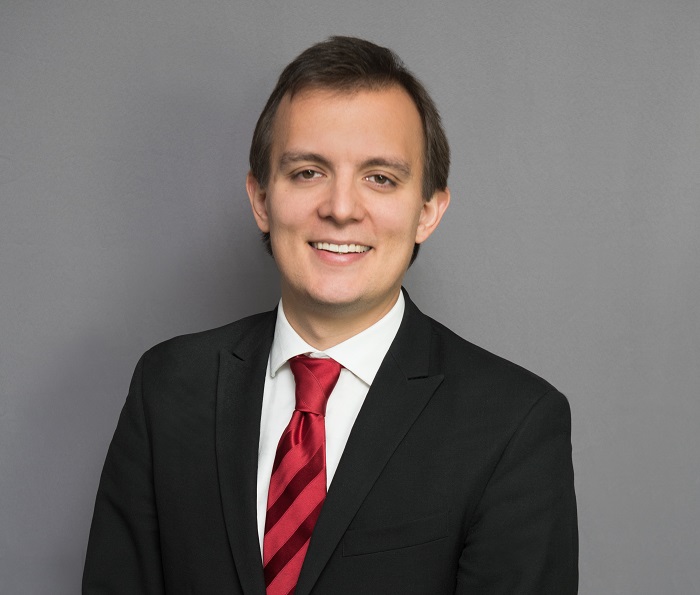 Christopher A. Suarez is a trial and appellate litigator at Williams & Connolly LLP who focuses generally on complex litigation, with an emphasis on intellectual property, antitrust, and education matters. His intellectual property practice spans both electronics and the life sciences.