

Now is the time for those who want to bring new voices to the digital trade and general trade debate involving the World Trade Organization, says an adviser to a leading security think tank in Switzerland.
“If the objective is for trade policy to effectively bring in non-traditional voices this is a perfect time for that to take place,” Nick Ashton-Hart, a consultant and associate fellow for the Geneva Centre for Security Policy said at the WTO’s 27-29 September Public Forum yesterday.
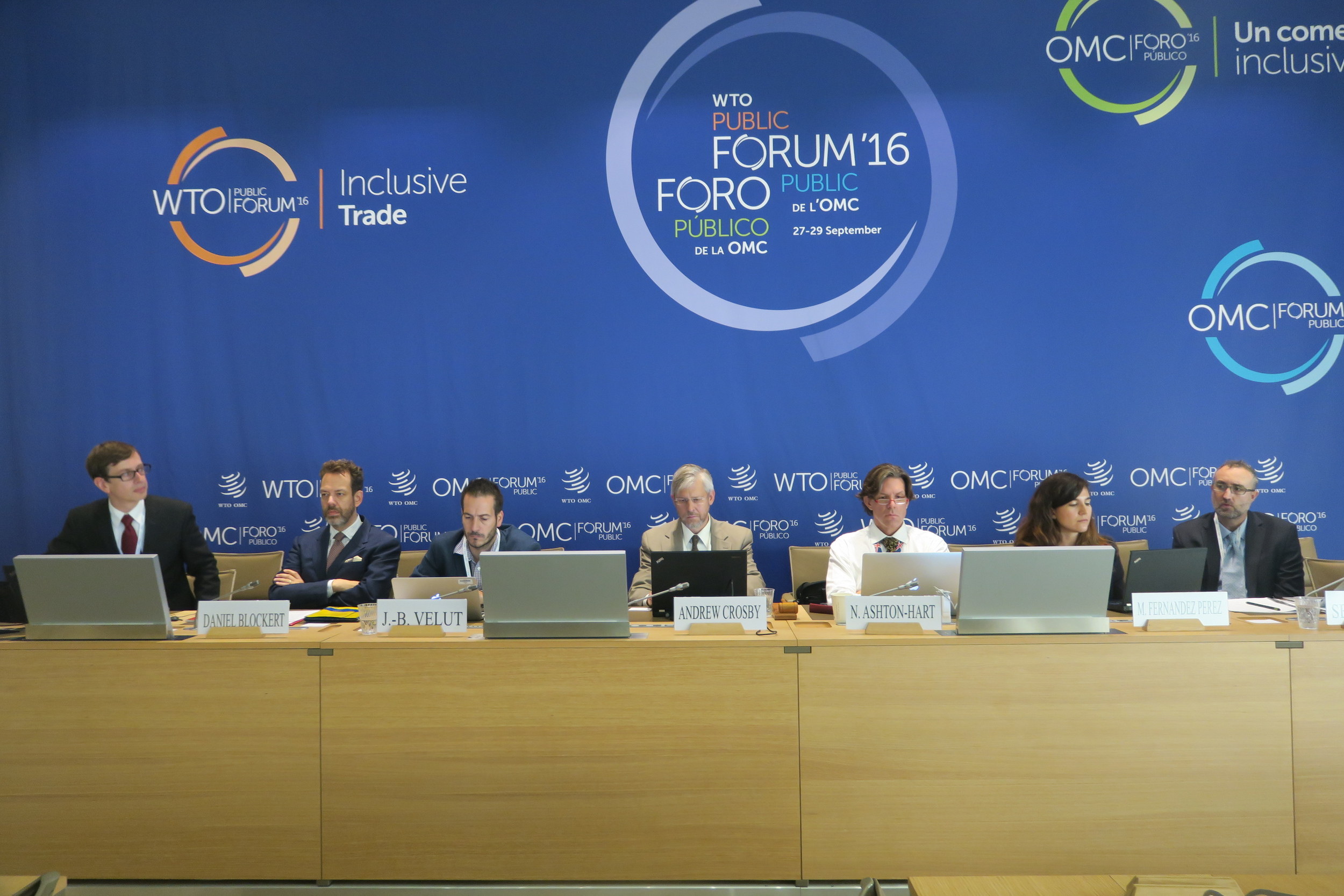 He was speaking at a discussion on Boundaries and Best Practices for Inclusive Digital Trade.
Introducing the talk, Jeremy Malcolm, senior global policy analyst for the Electronic Frontier Foundation (US), said many new digital issues are coming to the fore in discussion on trade agreements.
“There are so many new digital issues that traditionally haven’t been part of trade agreements that are moving into trade,” said Malcolm.
Previously they were dealt with by internet governance organisations such as ICANN (Internet Corporation for Assigned Names and Numbers), the UN-backed Internet Governance Forum, Internet Engineering Task Force, and the Messaging Anti Abuse Working Group.
“Digital issues that are being treated in trade agreements are rapidly extending from those that are closely analogous to rules on trade in goods, such as duties and market access restrictions, to those that are further removed, such as rules on spam, network neutrality, and country-code domain names,” said Malcolm.
He noted that there has been limited debate over the appropriate limits of the expansion of digital issues into rules on trade in goods and its intersection with existing process norms around multi-stakeholder internet governance.
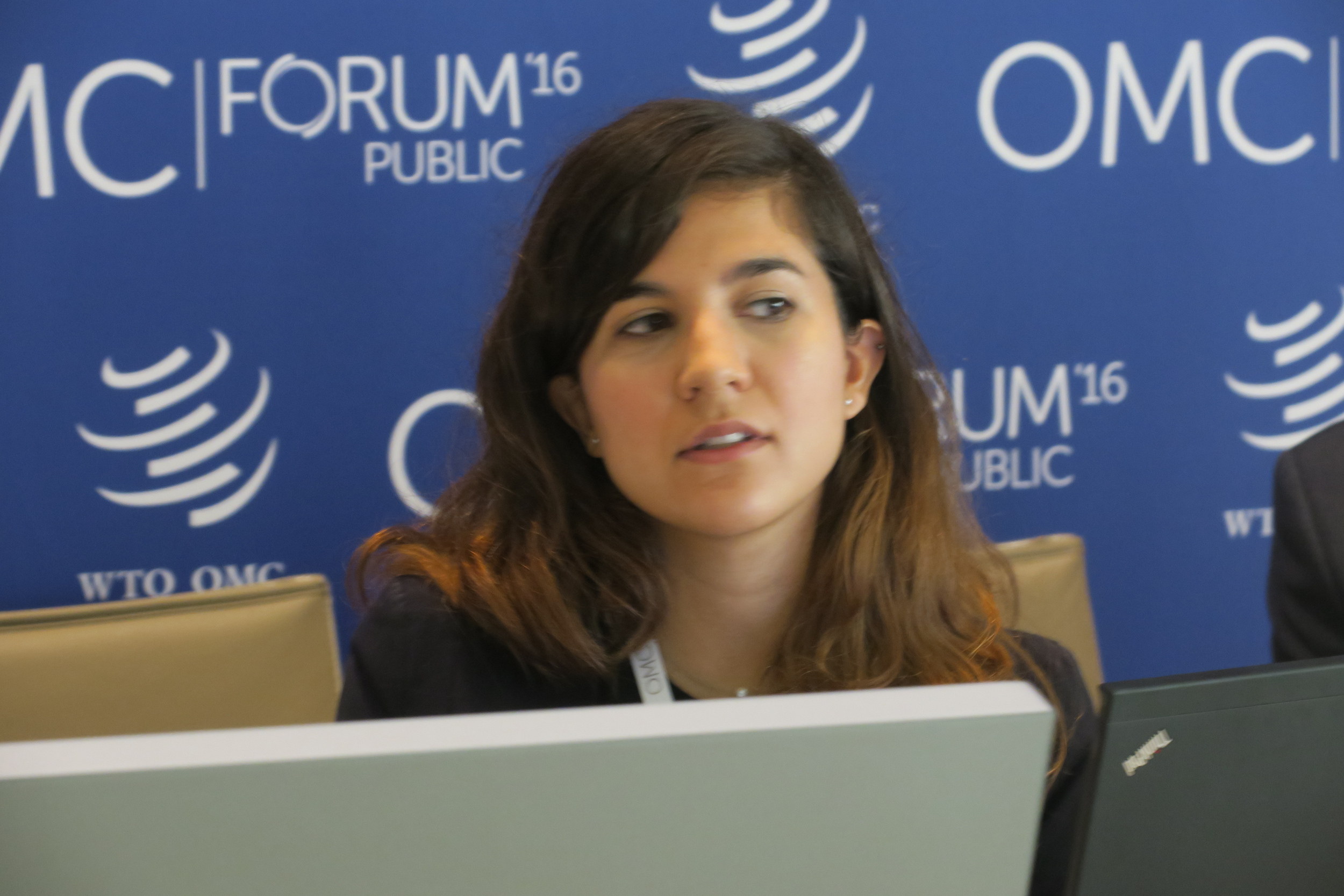 Maryant Fernandez Perez, advocacy manager for European Digital Rights, raised problems of transparency her group had encountered with the European Union in trying to get access to documents involving the European Commission and trade agreements around digital rights.
Malcom said questions that need to be considered hinge upon issues such as, how has limited stakeholder consultation affected the scope and content of free trade agreements?
Also, how could new stakeholders be included in the development of e-commerce rules and are there any procedural norms from internet governance that could be applied to trade?
Those interested could also ask, what domestic best practices standards for transparency and consultation exist in trade negotiations and is there scope for the WTO to expand its RTA Transparency Mechanism?
Ashton-Hart said in his talk that despite what some people say the internet been a part of multilateral trade policy since the conclusion of the GATT in the mid-1990s and that privacy was considered in the 1990s “before anyone could imagine personal information would flow on the internet.”
“That said, this is a good time to come here and start talking to developing countries…. The days when the US and the EU were going to tell the world what to do on digital trade or anything else are over.”
He said those who want to impact developing countries on trade have to “talk to developing countries in their capitals and here.” Developing countries genuinely understand there is an opportunity for them in developing digital trade, he said, while noting that the digital issue would be on the agenda at the WTO’s 2017 ministerial meeting.
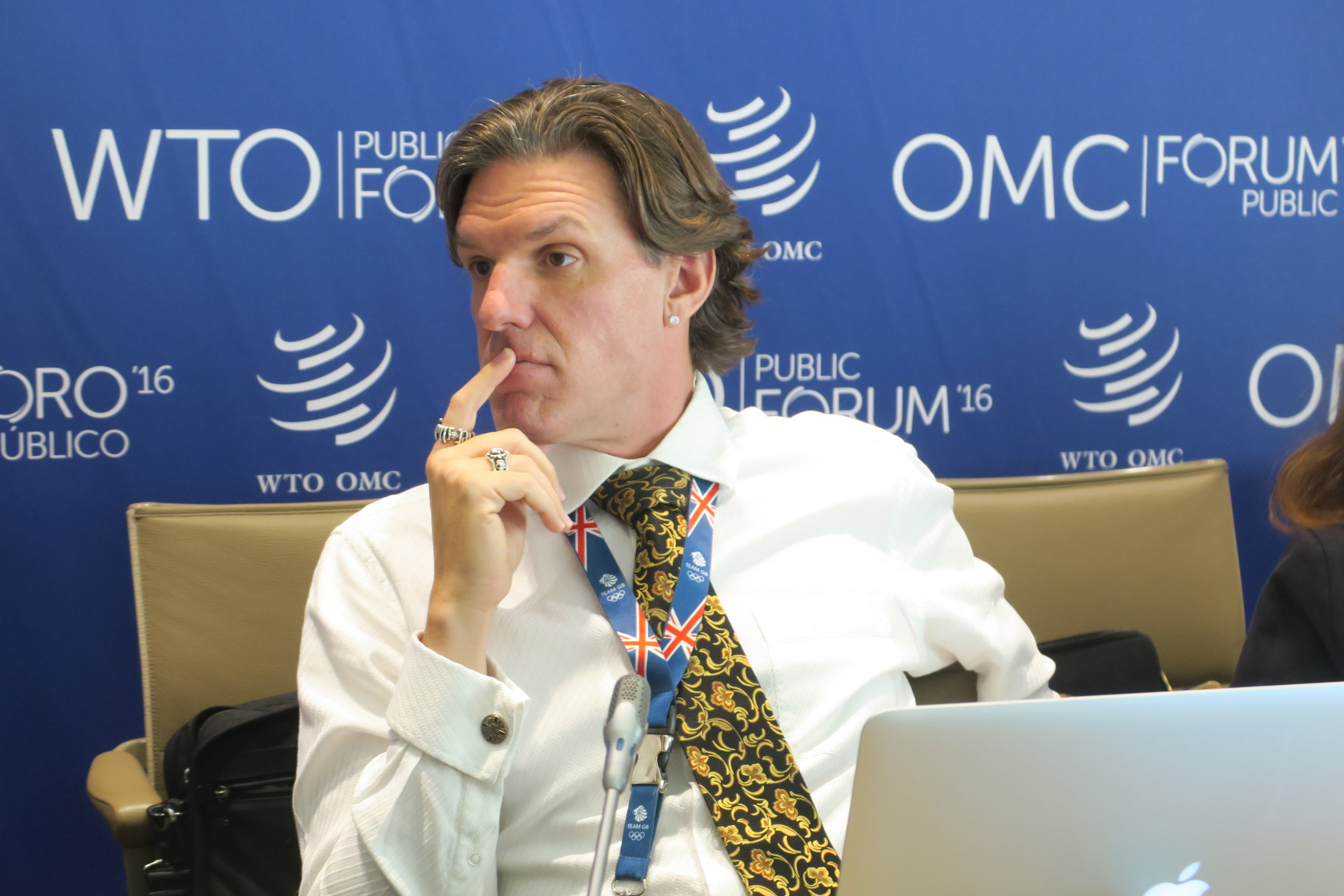
“Developing countries are going to determine the agenda and what it is about,” said Ashton-Hart, saying the issue at stake is, “How can we actually have a trade arrangement that has benefit to the little guy?”
The notion of the free flow of data is a Western concept which it will take developing countries years to come to grips with and people need to talk to developing countries not just the big powers he said.
Andrew Crosby, managing director of the International Centre for Trade and Sustainable Development (ICTSD), said the whole global trading system has become much more decentralised and he agreed with Ashton-Hart that now is the time to engage with the WTO on digital issues.
“In this context we need not only more information, but more contextually relevant information,” he said.
The old trade negotiations were about tariffs across borders, while new business models have come into effect and the IP system is “not well adapted to border barriers,” said Crosby.
The world will continue to develop with or without rules, but it is better if there are rules, he said.
“We really are in a new world, and how do we adapt to that?”
Sean Flynn, a professor from the American University Washington College of Law, said, “My sense is that we are likely to have something in the WTO on the issue of e-commerce – this broad issues that cuts across privacy and data flows, localization policies, internet service liability.”
Flynn said it is likely the WTO will have something by December 2017 that begins to chart how it will begin participating in e-commerce. “The degree of specificity in which this issue has come up in the trade area is pretty new,” he said, so it is likely to be charting on process rather than rules.
Panellist Daniel Blockert, the Swedish Ambassador to the WTO, noted the WTO does “legally binding stuff” and that in the WTO, people tend to think of negotiations.
“There is a lot of discussions on how do we bring electronic commerce and data transparencies issues into negotiations. We are not negotiating on these issues yet. We are talking about negotiating.”
Blockert thinks something will be done for next WTO ministerial which will be “a first step, but nothing controversial.”
Image Credits: Peter Kenny
[…] Time To Talk Digital Issues At WTO With Focus On Developing Countries, Forum Hears […]
[…] Of Changing Trends In FTAs’ IP Chapters, Speakers Say At WTO (Intellectual Property Watch) 30/09 Time To Talk Digital Issues At WTO With Focus On Developing Countries, Forum Hears (Intellectual Property Watch) 30/09 PO TTIP IN CETI – TISA (Zavod Radio […]